Experience the perfect balance of sun-ripened sweetness and peppery herbal notes with this artisanal Strawberry Basil Lemonade. It is a sophisticated mocktail that elevates traditional refreshment into a true culinary masterpiece suitable for any occasion.
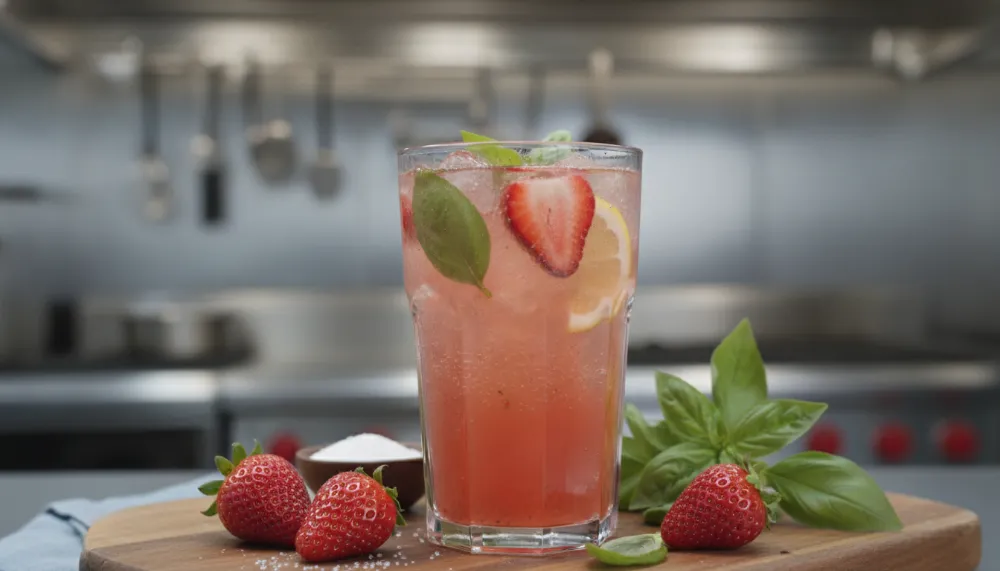
Strawberry Basil Lemonade
Ingredients
- 1 2 Cups Fresh Strawberries (hulled and halved)
- 2 1 Cup Freshly Squeezed Lemon Juice (about 6-8 lemons)
- 3 3/4 Cup Granulated Sugar
- 4 1 Cup Fresh Basil Leaves (loosely packed)
- 5 5 Cups Cold Filtered Water
- 6 Ice cubes and extra basil sprigs for garnish
Instructions
- 1 In a small saucepan, combine 1 cup of water and the sugar. Bring to a simmer over medium heat until sugar dissolves. Remove from heat, add the basil leaves, and let steep for 15 minutes.
- 2 Strain the basil simple syrup into a glass jar and discard the leaves. Let the syrup cool completely.
- 3 Place the strawberries in a blender and process until smooth. Strain through a fine-mesh sieve if you prefer a seedless lemonade.
- 4 In a large pitcher, combine the strawberry puree, lemon juice, basil syrup, and the remaining 4 cups of water. Stir well.
- 5 Chill for at least 1 hour. Serve over ice with lemon slices and fresh basil garnishes.
The Fascinating History of Strawberry Basil Lemonade
Strawberry Basil Lemonade is a modern, sophisticated evolution of one of the world’s oldest beverages. By combining the tartness of lemons with the sweetness of berries and the peppery aroma of basil, this drink bridges the gap between traditional refreshment and contemporary craft mocktails. The journey of this beverage spans from ancient medicinal elixirs to 19th-century American spectacle.
The foundation of the drink, lemonade, dates back to 10th-century Egypt and the Middle East, where a mixture of lemon juice and sugar known as qatarmizat was a popular cooling beverage. By the 12th century, Arabic physicians like Ibn Jumay was documenting recipes that included lemons, fruits, and herbs for their health-restorative properties. 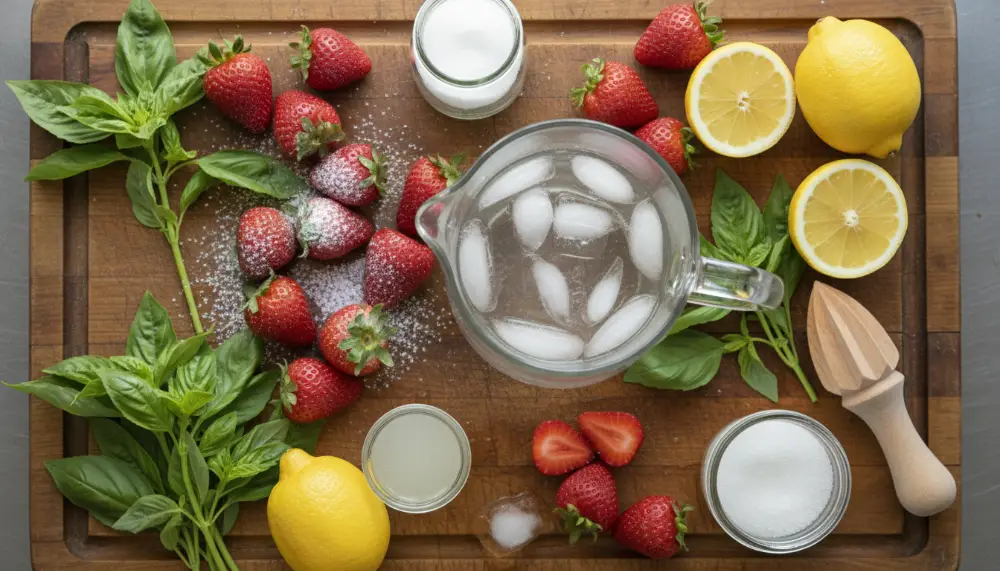
The strawberry component of this lemonade has a colorful American history. In 1857, circus worker Pete Conklin allegedly ran out of water for his lemonade stand. He used a tub of pink-tinted water, the result of a performer rinsing her tights, and marketed the rose-colored mixture as strawberry lemonade. It was a massive hit, and the concept of fruited lemonade became a staple of American summer culture. Today, the addition of basil is a 21st-century farm-to-table development. As professional mixology moved toward culinary-inspired mocktails, chefs began pairing strawberries with basil, a classic flavor combination in Mediterranean cooking, to add an earthy, savory depth to the standard sweet-tart profile of fruit lemonade.
Essential Tools for Gourmet Lemonade
To achieve the professional texture and clarity found in high-end cafes, you need the right kitchen equipment. Creating a smooth strawberry puree and perfectly balanced syrup requires precision. Here are our top recommendations for making the ultimate Strawberry Basil Lemonade:
- Ninja BN751 Professional Plus DUO Blender: https://amzn.to/3LCDyNR (Why Perfect: The 1000W motor is perfect for emulsifying strawberries and basil into a perfectly smooth base without chunks).
- Cosori 9-in-1 TurboBlaze Air Fryer 6 Qt: https://amzn.to/4hRWmVq (Why Perfect: Use this to lightly roast strawberries at 350°F for 10 minutes to concentrate their sugars for a deeper flavor profile).
- Cuisinart 8 Cup Food Processor: https://amzn.to/47Nhbg8 (Why Perfect: Fast chopping and slicing for lemon wheels and strawberry garnishes, an essential for meal prep).
- Rubbermaid Brilliance Glass Storage Set of 9: https://amzn.to/4oD0YkY (Why Perfect: Ideal for storing your basil simple syrup, leak-proof and stackable in the fridge).
- FoodSaver Vacuum Sealer Machine: https://amzn.to/4qWgVnS (Why Perfect: Keeps your fresh basil and lemon zest fresh longer, preventing oxidation).
The Science of Flavor: Why Strawberry and Basil Work
The pairing of strawberry and basil is not just a culinary trend, it is backed by chemistry. Both ingredients contain similar aromatic compounds. Strawberries are rich in esters and furaneol, which provide that signature sweet, fruity aroma. Basil contains linalool and eugenol, the latter of which provides a clove-like, peppery scent. When combined, the eugenol in the basil acts as a bridge, enhancing the floral notes of the strawberry while cutting through the intense acidity of the lemon juice.
This is why high-end mixologists often refer to this as a bridge pairing. The lemon juice provides the high-acid top note, the strawberry provides the sweet mid-tone, and the basil provides the earthy, savory base note. Together, they create a full-spectrum flavor profile that satisfies the entire palate. 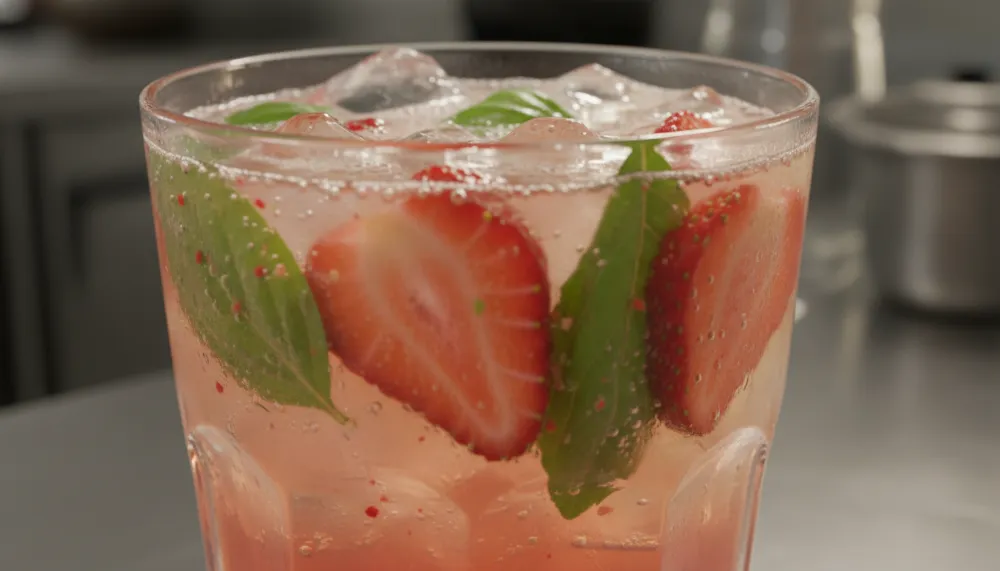
Nutritional Deep Dive
The nutrition of Strawberry Basil Lemonade varies significantly depending on whether it is prepared with fresh fruit or commercial syrups. Below is a profile for a standard 12-ounce serving made with fresh ingredients:
| Nutrient | Per 12 oz. Serving (Fresh) |
|---|---|
| Calories | 85–110 kcal |
| Total Sugars | 18–22g |
| Vitamin C | 45–60% of DV |
| Fiber | 1.5g (if not strained) |
| Carbohydrates | 22–26g |
It is an excellent source of Vitamin C from lemons and strawberries, which supports immune function and collagen production. Furthermore, the basil provides polyphenols and essential oils like eugenol, while strawberries contribute anthocyanins, which give the berries their vibrant red color and serve as powerful antioxidants.
Professional Flavor Variations
Chefs use specific techniques to elevate this drink. Here are some professional ways to modify your Strawberry Basil Lemonade:
- The Muddle vs. The Syrup: Professionals often muddle the basil leaves directly with sugar to release oils. However, a basil simple syrup ensures a consistent, clear herbal flavor without the bitterness of crushed stems.
- Alternative Sweeteners: To add complexity, substitute white sugar with agave nectar or maple syrup. For a low-calorie version, stevia or monk fruit are standard professional choices.
- Acid Balancing: High-end versions often use a blend of citrus, such as adding a splash of fresh lime juice or yuzu alongside the lemon to brighten the strawberry notes.
- Carbonation: Replace half of the water with club soda or sparkling mineral water to create a refreshing fizz that carries the basil aroma more effectively.
- Salt and Pepper: A pinch of sea salt enhances the sweetness of the berries, while a light dusting of freshly cracked black pepper plays off the spicy notes in basil.
Step-by-Step Preparation Mastery
To make the perfect Strawberry Basil Lemonade, start with the freshest fruit possible. When selecting lemons, look for those that are heavy for their size, as this indicates more juice. For strawberries, they should be deep red all the way to the stem. Washing the basil is critical, use cold water and pat dry gently to avoid bruising the leaves before they hit the syrup. When juicing, ensure you are at room temperature to maximize the yield from each lemon. If you use the FoodSaver Vacuum Sealer Machine (https://amzn.to/4qWgVnS), you can even store pre-portioned strawberry puree for months.
What to Serve with Strawberry Basil Lemonade
Because of its balanced sweet and savory profile, this lemonade is incredibly versatile. It pairs beautifully with grilled chicken breast marinated in lemon and garlic. For a beef option, consider serving it alongside a summer steak salad with balsamic glaze. If you prefer vegetarian fare, a fresh caprese salad or roasted chickpeas from your Cosori Air Fryer (https://amzn.to/4hRWmVq) provides a salty contrast that makes the lemonade pop. The herbal notes of the basil also complement Mediterranean dishes like falafel or grilled vegetable skewers.