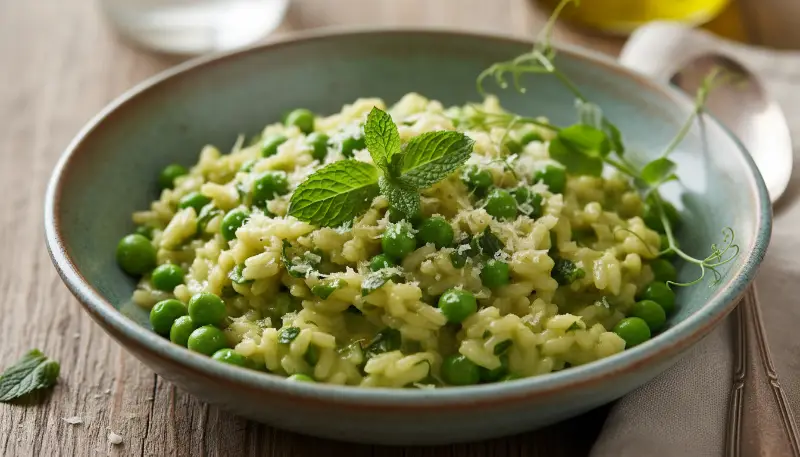
Experience the essence of the season with this vibrant Spring Pea Mint Risotto, a dish that combines creamy textures with the refreshing brightness of garden-fresh herbs. This sophisticated recipe utilizes savory beef and citrus to deliver a depth of flavor that is both comforting and elegantly light.

Spring Pea Mint Risotto
15 MIN
30 MIN
4 PERS
Ingredients
- 1 1 ½ cups Arborio Rice
- 2 6 cups Hot Beef Broth
- 3 4 oz Beef Bacon (Diced)
- 4 2 cups Sweet Peas (Fresh or Frozen)
- 5 ½ cup Fresh Mint Leaves
- 6 1.5 tbsp Fresh Lemon Juice
- 7 1 Shallot & 3 Garlic Cloves
- 8 ½ cup Grated Parmesan
- 9 2 tbsp Butter & 2 tbsp Olive Oil
Instructions
- 1 Crisp the beef bacon in a pot with olive oil. Remove and set aside.
- 2 Blend 1 cup of peas with a splash of broth and mint to create a green puree.
- 3 Sauté shallots and garlic in the pot, then toast the rice for 2 minutes.
- 4 Deglaze with lemon juice, then add broth gradually while stirring constantly.
- 5 When al dente, stir in pea puree, whole peas, butter, and cheese.
The Science and Soul of Spring Pea Mint Risotto
Creating a flawless Spring Pea Mint Risotto is an exercise in patience and precision. While many home cooks are intimidated by the constant stirring required, this technique is the secret to unlocking the creamy starch that defines the dish. Unlike other rice preparations where you want distinct, separate grains, risotto thrives on the release of amylopectin, a type of starch found in high concentrations in Arborio and Carnaroli rice. As you ladle hot beef broth into the pot, the mechanical action of stirring rubs these starches off the grain, creating a luxurious, velvety sauce without the need for excessive heavy cream.
In this particular Spring Pea Mint Risotto, we have chosen a savory beef profile to replace traditional pork elements. By using beef bacon or bresaola, you achieve a deep, umami-rich crunch that contrasts beautifully with the sweetness of the spring peas. This choice not only adheres to specific dietary preferences but also elevates the dish, as the richness of the beef broth anchors the ethereal brightness of the fresh mint. To achieve the perfect texture for your pea puree, we highly recommend the Ninja BN751 Professional Plus DUO Blender, which handles fibrous herbs and delicate peas with ease, ensuring a silken finish that blends seamlessly into the rice.
Replacing Alcohol and Pork without Sacrificing Flavor
One of the biggest myths in Italian cooking is that a great risotto requires white wine. While wine provides necessary acidity, it is certainly not the only way to achieve it. For our Spring Pea Mint Risotto, we utilize fresh lemon juice as a deglazing agent. This substitution actually enhances the “spring” profile of the dish, offering a cleaner, more vibrant citrus note that cuts through the richness of the butter and Parmesan. When the lemon juice hits the hot, toasted rice, it performs the same chemical function as wine, breaking down the exterior of the grain to facilitate starch release, all while keeping the recipe alcohol-free.

Similarly, the transition from pork to beef requires a thoughtful approach. Traditional recipes often call for pancetta or guanciale, which provide fat and salt. By using high-quality beef bacon, you maintain that essential textural contrast. For the best results, try crisping your beef components in the Cosori 9-in-1 TurboBlaze Air Fryer 6 Qt. This method allows the fat to render out perfectly, leaving you with brittle, salty shards of beef that act as the perfect garnish for your Spring Pea Mint Risotto. The beef fat can even be salvaged and added back into the initial sauté of shallots for an extra layer of complexity.
Mastering the Art of Mantecatura
The final and most critical stage of making Spring Pea Mint Risotto is known as mantecatura. This is the process of vigorously stirring in cold butter and cheese after the pot has been removed from the heat. This step is not just about melting ingredients, it is about emulsifying the fat into the starchy liquid to create a stable, creamy texture that won’t separate on the plate. When you add your pea and mint puree during this stage, you preserve the vivid green color and the volatile oils of the mint, which would otherwise dull if cooked too long.
To ensure your aromatics are prepared with the necessary finesse, the Cuisinart 8 Cup Food Processor is a meal-prep essential. Finely dicing shallots and garlic by hand can lead to uneven cooking, but a quick pulse in the processor ensures every piece of aromatic is uniform, allowing them to melt into the Spring Pea Mint Risotto base without leaving behind harsh, crunchy bits. This attention to detail is what separates a home-cooked meal from a restaurant-quality experience.
Why Fresh Mint and Peas are a Classic Pairing
The marriage of peas and mint is a culinary classic for a reason. Peas have a natural, grassy sweetness that can sometimes feel one-dimensional. Mint, with its cooling menthol properties, provides a sharp contrast that wakes up the palate. In a Spring Pea Mint Risotto, this combination is further enhanced by the lemon zest. The zest contains essential oils that bridge the gap between the heavy starch of the rice and the light freshness of the vegetables. If you find yourself with leftover ingredients, the Rubbermaid Brilliance Glass Storage Set of 9 is perfect for keeping your prepped peas and herbs fresh and organized.

For those who enjoy planning ahead, you can even preserve your fresh spring peas at the peak of their season. Using a FoodSaver Vacuum Sealer Machine prevents freezer burn and ensures that when you decide to make Spring Pea Mint Risotto in the middle of winter, your peas still taste like they were just picked from the vine. For more inspiration on seasonal meal planning, you can explore various culinary maps at our post sitemap, which offers a wealth of diverse recipes.
Essential Tips for Risotto Success
- Keep the Broth Hot: Never add cold broth to your Spring Pea Mint Risotto. Cold liquid shocks the rice and slows down the cooking process, resulting in a grain that is mushy on the outside but hard in the middle.
- Toast the Rice: Don’t skip the toasting step. Heating the dry rice in oil/butter creates a protective shell around each grain, helping it stay intact during the long stirring process.
- Wait for Absorption: Only add the next ladle of broth once the previous one has been almost entirely absorbed. This creates the friction needed for starch release.
- The Ripple Effect: Your Spring Pea Mint Risotto should have a “wave-like” consistency (all’onda). If it sits in a stiff mound on the plate, it is too dry. Add a final splash of broth just before serving to loosen it up.
Can I use frozen peas for Spring Pea Mint Risotto?
Absolutely. High-quality frozen sweet peas are often frozen within hours of harvest, preserving their sugar content and vibrant color. Simply thaw them quickly under warm water or add them directly to the Spring Pea Mint Risotto in the final few minutes of cooking.
What is the best beef substitute for pancetta?
Beef bacon is the closest match due to its fat-to-meat ratio. However, diced bresaola or even finely chopped beef jerky can provide that salty, chewy element that complements the Spring Pea Mint Risotto so well.
How do I store leftovers?
Risotto is best served fresh, but if you have leftovers, store them in an airtight container for up to 2 days. To reheat, add a splash of broth or water to a pan and stir gently over low heat to restore the creaminess of your Spring Pea Mint Risotto.
Ultimately, the beauty of a Spring Pea Mint Risotto lies in its versatility. While we have focused on a beef and lemon-based version, the core techniques of starch management and flavor balancing remain universal. Whether you are hosting a formal dinner or seeking a comforting midweek meal, this dish promises to be a highlight of your culinary repertoire. For more detailed guides on various cooking styles, visit our sitemap for more inspiration.