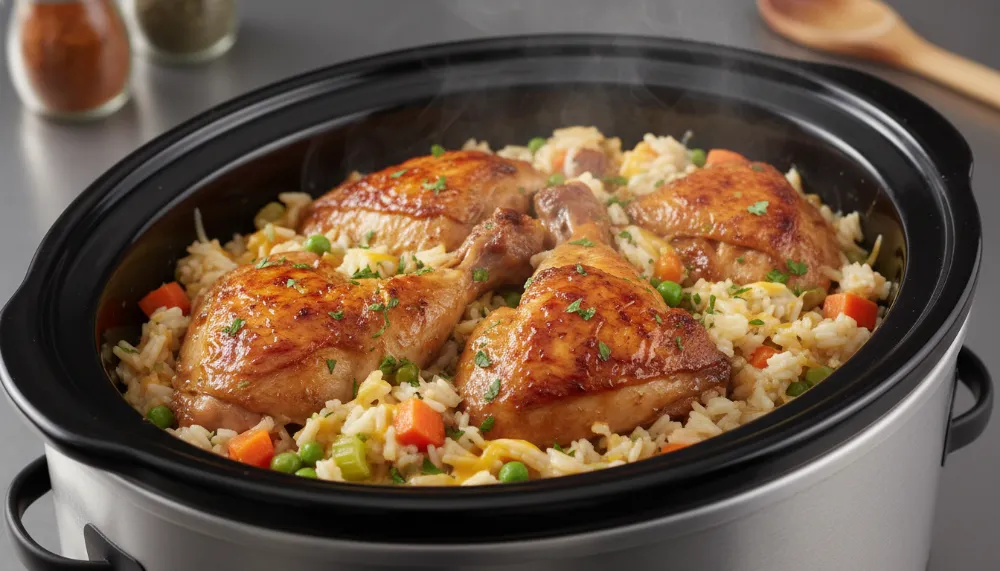
Experience the ultimate comfort with this easy Crockpot Chicken and Rice, a one-pot wonder that delivers tender poultry and perfectly fluffy grains every single time. This family-favorite meal simplifies your weeknight routine while providing a nutritious, hearty dinner that everyone will love.
Crockpot Chicken and Rice
Ingredients
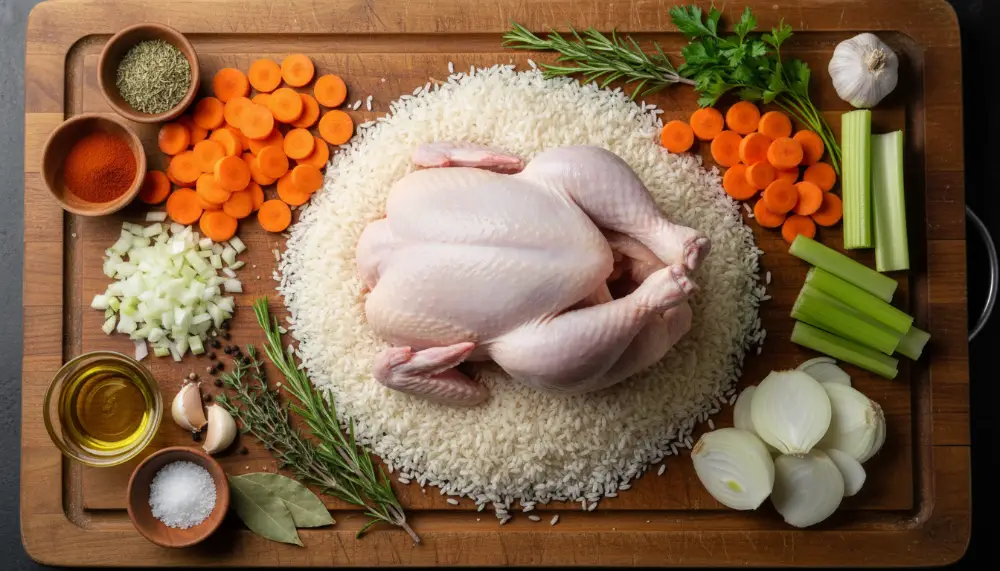
- 1.5 lbs Chicken thighs, boneless and skinless
- 1.5 cups Long-grain white rice, rinsed
- 3 cups Chicken bone broth
- 1 cup Diced yellow onion
- 2 cloves Garlic, minced
- 1 cup Sliced carrots
- 1 tsp Dried thyme
- 1 cup Frozen peas, added at the end
- 1 Salt and black pepper to taste
Instructions
- 1 Place the chicken, onion, garlic, carrots, and seasonings in the bottom of the crockpot.
- 2 Pour the chicken broth over the ingredients and stir slightly.
- 3 Cover and cook on HIGH for 3 hours or LOW for 6 hours until the chicken is tender.
- 4 Approximately 45 minutes before serving, stir in the rinsed rice.
- 5 Add the frozen peas in the last 10 minutes, then fluff with a fork and serve.
The Fascinating Evolution of Crockpot Chicken and Rice
The history of Crockpot Chicken and Rice is not merely a tale of a single recipe, it is a narrative of technological advancement meeting age-old culinary requirements. The slow cooker, as we know it today, trace its lineage back to the mid-20th century, specifically to the mind of Irving Naxon. Naxon’s invention, the Naxon Beanery, was inspired by his mother’s childhood stories of slow-cooking traditional stews in a communal village oven in Lithuania. This “set-it-and-forget-it” approach was revolutionary, offering a modern solution to an ancient cooking method.
By the early 1970s, the Rival Company rebranded the device as the “Crock-Pot,” and it became an immediate sensation among American households. As social dynamics shifted and more women entered the workforce, the demand for meals that could cook safely throughout the day skyrocketed. Crockpot Chicken and Rice became the quintessential dinner of this era, providing a balanced, warm meal with minimal evening labor. However, the flavors we enjoy today are deeply rooted in global traditions like Latin American Arroz con Pollo and Southeast Asian claypot cooking, which have long paired poultry and rice in single vessels for maximum flavor absorption.
Detailed Nutritional Profile and Health Benefits
Understanding what goes into your body is a cornerstone of modern cooking. A standard serving of this Crockpot Chicken and Rice offers a balanced macronutrient profile, making it a reliable choice for families seeking health without sacrificing flavor. Below is a breakdown based on a typical 1.5-cup serving:
| Nutrient | Average Amount |
|---|---|
| Calories | 320 – 430 kcal |
| Protein | 25g – 38g |
| Total Fat | 7g – 12g |
| Carbohydrates | 35g – 48g |
| Fiber | 2g – 4g |
| Sodium | 600mg – 950mg |
This dish is particularly high in Vitamin B6 and Niacin, which are essential for energy metabolism. Selenium, a powerful antioxidant found in chicken, supports immune health. By using bone broth instead of water, you also add collagen and amino acids that are beneficial for gut health and joint support.
4 Professional Flavor Variations to Elevate Your Meal
1. Savory Cremini and Thyme (The “Forest” Profile)
This variation focuses on deep, umami flavors without relying on processed, cream-based soups. Start with sliced cremini mushrooms and sautéed leeks for a foundation of earthy sweetness. To achieve the necessary acidity usually provided by white wine, utilize a splash of high-quality apple cider vinegar mixed into your chicken bone broth. This elevates the dish to a gourmet status while remaining entirely family-friendly. Finishing with a drizzle of truffle oil adds a touch of luxury.
2. Zesty Mediterranean (The “Sun” Profile)
For a brighter, more aromatic experience, integrate artichoke hearts, sun-dried tomatoes, and Kalamata olives into the pot. The liquid base should be a robust chicken broth infused with fresh lemon zest and dried oregano. This version is lighter on the palate and pairs beautifully with a side of steamed greens. To keep it professional, stir in fresh baby spinach and some feta crumbles just before serving to maintain the vibrant colors.
3. Aromatic Ginger and Sesame (The “Silk Road” Profile)
Moving away from the traditional herb-based recipes, this version uses freshly grated ginger, minced garlic, and thinly sliced beef-based summer sausage for a smoky, savory depth. Use a liquid base of low-sodium soy sauce and chicken stock with a hint of honey for balance. Using Basmati or Jasmine rice here is crucial, as their floral notes complement the ginger perfectly. Garnish with toasted sesame seeds for a crunch that contrasts the tender chicken.
4. Smoked Pepper and Tomato (The “Southwest” Profile)
If you prefer a robust, slightly spicy kick, use fire-roasted tomatoes and smoked paprika. To balance the heat, a small amount of unsweetened pineapple juice can be added to the chicken stock, providing a subtle fruitiness that mimics the complexity of fermented ingredients. Use a blend of long-grain white rice and wild rice for a nutty, chewy texture that stands up to the bold spices. Fresh lime juice at the end is mandatory for brightening the flavors.
The Technical Secrets of Perfect Slow Cooker Rice
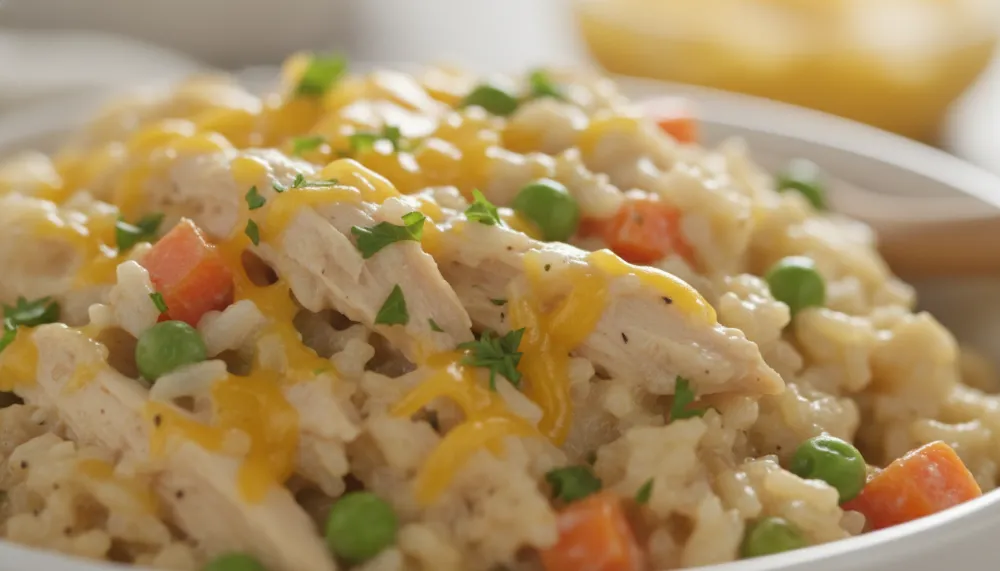
The most common complaint with Crockpot Chicken and Rice is mushy grains. To prevent this, there are three non-negotiable rules. First, always rinse your rice until the water runs clear, this removes the excess surface starch that causes clumping. Second, timing is everything. Do not add the rice at the very beginning of a 6-hour cook cycle. Instead, add it during the final hour or 45 minutes of cooking. This ensures the rice absorbs the liquid and becomes tender without losing its individual grain structure.
Third, the ratio of liquid must be adjusted. Because the slow cooker is a closed system with very little evaporation, you generally need slightly less liquid than you would on the stovetop. A 2:1 ratio of liquid to rice is the standard, but keep an eye on it, if the rice looks dry, you can always add a few tablespoons of warm broth near the end. If you are using a tool like the Cuisinart 8 Cup Food Processor to prep your vegetables, make sure they are cut uniformly so they distribute their moisture evenly throughout the rice.
Essential Kitchen Tools for Meal Prep Success
To make the preparation of Crockpot Chicken and Rice even more seamless, high-quality equipment is a worthy investment. For those who want to prepare their own sauces or vegetable purees to stir into the rice, the Ninja BN751 Professional Plus DUO Blender is a powerhouse with a 1000W motor that handles tough ingredients with ease. If you are following the Mediterranean variation and want perfectly roasted chickpeas as a garnish, the Cosori 9-in-1 TurboBlaze Air Fryer 6 Qt is an excellent companion tool.
Proper storage is just as important as the cooking itself. Leftover Crockpot Chicken and Rice should be stored in airtight containers to maintain moisture. The Rubbermaid Brilliance Glass Storage Set of 9 is our top recommendation because it is leak-proof and prevents the rice from absorbing refrigerator odors. For those who like to bulk-buy chicken when it is on sale, the FoodSaver Vacuum Sealer Machine is essential for preventing freezer burn and keeping your ingredients fresh until they are ready for the slow cooker.
Frequently Asked Questions
Can I use brown rice instead of white?
Yes, but you must increase the cooking time and the liquid. Brown rice takes significantly longer to soften and requires about 2.5 cups of liquid per 1 cup of rice. Expect the rice to take 1.5 to 2 hours in the crockpot on HIGH.
Should I brown the chicken first?
While not strictly necessary for safety, searing the chicken in a pan for 2 minutes per side before adding it to the crockpot develops a Maillard reaction, which adds a much deeper flavor profile to the final dish. It also improves the visual appeal of the poultry.
How do I prevent the chicken from drying out?
Using chicken thighs is the best way to ensure moist results. Thighs have more connective tissue and fat than breasts, which allows them to withstand the long, slow heat without becoming stringy. If you must use breasts, cut them into large, uniform chunks and monitor the temperature closely.