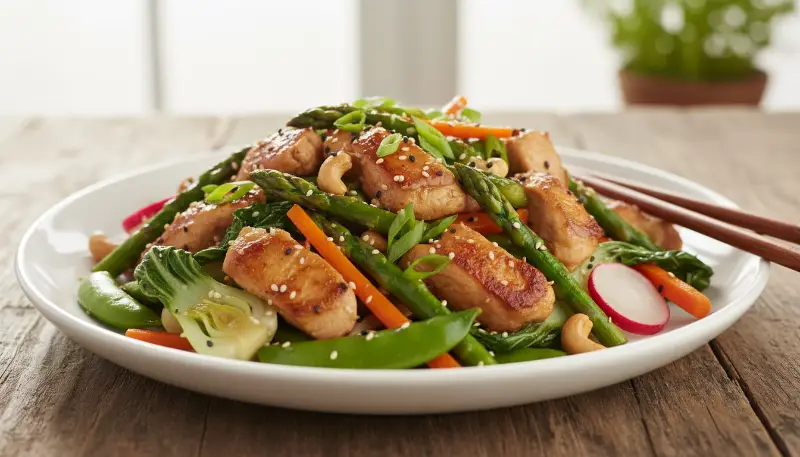
Experience the ultimate celebration of seasonal flavors with this vibrant Spring Chicken Stir-fry, a dish designed to bring the crispness of early harvest vegetables to your dinner table. This light yet satisfying meal is perfect for those seeking a nutritious, high-protein dinner that can be prepared in under thirty minutes.
Spring Chicken Stir-fry
Ingredients
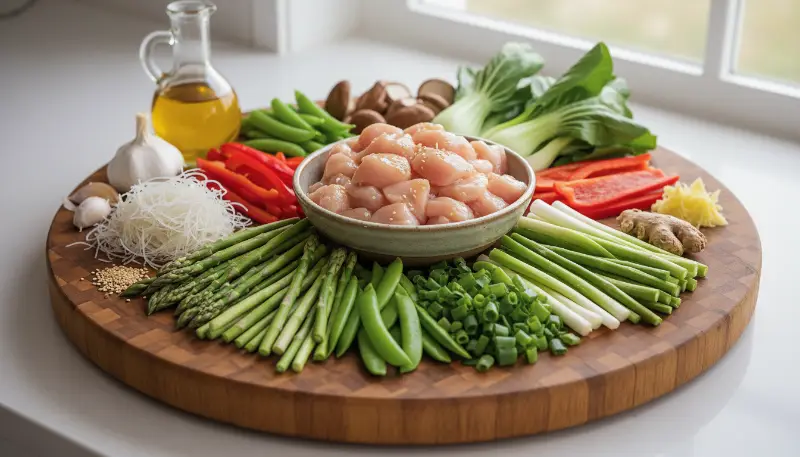
- • 1.5 lbs Chicken breast, thinly sliced
- • 1 cup Asparagus, 2-inch pieces
- • 1 cup Sugar Snap Peas
- • 1 Red Bell Pepper, sliced
- • 1 cup Baby Bok Choy
- • 3 cloves Garlic, minced
- • 1/4 cup Chicken Broth
- • 3 tbsp Soy Sauce
- • 1 tbsp Honey
- • 1 tbsp Rice Vinegar
Instructions
- 1 Whisk broth, soy sauce, honey, vinegar, and cornstarch.
- 2 Sear chicken in a hot wok until golden; remove and set aside.
- 3 Sauté garlic, ginger, and spring onion whites for 30 seconds.
- 4 Add asparagus, peas, and peppers; stir-fry for 4 minutes.
- 5 Return chicken, add sauce, and toss until thickened.
- 6 Garnish with green onions and serve over rice.
Why Spring Chicken Stir-fry is the Essential Seasonal Meal
As the winter frost fades and the first green shoots emerge from the soil, our palates naturally crave something lighter and more vibrant. The Spring Chicken Stir-fry is the perfect answer to this seasonal transition. Unlike heavy winter stews, this dish relies on rapid cooking techniques that preserve the integrity, color, and nutritional value of fresh produce. By utilizing a high-heat wok or skillet, we ensure that the asparagus retains its snap, the snap peas remain bright green, and the chicken stays tender and juicy. This Spring Chicken Stir-fry is not just a meal; it is a celebration of freshness that avoids the use of heavy fats or unnecessary additives.
The beauty of the Spring Chicken Stir-fry lies in its versatility. While we focus on chicken as our primary protein, the recipe is easily adapted for those who prefer red meat. Using thinly sliced beef sirloin or flank steak provides a robust, savory alternative that pairs beautifully with the earthy notes of spring vegetables. Regardless of the protein chosen, the key is the preparation. Thinly slicing the meat against the grain ensures maximum tenderness, allowing it to cook in mere minutes. This speed is essential for maintaining the “wok hei” or the breath of the wok, which imparts a subtle smoky charred flavor that defines a high-quality Spring Chicken Stir-fry.
Mastering the Art of the Alcohol-Free Stir-fry Sauce
Many traditional stir-fry recipes call for cooking wines or mirin to add depth and acidity. However, creating a world-class Spring Chicken Stir-fry without alcohol is entirely possible and often results in a cleaner, more vegetable-forward flavor profile. In this recipe, we substitute traditional spirits with a high-quality chicken broth combined with rice vinegar. The chicken broth provides a savory base that anchors the sauce, while the rice vinegar offers the necessary brightness to cut through the saltiness of the soy sauce. To achieve that iconic glossy coating that clings to every morsel of your Spring Chicken Stir-fry, a small amount of cornstarch is whisked into the sauce. This creates a slurry that thickens almost instantly when it hits the hot pan.
For those looking to elevate the sauce further, consider using the Ninja BN751 Professional Plus DUO Blender to emulsify aromatics like ginger and garlic directly into your sauce base. This results in a smoother texture and a more intense flavor distribution throughout the Spring Chicken Stir-fry. The sweetness in our sauce comes from a touch of honey, which caramelizes slightly under the high heat, providing a beautiful sheen and a counterpoint to the umami-rich soy sauce. This balanced approach ensures that your Spring Chicken Stir-fry tastes professional-grade every single time.
Essential Equipment for the Perfect Spring Chicken Stir-fry
To achieve the best results with your Spring Chicken Stir-fry, the right tools are indispensable. Stir-frying is a technique defined by speed and heat. A heavy-bottomed carbon steel wok is the gold standard, as it conducts heat rapidly and evenly. However, a large cast-iron skillet can also produce an excellent Spring Chicken Stir-fry if allowed to preheat properly. Before you even turn on the stove, ensure all your ingredients are prepped. This is where a high-quality tool like the Cuisinart 8 Cup Food Processor becomes a lifesaver. It can slice peppers and onions into uniform strips in seconds, ensuring that everything in your Spring Chicken Stir-fry cooks at the same rate.
Once the cooking is done, storage becomes the next priority. If you are making a double batch of Spring Chicken Stir-fry for meal prep, you need containers that maintain the texture of the vegetables. The Rubbermaid Brilliance Glass Storage Set of 9 is ideal for this purpose, as the airtight seals keep the sauce from leaking and the glass doesn’t stain or retain odors. For long-term storage of your fresh spring vegetables or bulk-purchased chicken, the FoodSaver Vacuum Sealer Machine is an essential investment to prevent freezer burn and maintain peak freshness until you are ready to cook your next Spring Chicken Stir-fry.
Health Benefits of Spring Vegetables in Your Stir-fry
The nutritional profile of a Spring Chicken Stir-fry is impressively dense. Asparagus, one of the stars of this dish, is a fantastic source of fiber, folate, and vitamins A, C, and K. It acts as a natural diuretic and provides a unique prebiotic fiber that supports gut health. When combined with the lean protein of chicken breast, the Spring Chicken Stir-fry becomes a muscle-building, metabolism-boosting powerhouse. Sugar snap peas add a boost of vitamin C and manganese, while the red bell peppers provide more than double your daily requirement of vitamin C in a single serving. By avoiding heavy oils and refined sugars, this Spring Chicken Stir-fry remains a heart-healthy option for all ages.
If you enjoy a bit of crunch on the side, you can use the Cosori 9-in-1 TurboBlaze Air Fryer 6 Qt to roast some chickpeas or even kale chips to serve alongside your Spring Chicken Stir-fry. This adds a layer of texture and additional plant-based protein to the meal without the need for deep frying. The integration of baby bok choy into the Spring Chicken Stir-fry also introduces calcium and antioxidants that help reduce inflammation. Every ingredient in this Spring Chicken Stir-fry is chosen not only for its flavor but for its contribution to a balanced, healthful diet.
Common Mistakes to Avoid When Making Spring Chicken Stir-fry
One of the most frequent errors when preparing a Spring Chicken Stir-fry is overcrowding the pan. When too much chicken or too many vegetables are added at once, the temperature of the wok drops significantly. Instead of searing, the food begins to steam in its own juices, leading to gray meat and soggy vegetables. To avoid this, always cook your Spring Chicken Stir-fry in batches if necessary. Sear the chicken first, remove it, and then cook the vegetables. This ensures that every component of the Spring Chicken Stir-fry receives the direct contact with high heat required for that perfect texture.
Another mistake is adding the garlic and ginger too early. While they are essential aromatics for a Spring Chicken Stir-fry, they can burn easily and become bitter. Always wait until the oil is shimmering and add them just before the vegetables, or toss them in with the spring onions. Finally, ensure your sauce is properly mixed before adding it to the pan. Cornstarch tends to settle at the bottom of the bowl, so give it a final whisk to ensure your Spring Chicken Stir-fry has a smooth, consistent glaze. Following these simple tips will elevate your Spring Chicken Stir-fry from a standard weeknight meal to a restaurant-quality experience.
Can I use beef instead of chicken in this Spring Chicken Stir-fry?
Absolutely. If you prefer red meat, thinly sliced flank steak or sirloin works beautifully. Just ensure you sear the beef quickly over high heat to keep it tender, similar to how you would treat the poultry in a Spring Chicken Stir-fry.
How do I keep the asparagus from getting mushy?
The secret is timing. Asparagus only needs about 3-4 minutes in a hot wok. Add it toward the middle of the cooking process for your Spring Chicken Stir-fry so it stays crisp-tender.
What is the best way to store leftovers?
Leftover Spring Chicken Stir-fry can be stored in an airtight container in the refrigerator for up to 3 days. Use glass containers like the Rubbermaid Brilliance set to keep the flavors fresh.
Is there a substitute for soy sauce?
Yes, you can use liquid aminos or coconut aminos as a substitute in your Spring Chicken Stir-fry if you are looking for a lower-sodium or soy-free alternative. The flavor profile will remain very similar.