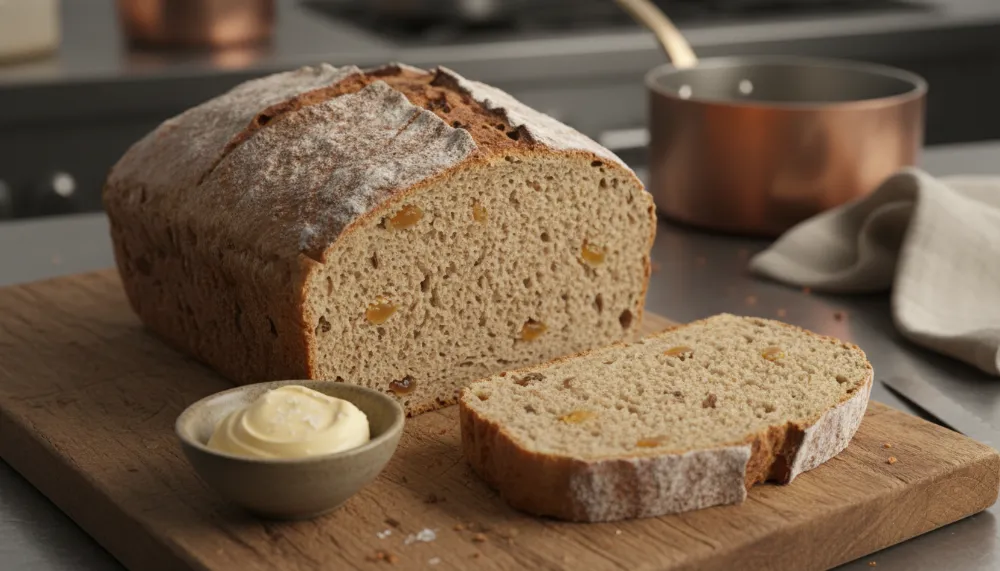
Experience the rustic charm and hearty texture of traditional Whole Wheat Irish Soda Bread, a cornerstone of Irish heritage that brings a warm, comforting aroma to every kitchen. This no-knead masterpiece relies on the timeless chemistry of buttermilk and baking soda to create a loaf that is as nutritious as it is delicious.
Whole Wheat Irish Soda Bread
Ingredients
- 3 ½ cups Stone-ground Whole Wheat Flour
- 1 cup All-Purpose Flour
- 1 tsp Baking Soda (Bicarbonate of Soda)
- 1 tsp Sea Salt
- 2 cups Real Buttermilk (full fat preferred)
- 2 tbsp Cold Butter (cubed)
Instructions
- Preheat your oven to 425°F (220°C). Dust a baking sheet with a little flour or line with parchment paper.
- In a large bowl, whisk together the whole wheat flour, all-purpose flour, baking soda, and salt.
- Work the cold butter into the flour using your fingertips or a pastry cutter until it resembles coarse crumbs.
- Make a well in the center and pour in most of the buttermilk. Use a wooden spoon or your hand to mix until a soft, slightly sticky dough forms. Add remaining buttermilk if too dry.
- Turn the dough onto a lightly floured surface and gently shape into a round loaf about 1.5 inches thick. Do not overwork!
- Transfer to the baking sheet. Use a sharp knife to cut a deep cross (the “X”) across the top.
- Bake for 15 minutes, then reduce oven temp to 400°F (200°C) and bake for another 20-25 minutes until the bottom sounds hollow when tapped.
The Rich Heritage of Irish Brown Bread
Whole Wheat Irish Soda Bread, often referred to as “Brown Bread” in its native land, is a cornerstone of Irish culinary identity. It is a dense, hearty loaf that relies on a chemical reaction between an acid and a base rather than biological fermentation from yeast. Unlike the crusty baguettes of France or the airy focaccias of Italy, the Irish loaf is defined by its rugged exterior and tender, cake-like interior crumb.
While soda-leavened breads were first documented among Native Americans using “pearl ash”, the Irish version emerged in the 1830s with the commercial introduction of bicarbonate of soda. It became an immediate necessity due to Ireland’s agricultural landscape. Ireland’s climate is better suited for “soft” wheat, which is low in protein and gluten. Unlike the “hard” wheat grown in North America, soft wheat flour does not rise well with yeast. Baking soda provided a reliable way to leaven this local grain, ensuring that every household could produce bread regardless of the grain’s gluten strength.
The Economic Necessity and the Great Famine
During the Great Famine (1845–1852), poverty was widespread across the Irish countryside. Whole Wheat Irish Soda Bread required only four inexpensive ingredients: wholemeal flour, salt, baking soda, and soured milk. It could be baked in a “bastable”, a cast-iron pot with a lid, over an open peat fire, making it accessible to rural households without ovens. This resilience made the bread a literal lifesaver for millions.
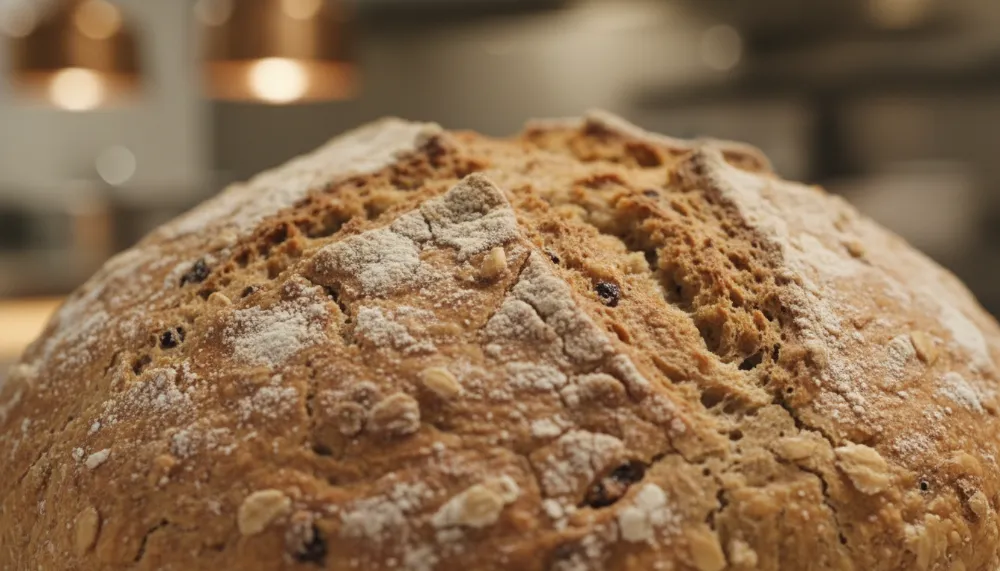
The symbolic “X” cut into the top of the loaf served two purposes: practically, it allowed the thick center to cook through and the bread to expand, while folklore suggested it was to “let the fairies out” or ward off evil from the household. Today, that cross remains a signature mark of an authentic loaf, providing those iconic four wedges known as “farls”.

The Science Behind the Rise
Understanding the chemistry of Whole Wheat Irish Soda Bread is key to mastering its texture. When the lactic acid in buttermilk meets the alkaline baking soda, it creates carbon dioxide bubbles. Because whole wheat flour is heavier and contains more bran than white flour, these bubbles need to be captured quickly before the dough is placed in the hot oven. This is why professional bakers emphasize speed, once the liquid hits the flour, the clock is ticking. Over-kneading will pop these bubbles and develop too much gluten, resulting in a bread that is tough and rock-hard rather than dense and tender.
Nutritional Profile of a Classic Loaf
Per standard 1.5 oz / 45g slice, you can expect the following nutritional benefits:
- Calories: 120–150 kcal
- Carbohydrates: 24g–28g (Primarily complex carbohydrates for sustained energy)
- Fiber: 3g–5g (High due to the use of wholemeal flour and bran)
- Protein: 4g–6g
- Fat: 1g–3g (Very low in saturated fats)
- Micronutrients: A significant source of Iron, Magnesium, and B-vitamins, especially Thiamin and Niacin. Because it is made with buttermilk, it also contains small amounts of calcium.
Professional Flavor Variations
Chefs often elevate the humble loaf by introducing textures and aromatic elements. To adhere to strict dietary requirements, these variations use savory or sweet substitutes in place of restricted ingredients. Here are five ways to take your Whole Wheat Irish Soda Bread to the next level:
1. Savory Herb & Seed (Vegetarian)
Introduce toasted pumpkin seeds, sunflower seeds, and fresh rosemary or thyme. For the best results, use the Ninja BN751 Professional Plus DUO Blender: https://amzn.to/3LCDyNR to lightly pulse the seeds and herbs, ensuring they are evenly distributed without being pulverized. This 1000W motor is perfect for handling tough seeds and creates a uniform texture. Brush the top with a mixture of melted butter and sea salt before baking to create a savory, shattered-glass crust.
2. The “Dark Malt” Variation (Non-Alcoholic)
In place of traditional stout ale, professionals use a mixture of strong black coffee and blackstrap molasses. This mimics the deep, bitter-sweet complexity and dark color of a malted brew without the use of alcohol. Steel-cut oats are soaked in the coffee mixture beforehand to add a nutty chew to the crumb. This variation pairs beautifully with sharp cheeses.
3. Treacle & Ginger (Sweet)
Add 2 tablespoons of black treacle (or dark molasses) and finely minced crystallized ginger to the dough. The acidity in the molasses reacts with the baking soda to create an even loftier rise and a moist, gingerbread-like texture. This version is best served toasted with a thick layer of unsalted butter.
4. Chicken-Fat Infused (Non-Pork Savory)
Replace the standard butter with chilled, rendered chicken fat. This adds a profound savory depth that traditional soda bread lacks. Combine this with cracked black pepper and caramelized onions. You can use the Cosori 9-in-1 TurboBlaze Air Fryer 6 Qt: https://amzn.to/4hRWmVq to perfectly caramelize the onions and roast any additional vegetable toppings with ease.
5. Stone-Fruit & Citrus
Dried figs or apricots soaked in apple or orange juice to plump them up, combined with fresh orange zest, create a bright and fruity loaf. Use a “coarse wholemeal” flour rather than standard whole wheat to provide a rugged, pebble-like texture that offsets the soft fruit. To prep the fruit efficiently, the Cuisinart 8 Cup Food Processor: https://amzn.to/47Nhbg8 is an essential tool for fast chopping and meal prep.
Storage and Preservation
Because Whole Wheat Irish Soda Bread does not contain preservatives, it is best enjoyed within 24 to 48 hours. To maintain that perfect crust, wrap it in a clean tea towel rather than plastic wrap for the first day. For longer storage, we recommend using the Rubbermaid Brilliance Glass Storage Set of 9: https://amzn.to/4oD0YkY. These leak-proof, stackable containers keep the bread from drying out while protecting its structural integrity.
If you wish to freeze your bread, slice it first and use the FoodSaver Vacuum Sealer Machine: https://amzn.to/4qWgVnS. This machine keeps ingredients fresh longer and prevents freezer burn, allowing you to enjoy a slice of Ireland whenever the craving strikes. Simply pop a frozen slice into the toaster for a quick, high-fiber breakfast.
Final Expert Tips for the Perfect Loaf
The most common mistake when making Whole Wheat Irish Soda Bread is over-handling the dough. It should be shaggy and slightly sticky. If it looks like a smooth ball of pizza dough, you have gone too far. Gently pat it into shape, cut your cross, and get it into the oven immediately. Remember, the reaction starts the moment the buttermilk touches the soda, don’t let those bubbles escape! When the bread is done, the bottom should sound hollow like a drum when tapped. If it sounds dull, it needs another five minutes. Happy baking!