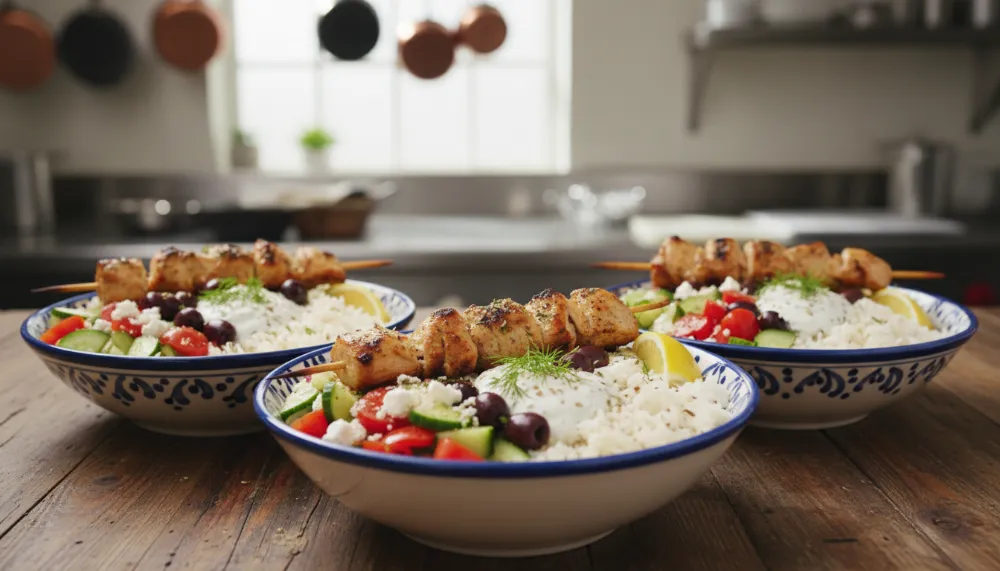
Greek Chicken Bowls represent a pinnacle of Mediterranean meal prep, blending succulent lemon-garlic chicken with the vibrant, crisp textures of fresh garden vegetables. This holistic meal provides a perfect balance of protein, healthy fats, and complex carbohydrates to keep you fueled throughout the day.
GREEK CHICKEN BOWLS
INGREDIENTS
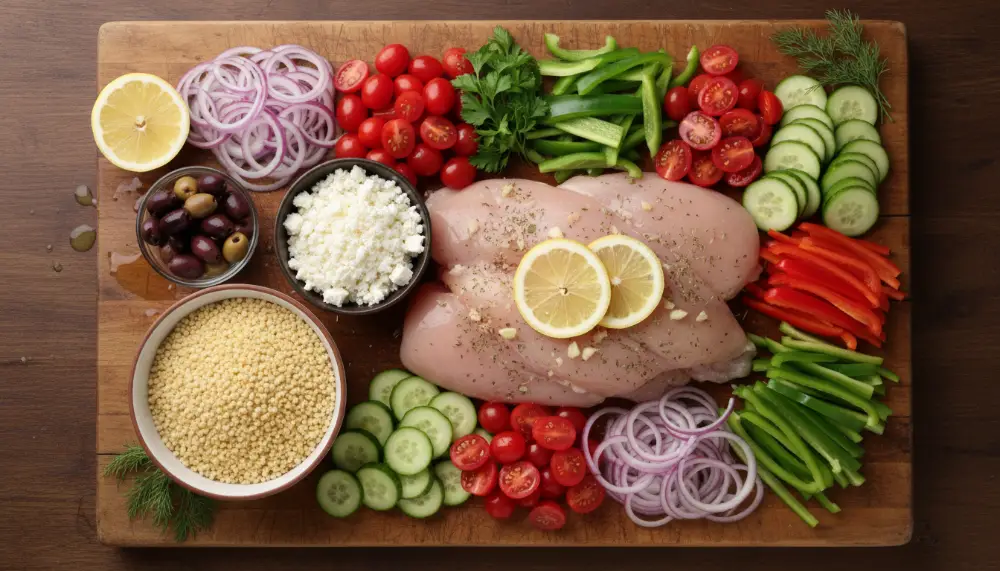
- 1.5 lbs Chicken Breast or Thighs, cubed
- 1/4 cup Extra Virgin Olive Oil
- 3 cloves Garlic, minced
- 2 tbsp Lemon Juice (plus zest)
- 1 tbsp Dried Oregano
- 2 cups Cooked Quinoa or Basmati Rice
- 1 large Cucumber, diced
- 1 cup Cherry Tomatoes, halved
- 1/2 Red Onion, thinly sliced
- 1/2 cup Kalamata Olives
- 1/2 cup Crumbled Feta Cheese
- 1/2 cup Tzatziki Sauce
INSTRUCTIONS
- In a large bowl, whisk together olive oil, lemon juice, garlic, and oregano. Add chicken and marinate for 30 minutes.
- Heat a skillet over medium-high heat. Cook chicken for 8-10 minutes until golden brown and cooked through.
- Assemble bowls by placing a base of quinoa or rice in each container.
- Top with cooked chicken, cucumbers, tomatoes, red onions, and olives.
- Garnish with feta cheese and a generous dollop of tzatziki sauce.
The Deep History of the Greek Chicken Bowl
The concept of the Greek Chicken Bowl is rooted in three primary historical pillars. First, the Ancient Foundations including Obelos and Kandaulos, the practice of grilling small pieces of meat on skewers dates back over 3,000 years. Archaeological excavations in Santorini have unearthed stone barbecue holders from the 17th century BC. Ancient texts, including the Iliad, describe obeliskos, small skewers, while the philosopher Athenaeus recorded a dish called kandaulos, consisting of grilled meat served with pita bread and cheese. This ancient heritage established the flavor profile we associate today with Greek Chicken Bowls, focusing on open-fire roasting and simple, high-quality seasonings like wild herbs and sea salt.
The second pillar is the rise of street food in the Hellenic world. The modern soul of the bowl comes from Souvlaki and Gyro. Souvlaki gained massive popularity in the 1960s as a portable fast food. While these were traditionally served as wraps or on skewers, the deconstructed platter, known as merida, paved the way for the bowl format. In Athens and Thessaloniki, diners began requesting these components without the bread to better appreciate the quality of the char-grilled meat and the freshness of the seasonal produce.
Finally, the modern adaptation of Greek Chicken Bowls emerged in the early 21st century as health-conscious diners sought to enjoy Mediterranean flavors without the heavy breading of a pita wrap. This transition replaced the bread with nutrient-dense grains like farro, quinoa, or rice. This shift aligned perfectly with the global grain bowl trend, making Greek Chicken Bowls a staple of contemporary meal prep and healthy lifestyle movements.
The Nutritional Profile of a Balanced Bowl
A standard Greek Chicken Bowl is considered a macro-balanced meal, providing a healthy distribution of proteins, fats, and carbohydrates. On average, a serving contains between 550 and 700 calories, making it a substantial but not overwhelming option for lunch or dinner. The protein content, usually ranging from 25g to 45g, is primarily sourced from lean chicken breast or thighs, which supports muscle maintenance and satiety.
Healthy fats are another cornerstone of this dish. Usually between 15g and 25g per serving, these fats are derived from extra virgin olive oil, which provides monounsaturated fats, as well as Kalamata olives and feta cheese. These fats are essential for nutrient absorption and heart health. Carbohydrates, typically between 40g and 60g, come from complex sources like brown rice, quinoa, or chickpeas, providing sustained energy throughout the day without the insulin spikes associated with refined sugars.
Mastering the Marinade: The Science of Flavor
The secret to exceptional Greek Chicken Bowls lies in the marination process. Acid is the primary driver of texture and flavor penetration. By using lemon juice or apple cider vinegar, you break down the tough surface proteins of the chicken, allowing the aromatics like garlic and oregano to seep deeper into the meat. For the best results, chicken should marinate for at least 30 minutes, though two hours is the sweet spot for maximum tenderness. Avoid marinating for longer than six hours, as the acid can eventually turn the texture of the meat mushy.
To achieve a professional-grade sauce for your bowls, we recommend using the – Ninja BN751 Professional Plus DUO Blender: https://amzn.to/3LCDyNR (Why Perfect: 1000W motor, perfect for tahini sauce and harissa paste). A smooth sauce is the bridge that connects the dry grains with the succulent chicken, and a high-powered blender ensures there are no chunks of garlic or undissolved spices.
Professional Flavor Variations
Professional chefs elevate the basic Greek Chicken Bowl by adjusting the marinade and grain base to create distinct regional profiles. Here are four ways to transform your standard recipe.
1. The Aegean Citrus Profile
This variation focuses on high acidity and bright, fresh notes. The marinade uses a blend of lemon zest, fresh dill, and apple cider vinegar. It is typically served over lemon-infused basmati rice and topped with pickled red onions and capers for a sharp, briny finish that cuts through the richness of the chicken.
2. The Spiced Anatolian Variation
Reflecting the historical influence of Asia Minor on Greek cuisine, this profile is warmer and more aromatic. Smoked paprika, cumin, and coriander are rubbed onto the chicken before roasting. Instead of traditional yogurt sauce, it features a garlic-tahini drizzle and roasted chickpeas. For perfectly roasted chickpeas, use the – Cosori 9-in-1 TurboBlaze Air Fryer 6 Qt: https://amzn.to/4hRWmVq (Why Perfect: Roasts chickpeas and vegetables perfectly, large family capacity).
3. The Herb-Heavy Mountain Style
Inspired by the inland regions of Greece where wild herbs are abundant, this variation uses a heavy concentration of dried wild oregano, thyme, and rosemary with crushed garlic. It is often served over farro or toasted orzo, accompanied by artichoke hearts and sun-dried tomatoes to provide deep, earthy flavors.
4. The Creamy Garden Variation
A texture-focused bowl designed for maximum richness without being heavy. The marinade uses Greek yogurt to tenderize the chicken, and the bowl is built on a bed of massaged kale and quinoa. Sliced avocado and a double-cream feta whip blended with fresh mint round out this decadent variation.
Meal Prep Mastery and Ingredient Preparation
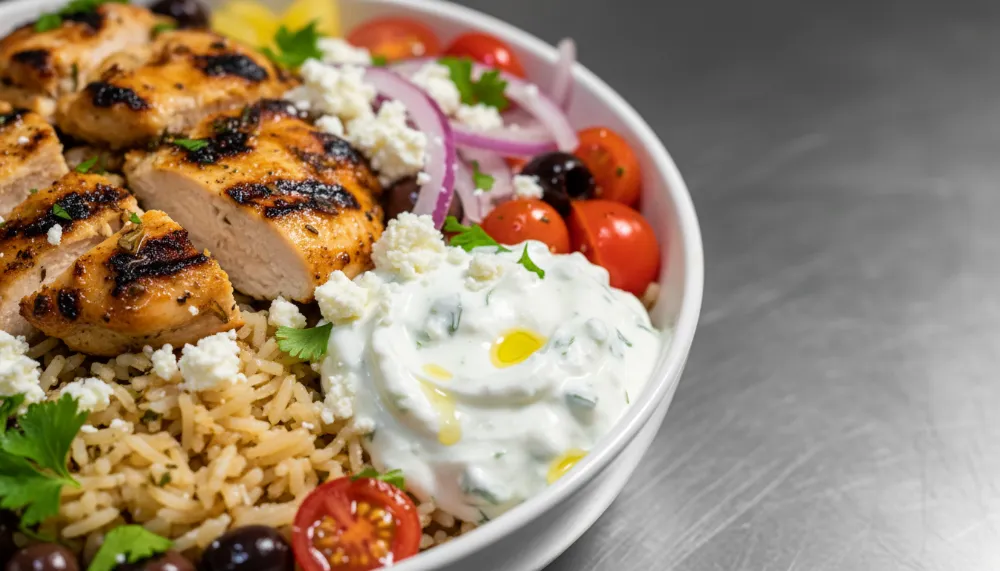
Preparation is the key to maintaining a healthy diet during a busy week. Utilizing a food processor can drastically reduce your prep time. The – Cuisinart 8 Cup Food Processor: https://amzn.to/47Nhbg8 (Why Perfect: Fast chopping and slicing, meal prep essential) is ideal for quickly dicing cucumbers and slicing red onions for the week ahead.
Once your components are prepared, storage is the next vital step. For Greek Chicken Bowls, it is best to store the wet components, like tzatziki and fresh tomatoes, separately from the grains and chicken to prevent sogginess. We suggest the – Rubbermaid Brilliance Glass Storage Set of 9: https://amzn.to/4oD0YkY (Why Perfect: Perfect for meal prep storage, leak-proof, stackable). These glass containers don’t absorb odors and keep your vegetables crisp for up to five days.
For long-term freshness of your marinated chicken, consider vacuum sealing. The – FoodSaver Vacuum Sealer Machine: https://amzn.to/4qWgVnS (Why Perfect: Keeps ingredients fresh longer, prevents freezer burn) allows you to prep large batches of marinated chicken and freeze them, ensuring that you always have high-quality protein ready to grill at a moment’s notice.
Storage and Reheating Guidelines
When storing your Greek Chicken Bowls, remember that the chicken and grains can be reheated, but the salad components should remain cold. Store your cooked chicken and rice in one compartment and your fresh cucumbers, tomatoes, and feta in another. If you are reheating, a quick 90 seconds in the microwave for the chicken and rice is sufficient. Always add the cold salad and tzatziki after reheating to maintain the contrast in temperatures that makes this dish so satisfying. Properly stored, the cooked chicken will stay fresh for 3 to 4 days in the refrigerator.