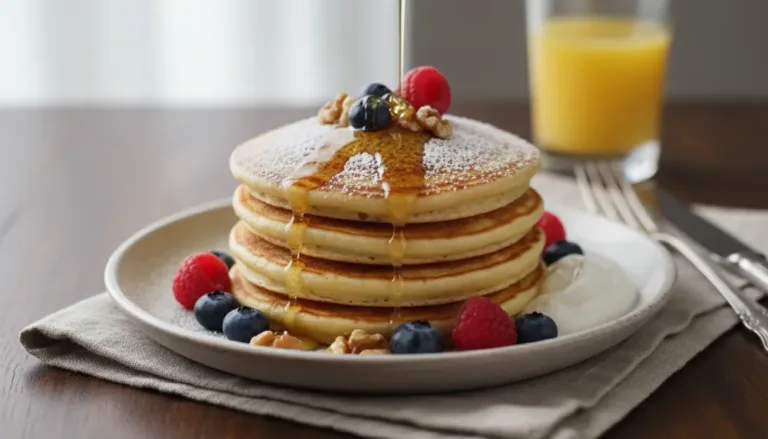
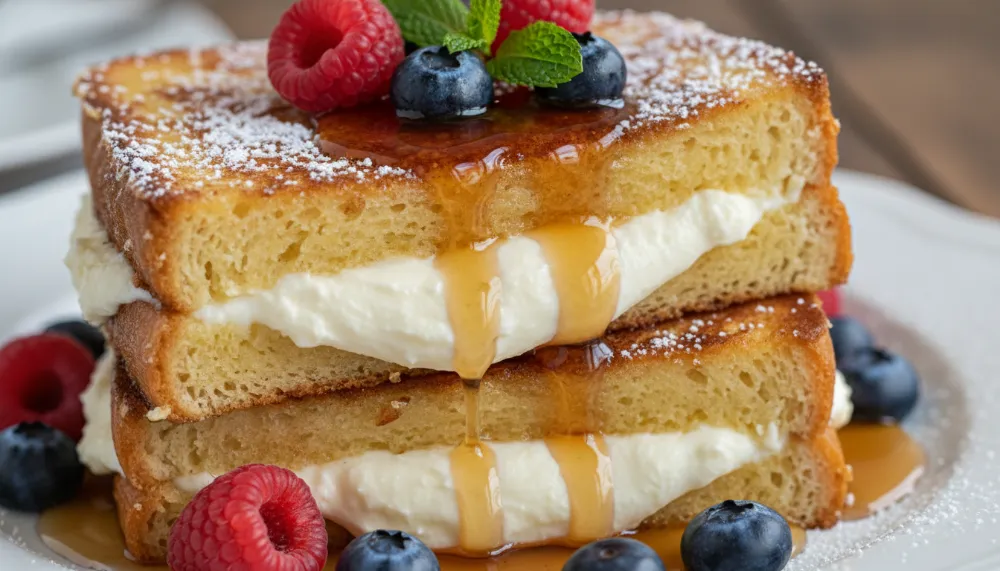
Indulge in the most decadent breakfast experience imaginable with this restaurant-quality Stuffed Cream Cheese French Toast, featuring a molten center and a golden, buttery crust. This recipe transforms thick-cut brioche into a gourmet centerpiece that balances silky cream cheese with the warm spice of cinnamon and nutmeg.

Stuffed Cream Cheese French Toast
Ingredients
- 1 4 Thick slices of Brioche or Challah (approx 2 inches thick)
- 2 8 oz Cream Cheese, softened at room temperature
- 3 2 tbsp Pure Honey or Maple Syrup
- 4 1 tsp Vanilla Extract and 1 tsp Fresh Lemon Zest
- 5 3 Large Eggs
- 6 1/2 cup Whole Milk or Heavy Cream
- 7 1 tsp Ground Cinnamon and 1/4 tsp Nutmeg
- 8 2 tbsp Unsalted Butter for the pan
Instructions
- 1 In a bowl, whip softened cream cheese, honey, vanilla, and lemon zest until completely smooth.
- 2 Cut a horizontal slit into the side of each thick bread slice to create a pocket, being careful not to cut all the way through.
- 3 Stuff approximately 2 tablespoons of the cream cheese mixture into each pocket. Press edges to seal.
- 4 Whisk eggs, milk, cinnamon, and nutmeg in a shallow dish.
- 5 Dip each stuffed slice into the custard for 20 seconds per side. Melt butter in a skillet over medium heat.
- 6 Fry for 3-4 minutes per side until golden brown and the cream cheese is warmed through. Serve hot.
The Rich History and Modern Evolution of French Toast
While we often associate Stuffed Cream Cheese French Toast with modern American brunch culture, the roots of this dish reach back nearly two millennia. The earliest recorded version of egg-soaked bread appears in the 4th-century Roman cookbook *Apicius*. Known as *aliter dulcia*, meaning “another sweet dish,” the recipe described white bread with the crusts removed, soaked in milk and beaten eggs, then fried and topped with honey. It was a practical solution for using stale bread, a theme that would carry through culinary history for centuries.
In medieval Europe, the dish was known as *pain perdu*, or “lost bread,” a French term highlighting the reclamation of bread that would otherwise be discarded. Other cultures adopted their own variations, such as the German *arme ritter* (poor knights) and the British “poor knights of Windsor.” It wasn’t until the 1700s that the name “French toast” became popularized in the United States. Legend suggests the name came from Joseph French, an 18th-century innkeeper in New York who advertised the dish but allegedly forgot the apostrophe in “French’s Toast.”
The Art of the Stuffing: Professional Techniques
Creating a truly exceptional Stuffed Cream Cheese French Toast requires more than just slapping cream cheese between two slices of bread. Professional chefs typically utilize one of two primary methods to ensure structural integrity and the perfect filling-to-bread ratio. The first is the “Sandwich Method,” where the filling is spread between two standard slices, which are then pressed together before dipping. However, the superior method for high-end brunch is the “Pocket Method.”
For the Pocket Method, you must use extra-thick slices of bread, ideally 2 inches thick. By using a paring knife to slice a slit through the top or side crust into the center of the crumb, you create a secure envelope. This ensures the cream cheese remains trapped during the frying process, resulting in a molten surprise when the guest cuts into it. To get the smoothest consistency for your filling, a tool like the Ninja BN751 Professional Plus DUO Blender is perfect for whipping cream cheese and fruit compotes into a velvet-like texture.

Flavor Profiles: Beyond the Basics
While vanilla and honey are classic, the versatility of cream cheese allows for an incredible range of flavor profiles. Professional chefs often elevate their Stuffed Cream Cheese French Toast with complex infusions.
Sweet Variations
- Zesty Lemon & Wild Berry: Incorporating lemon zest into the cream cheese provides a sharp contrast to the richness. You can even use the Cuisinart 8 Cup Food Processor to quickly pulse fresh raspberries and blueberries into a chunky compote for the filling.
- Orange-Pecan Marmalade: Fold orange marmalade and toasted chopped pecans into the cream cheese. Instead of alcohol-based extracts, use a reduction of fresh orange juice to brighten the flavor.
- Spiced Apricot & Almond: Mix cream cheese with apricot preserves and toasted slivered almonds, finishing the dish with a dusting of cardamom.
Savory Masterpieces: A No-Pork Exploration
The savory side of Stuffed Cream Cheese French Toast is where culinary creativity truly shines. Many traditional recipes rely on pork products like bacon or ham, but high-authority kitchens often pivot to beef and chicken to provide a deeper, more sophisticated umami profile.
One standout variation is Braised Beef Short Rib & Smoked Gouda. The beef is slow-cooked in a rich liquid of beef broth and balsamic vinegar, avoiding any wine or alcohol, until it is tender enough to shred. When mixed with herbed cream cheese and stuffed inside a brioche pocket, it creates a savory meal that bridges the gap between breakfast and dinner. For a lighter touch, consider Herbed Chicken & Fontina, using roasted chicken breast tossed with chive-infused cream cheese. This version is often served with a savory reduction of chicken jus rather than syrup.
Nutritional Insight and Ingredient Substitutions
Understanding the nutritional profile of Stuffed Cream Cheese French Toast helps in balancing a brunch menu. A professional serving usually contains between 450 and 620 calories. The richness comes primarily from the healthy fats in eggs and the dense protein of the cream cheese. By choosing whole-grain challah or adding nuts, you can increase the fiber and micronutrient content, including Calcium and Vitamin A.
For those avoiding specific ingredients, professional substitutions are key. If a recipe calls for a wine deglaze for a savory filling, replace it with apple cider vinegar or a high-quality beef broth. To mimic the saltiness of pork without using it, lean into high-quality beef pastrami or smoked turkey. These provide the necessary salt and smoke profile without deviating from dietary preferences. If you’re looking for a healthier cooking method, the Cosori 9-in-1 TurboBlaze Air Fryer 6 Qt can actually be used to “toast” the stuffed bread for a crispy exterior with significantly less butter than pan-frying.
The Secret to the Perfect Custard
The custard is the soul of Stuffed Cream Cheese French Toast. A common mistake is using too much milk, which leads to a soggy, “eggy” texture. The professional ratio is typically 2 to 3 eggs for every half-cup of dairy. Using whole milk or even heavy cream ensures a custard that sets properly upon contact with the heat. Adding a pinch of salt is also essential, as it enhances the sweetness of the maple syrup and the richness of the cheese. Always allow your bread to soak for at least 20 seconds per side, this ensures the custard penetrates the outer layers without turning the interior to mush.
Troubleshooting Your French Toast
If your French toast is burning on the outside while remaining cold in the middle, your heat is too high. The cream cheese filling requires a moderate, consistent temperature to warm through properly. Use a heavy-bottomed skillet to distribute heat evenly. If you are serving a large group, you can sear the stuffed slices in a pan for color and then finish them in a 350°F oven for 5 minutes. This ensures the center is piping hot and the cream cheese has reached that perfect, spreadable consistency.