Transform your mornings with this decadent Overnight French Toast Casserole, a make-ahead masterpiece that delivers a custard-like center and a golden, crunchy topping. It is the ultimate stress-free solution for holiday breakfasts and cozy family brunches.
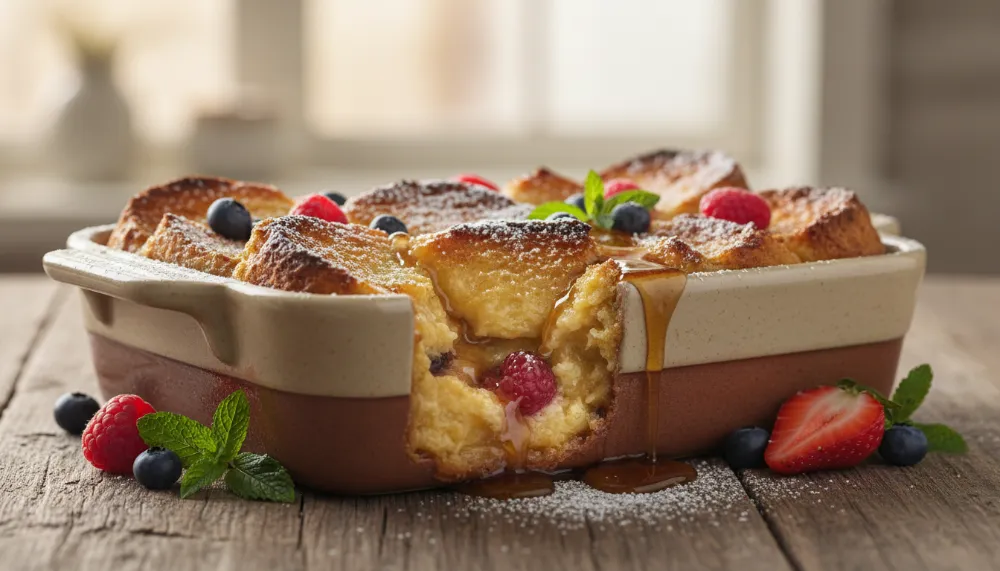
Overnight French Toast Casserole
Ingredients
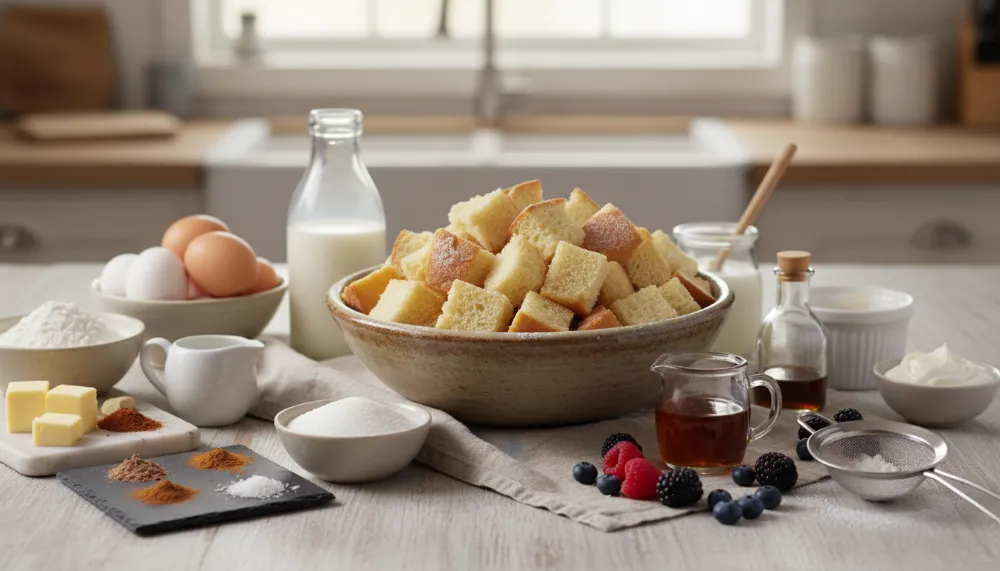
- 1 Large loaf of day-old Brioche or Challah bread, cubed
- 8 Large eggs
- 2 Cups whole milk
- 1/2 Cup heavy cream
- 1/2 Cup maple syrup
- 2 tsp Ground cinnamon
- 1 tsp Alcohol-free vanilla powder or essence
- 1/2 Cup Unsalted butter, melted (for topping)
- 1 Cup Brown sugar (packed)
- 1/2 Cup Chopped pecans
Instructions
- 1 Grease a 9×13 inch baking dish with butter. Place the cubed bread evenly into the dish.
- 2 In a large bowl, whisk together the eggs, milk, heavy cream, maple syrup, cinnamon, and vanilla powder until smooth.
- 3 Pour the custard mixture over the bread cubes, ensuring every piece is well-coated. Cover with foil and refrigerate for 8 hours or overnight.
- 4 Pre-heat oven to 350°F (175°C). Mix melted butter, brown sugar, and pecans in a small bowl.
- 5 Sprinkle the sugar mixture over the soaked bread. Bake for 45-50 minutes until golden and set.
The History and Evolution of French Toast
The Overnight French Toast Casserole is a modern culinary evolution that combines the ancient tradition of soaking bread with the mid-20th-century American “make-ahead” hosting culture. While we often associate this dish with French cafes, its roots go back much further, into the very heart of the Roman Empire.
The earliest known reference appears in the 4th-century cookbook Apicius, which describes a dish called Aliter Dulcia, meaning “another sweet dish.” Romans would take crustless white bread, soak it in a mixture of milk and beaten eggs, and then fry it in oil. To finish, it was doused in honey, creating a primitive but delicious version of what we eat today. Throughout the Medieval period, the dish spread across Europe as a vital way to use “lost” or stale bread, preventing food waste in an era where every calorie counted. In France, it became known as pain perdu, literally “lost bread,” while in England, it earned the chivalrous title of “poor knights of Windsor.”
The American name “French Toast” is actually somewhat of a misnomer. Legend suggests an 18th-century Albany, New York, innkeeper named Joseph French popularized the dish in 1724. Due to a grammatical error, he advertised it as “French Toast” rather than “French’s Toast,” and the name persisted in the American lexicon. The transition from individual slices to a baked Overnight French Toast Casserole took hold in the mid-20th century. As convenience cooking and brunch culture rose in the 1950s and 60s, home cooks adapted the labor-intensive stovetop method into a single-pan bake that could be prepped ahead for holidays, ensuring the host could enjoy the morning as much as the guests.
Why the “Overnight” Method is Superior
The science behind the Overnight French Toast Casserole lies in starch hydration. When you cook French toast on a griddle immediately after dipping, the egg mixture often only coats the exterior, leaving the center of the bread dry. By allowing the casserole to sit for 8 to 12 hours, the bread fibers have time to fully absorb the custard. This results in a texture that is remarkably similar to bread pudding, silky, rich, and consistent throughout.
Furthermore, the cold rest allows the gluten in the bread to relax, which prevents the casserole from becoming tough. As the bread hydrates, the proteins in the eggs and milk begin to bond with the starches, creating a structural matrix that puffs up beautifully in the oven. For the best results, using a high-quality blender like the Ninja BN751 Professional Plus DUO Blender ensures that your custard is perfectly emulsified, with the cinnamon and vanilla powder evenly distributed so every bite is packed with flavor.
Choosing the Perfect Bread
Not all bread is created equal when it comes to an Overnight French Toast Casserole. You need a bread with a tight crumb and a high fat content to stand up to the long soak without disintegrating into mush.
- Brioche: The gold standard. Its high egg and butter content provides a rich, buttery flavor and a sturdy structure.
- Challah: Similar to brioche but usually made without dairy, challah offers a beautiful braid and a fantastic ability to soak up liquids.
- French Bread or Baguette: These provide a chewier texture. If using these, ensure they are at least a day old to maximize absorption.
- Sourdough: For those who prefer a less sweet base, the tang of sourdough provides a sophisticated contrast to the maple syrup and sugar topping.
Using the Cuisinart 8 Cup Food Processor can be an essential tool here for fast chopping and slicing during meal prep, especially if you are incorporating fruits or nuts into your layers.
Gourmet Savory Variations: Replacing Pork
While many traditional breakfast bakes rely on pork sausage or bacon, the Overnight French Toast Casserole is incredibly versatile. To adhere to dietary needs while maintaining a high-authority flavor profile, we recommend savory substitutions that bring umami and depth.
A Sun-Dried Tomato and Beef Sausage variation is a crowd-pleaser. Replace pork with crumbled beef breakfast sausage seasoned with sage and black pepper. The richness of the beef pairs perfectly with the acidity of sun-dried tomatoes and sharp white cheddar. For a lighter touch, smoked chicken links offer a lean protein alternative that complements the creamy custard base. If you prefer a vegetarian route, sautéed cremini and shiitake mushrooms, prepared with a dash of vegetable broth, provide an earthy, meaty texture without the need for animal protein.

The No-Alcohol Flavor Secret
In high-end culinary circles, alcohol is often used to carry flavors, but it is entirely unnecessary for a world-class Overnight French Toast Casserole. Traditional vanilla extract contains alcohol, so for a pure and compliant recipe, we recommend using alcohol-free vanilla powder or a concentrated apple juice reduction.
To add complexity to savory versions, instead of white wine, use a splash of apple cider vinegar or a high-quality beef broth. These liquids provide the necessary acidity to cut through the heavy fats of the cream and eggs without the need for alcohol. For a sweet apple-cinnamon version, simmering apple juice until it reduces to a thick syrup creates a massive flavor punch that rivals any liqueur-based recipe.
Essential Tools for Success
To achieve the perfect texture, equipment matters. For reheating leftovers to their original crispy glory, the Cosori 9-in-1 TurboBlaze Air Fryer 6 Qt is an absolute game-changer. It roasts the topping and warms the center perfectly with its large family capacity, ensuring that second-day servings are just as good as the first.
Additionally, when preparing the streusel topping, using a food processor ensures the butter is cut into the sugar and flour perfectly, creating those sought-after “crumbs” that turn into a crunchy crust. A deep, heavy ceramic baking dish is also recommended for even heat distribution, preventing the edges from burning before the center is set.
Nutritional Overview
A standard serving of Overnight French Toast Casserole provides a robust nutritional profile. A typical 150g serving contains approximately 350 to 420 calories. It is a significant source of protein (10g to 14g), thanks to the heavy egg count and milk. It also provides about 17% of your daily value of Iron and 15% of Calcium. While it is a celebratory dish, these numbers can be adjusted by using skim milk or adding more lean beef or chicken proteins to the mix.
Troubleshooting and Tips
One common issue with the Overnight French Toast Casserole is a soggy bottom. This usually happens if the bread was too fresh or the milk-to-egg ratio was too high. Always use bread that is slightly stale, or toast your bread cubes in a low oven for 10 minutes before soaking. This “dries” the bread, making it act like a sponge for the custard.
Another tip is the “foil tent.” If you notice the top is browning too quickly but the center still feels liquid, loosely cover the dish with aluminum foil. This allows the internal temperature to rise and set the eggs without burning the sugar topping. Remember, the casserole will continue to set for 5 to 10 minutes after being removed from the oven, so do not overbake it!