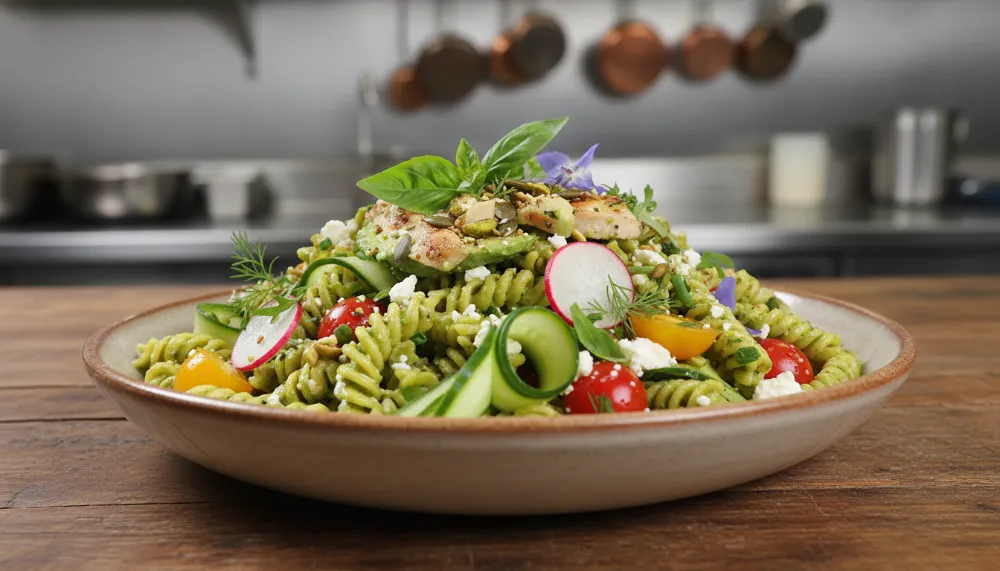
Elevate your next gathering with this vibrant green goddess pasta salad, a dish that combines a century of culinary history with fresh, modern ingredients. This herbaceous masterpiece offers a refreshing departure from heavy, mayonnaise-laden salads, delivering a nutrient-dense punch in every bite.
Vibrant Green Goddess Pasta Salad
Ingredients
- 1 16 oz box short-ridged pasta (Rotini or Fusilli)
- 2 1 cup Greek yogurt (plain, full fat)
- 3 1 large ripe avocado, pitted
- 4 1 cup fresh Italian parsley, packed
- 5 1/4 cup fresh tarragon leaves
- 6 1/4 cup fresh chives, chopped
- 7 2 cloves garlic, peeled
- 8 3 tbsp lemon juice (freshly squeezed)
- 9 2 tbsp apple cider vinegar
- 10 1/2 cup extra virgin olive oil
- 11 1 cup frozen peas, thawed
- 12 1 bunch asparagus, cut into 1-inch pieces
- 13 1/4 cup toasted pepitas (pumpkin seeds)
- 14 Salt and cracked black pepper to taste
Instructions
- 1 Cook the pasta in a large pot of salted boiling water until al dente. In the last 2 minutes of cooking, add the asparagus pieces to the pot.
- 2 Drain the pasta and asparagus, then rinse immediately with cold water to stop the cooking process. Drain well.
- 3 In a high-speed blender, combine Greek yogurt, avocado, parsley, tarragon, chives, garlic, lemon juice, vinegar, and olive oil. Blend until silky smooth.
- 4 In a large mixing bowl, toss the chilled pasta and asparagus with the peas and the creamy green dressing.
- 5 Season with salt and pepper. Top with toasted pepitas before serving.
The Fascinating History of Green Goddess Pasta Salad
While the green goddess pasta salad feels like a contemporary social media star, its roots reach back over a hundred years. The original flavor profile was born in 1923 at the legendary Palace Hotel in San Francisco. Executive Chef Philip Roemer was tasked with creating a signature dish to honor the actor George Arliss, who was staying at the hotel while performing in the play titled “The Green Goddess.”
Roemer’s original creation was a salad dressing inspired by the French “sauce au vert,” which was historically paired with eel. He took the basic concept of a green, herbaceous sauce and adapted it for the American palate using mayonnaise, chives, parsley, tarragon, and anchovies. Throughout the mid-20th century, the dressing became a symbol of California’s culinary innovation, appearing at dinner parties and high-end luncheons across the United States. It wasn’t until the modern era, however, that this dressing evolved into the base for the massive, veggie-packed pasta salads we love today.
Why This Recipe Works: The Science of Herbaceous Balance
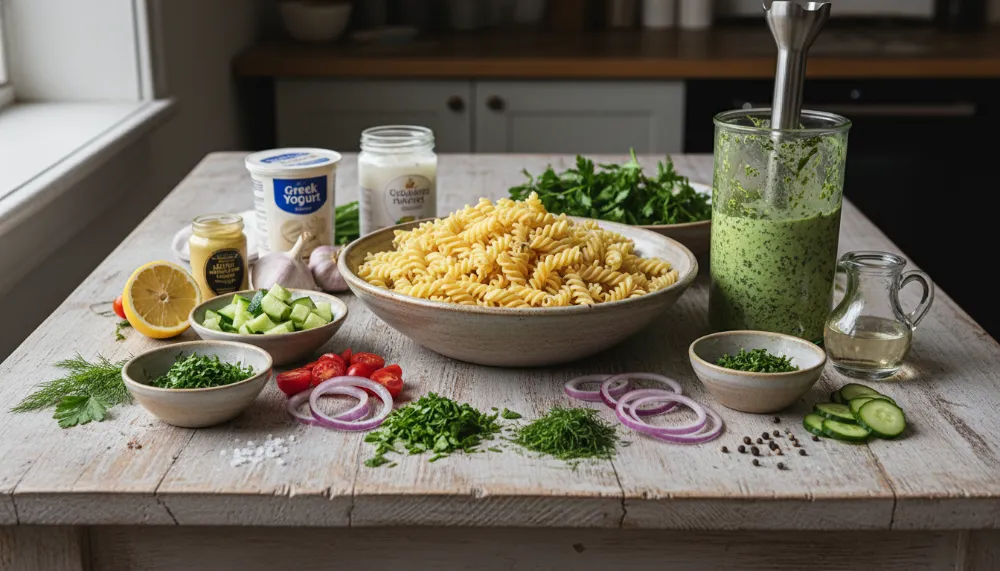
The success of a green goddess pasta salad depends entirely on the vibrancy of its dressing. Unlike a standard pesto, which relies heavily on basil and nuts, the green goddess profile is built on a complex blend of tender herbs. The addition of tarragon provides a unique, sophisticated anise note that distinguishes it from any other salad. By using a high-quality blender like the Ninja BN751 Professional Plus DUO Blender, you can ensure that the herbs are pulverized into a smooth, emerald-green emulsion rather than just being chopped. This allows the essential oils of the chives and parsley to fully integrate with the yogurt and avocado base.
Using Greek yogurt and avocado as a base instead of heavy mayonnaise provides a rich mouthfeel while keeping the dish light and nutrient-dense. The acidity from the lemon juice and apple cider vinegar acts as a brightener, cutting through the creaminess and ensuring the pasta does not taste heavy. Because we avoid alcohol-based vinegars, the apple cider vinegar provides a fruity, robust tang that complements the earthiness of the vegetables perfectly.
The Perfect Pasta Selection
When making a green goddess pasta salad, the shape of the noodle is not just an aesthetic choice, it is a functional one. You want a pasta that features ridges, nooks, and crannies to catch and hold the thick, creamy dressing. Fusilli, rotini, and gemelli are the gold standards for this recipe. The spiral shapes provide maximum surface area for the sauce to cling to, ensuring every bite is flavorful.
If you are looking for a more modern twist, consider using orecchiette, which acts as little “ears” or cups for the peas and dressing. Regardless of the shape, the secret to a great pasta salad is cooking the pasta in heavily salted water and pulling it out exactly at the al dente mark. Since the pasta will continue to absorb moisture from the dressing as it sits, starting with a firm noodle prevents the salad from becoming mushy by the time you serve it.
Vegetable Harmony and Textural Layers
A true green goddess pasta salad should be a celebration of textures. While the pasta provides the chew and the dressing provides the creaminess, the vegetables provide the snap. Blanched asparagus and English peas are the traditional choices, but the possibilities are endless. Many professional chefs incorporate snap peas, thinly sliced cucumbers, or even blanched broccoli florets to keep the monochromatic green theme while varying the bite.
To prepare your vegetables with professional speed and precision, the Cuisinart 8 Cup Food Processor is an essential tool for fast chopping and slicing during meal prep. It allows you to process large quantities of greens and vegetables in seconds, ensuring that your prep work doesn’t become a chore. For the best results, always blanch your green vegetables in boiling water for 60-90 seconds and then plunge them into an ice bath. This “shocks” the vegetables, locking in their bright green color and crisp-tender texture.
Pork-Free Savory Toppings for Extra Crunch
While many pasta salads rely on bacon for a salty finish, our green goddess pasta salad stays strictly pork-free while maintaining that essential savory crunch. One of the best ways to achieve this is by using the Cosori 9-in-1 TurboBlaze Air Fryer 6 Qt. You can use it to create crispy beef bresaola bits or even air-fried chickpeas that provide a satisfying pop. Simply slice thin pieces of beef or toss canned chickpeas with a little olive oil and salt, and air fry until crisp. These act as the perfect savory counterpoint to the fresh herbs.
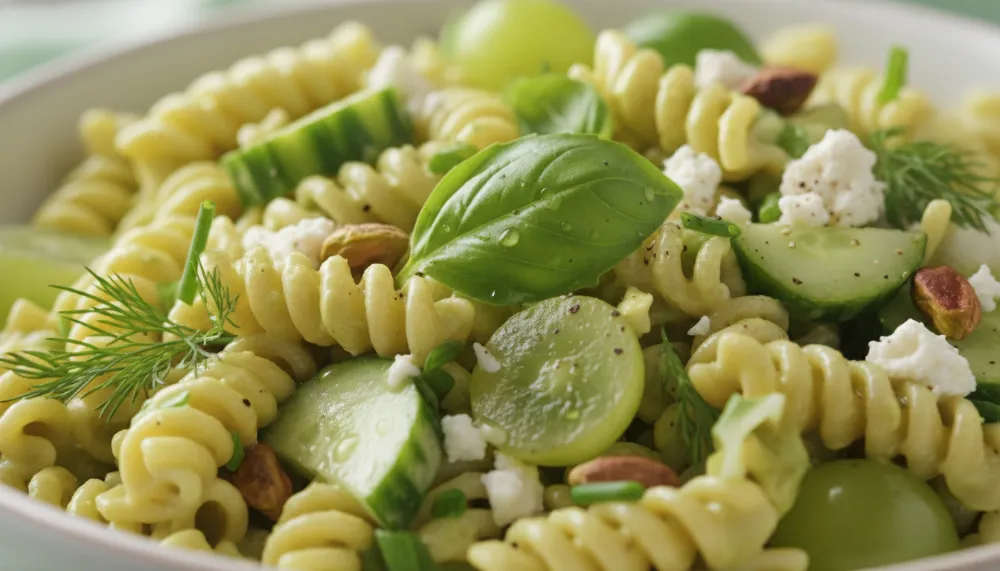
Another professional touch is the use of toasted seeds and nuts. Pepitas (pumpkin seeds) are a classic pairing for green goddess flavors, providing a nutty depth without overwhelming the herbs. You can also use toasted pine nuts or sliced almonds for a different texture. These toppings should always be added right before serving to ensure they stay crunchy.
Nutritional Benefits of the Green Goddess
This salad is a nutritional powerhouse. A single serving is packed with Vitamin K, which is essential for bone health and blood clotting, thanks to the heavy use of fresh parsley and chives. The avocado provides heart-healthy monounsaturated fats, which help your body absorb the fat-soluble vitamins found in the greens. By using Greek yogurt, we increase the protein content and add beneficial probiotics to the meal.
For those looking to boost the protein even further, grilled chicken breast or poached shrimp are excellent additions. Since we strictly avoid pork and alcohol, this recipe remains a clean, high-energy option for athletes or anyone looking for a wholesome lunch. The fiber from the pasta and the variety of vegetables ensures a slow release of energy, keeping you full for hours without the “food coma” associated with traditional heavy pasta dishes.
Storage and Meal Prep Tips
One of the best features of green goddess pasta salad is that it actually tastes better the next day. As the salad sits in the refrigerator, the flavors of the garlic, lemon, and herbs meld together and penetrate the pasta. However, keep in mind that the avocado in the dressing may oxidize slightly over time. To prevent this, ensure your dressing has enough acidity (lemon and vinegar) and store the salad in an airtight container with a piece of plastic wrap pressed directly onto the surface of the pasta.
If you are meal prepping for the week, keep the toasted nuts and any crispy beef bits in a separate container and add them only when you are ready to eat. This prevents them from becoming soggy. If the salad seems a bit dry after a day in the fridge, simply stir in a tablespoon of olive oil or a splash of water to loosen up the dressing and restore its creamy texture.
A Professional Finishing Touch
To truly make this dish stand out, don’t forget the garnish. A final sprinkle of lemon zest adds an aromatic lift that hits the nose before the first bite. You can also add a few whole leaves of fresh tarragon or chive blossoms if they are in season. The visual appeal of a bright, monochromatic green salad is undeniable, making it a centerpiece for any potluck or dinner table. By following these professional techniques and utilizing high-quality kitchen tools, you can transform a simple pasta salad into a gourmet experience that honors its San Francisco heritage while embracing modern health-conscious cooking.