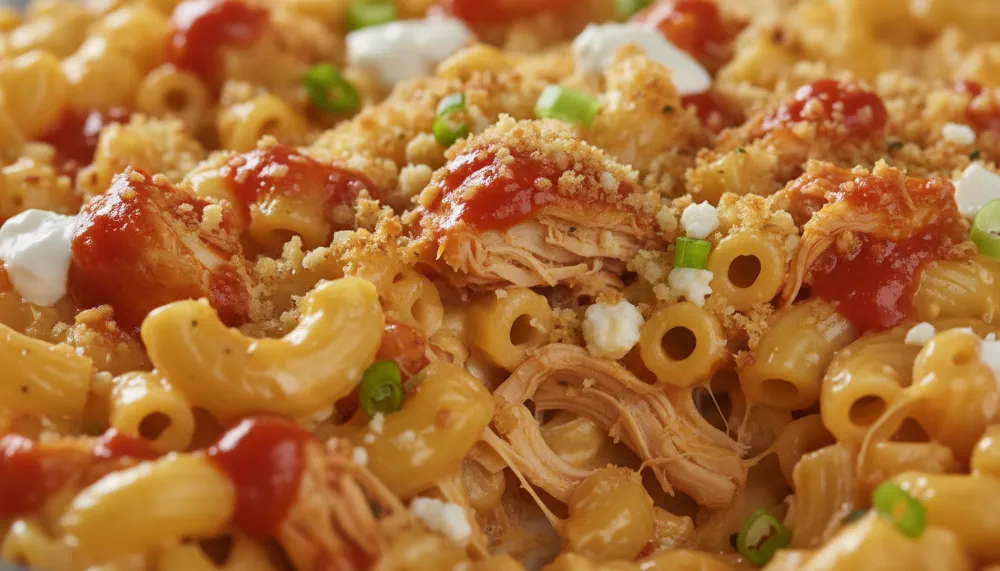
This Buffalo Chicken Mac and Cheese is the definitive fusion of spicy New York style heat and a decadent, multi-layered cheese sauce. It is a bold, velvety masterpiece that transforms the classic comfort of pasta into a high-octane culinary experience.

Buffalo Chicken Mac and Cheese
Ingredients
- 1 lb Cavatappi or Cellentani pasta
- 2 cups Cooked chicken thighs, diced or shredded
- 1/2 cup Buffalo hot sauce (Cayenne based)
- 4 tbsp Unsalted butter
- 1/4 cup All-purpose flour
- 3 cups Whole milk, room temperature
- 1 cup Heavy cream
- 8 oz Extra sharp white cheddar, freshly grated
- 4 oz Havarti cheese, freshly grated
- 4 oz Smoked Gouda, freshly grated
- 1/2 cup Beef bacon bits, crisped
- 1 cup Panko breadcrumbs toasted in butter
Instructions
- 1 Preheat oven to 375°F (190°C). Cook the pasta in salted water for 2 minutes less than the package directions for al dente.
- 2 Toss the cooked chicken with half of the buffalo sauce and set aside to marinate.
- 3 Melt butter in a large pot, whisk in flour, and cook for 1-2 minutes to create a light roux. Slowly whisk in milk and heavy cream until thickened.
- 4 Remove from heat and stir in the grated cheddar, Havarti, and Smoked Gouda until the sauce is silky. Whisk in the remaining buffalo sauce.
- 5 Fold the pasta and chicken into the cheese sauce. Transfer to a baking dish and top with panko and beef bacon bits. Bake for 20 minutes until bubbling.
The Historical Evolution of Buffalo Chicken Mac and Cheese
The culinary DNA of Buffalo Chicken Mac and Cheese is a fascinating study in American regional evolution. To understand this dish, one must travel back to 1964 at the Anchor Bar in Buffalo, New York. It was here that Teressa Bellissimo created the original Buffalo wing, tossing fried chicken in a mixture of butter and cayenne pepper hot sauce. What began as a late night snack for her son’s friends quickly became a cultural icon. By the late 1980s and early 1990s, the “Buffalo style” profile began to migrate, escaping the confines of the wing basket and entering the world of pasta, pizzas, and dips.
Today, Buffalo Chicken Mac and Cheese is viewed as a “comfort fusion” masterpiece. It bridges the gap between the sharp, vinegar-forward acidity of Northern New York flavors and the alkaline, rich creaminess of a traditional French Mornay sauce. In professional kitchens, this dish is no longer just a pub appetizer, it is a canvas for exploring complex textures and high-quality dairy blends. The evolution from a simple snack to a gourmet staple represents the American palate’s growing desire for dishes that provide both nostalgic comfort and aggressive, complex flavor profiles.
The Science of the Perfect Cheese Sauce
Creating a world class Buffalo Chicken Mac and Cheese requires more than just melting cheese into milk. It is a game of chemistry. A professional cheese sauce, or Mornay sauce, starts with a roux, a precise mixture of fat and flour. This roux acts as the emulsifier, ensuring that as the cheese melts, the fats do not separate from the liquids, which would result in a greasy, grainy texture.
To achieve the ultimate silkiness, professional chefs recommend using a high-powered tool for preparation. For instance, the Ninja BN751 Professional Plus DUO Blender (https://amzn.to/3LCDyNR) is exceptional for ensuring that additional flavor components, like roasted garlic or even a smooth buffalo emulsion, are perfectly incorporated without lumps. When selecting cheeses, the blend is paramount. We utilize Havarti for its incredibly low melting point and creamy mouthfeel, Extra Sharp White Cheddar for that essential acidic bite, and Smoked Gouda to provide a savory depth that mimics the traditional wood-fired flavors of high-end wing joints.

Selecting the Right Pasta Shape
Not all pasta is created equal when it comes to Buffalo Chicken Mac and Cheese. You need a shape with “architectural integrity,” something that can hold onto the heavy, viscous cheese sauce. Cavatappi, also known as Cellentani, is the gold standard. Its corkscrew shape and exterior ridges provide the maximum surface area for the sauce to cling to, ensuring that every bite is saturated with flavor. Other excellent choices include Radiatori, which looks like small radiators and is designed specifically to trap thick sauces, or a large Conchiglie (shells). Avoid thin or smooth pastas like Penne Lisce or Spaghetti, as the sauce will simply slide off, leaving you with a puddle of cheese at the bottom of the bowl.
Protein Preparation: The Case for Chicken Thighs
While many home cooks reach for chicken breasts, professional chefs almost exclusively use chicken thighs for this dish. Thigh meat has a higher fat content and a more robust flavor, which allows it to remain succulent even after being seared and then baked in the oven. To achieve the perfect texture, consider using the Cosori 9-in-1 TurboBlaze Air Fryer 6 Qt (https://amzn.to/4hRWmVq). Air frying the chicken pieces before adding them to the mac and cheese creates a slightly crisp exterior that stands up well against the moisture of the sauce. This technique ensures that the chicken isn’t just a soft filler, but a structural component of the dish.
Pork-Free Savory Upgrades: The Art of Beef Bacon
To maintain dietary compliance while still providing that essential salty, smoky crunch, we turn to premium pork-free alternatives. Beef bacon is an extraordinary substitute, it offers a deeper, more umami-rich flavor than traditional options. When rendered until crispy, beef bacon bits provide the necessary textural contrast to the soft pasta. Another chef secret is to use the Cuisinart 8 Cup Food Processor (https://amzn.to/47Nhbg8) to pulse crispy chicken skin or seasoned beef bresaola into a fine crumble. This can be mixed with your panko breadcrumbs for a topping that is intensely savory and entirely pork-free.
The Balance of Heat: Managing the Buffalo Profile
The “Buffalo” in Buffalo Chicken Mac and Cheese comes from a specific type of hot sauce, usually one made from aged cayenne peppers and vinegar. However, the acidity can sometimes split a delicate cheese sauce. To prevent this, it is best to marinate the chicken in the sauce separately and fold only a portion of the sauce directly into the cheese mixture. This “layered heat” approach ensures that the spice is integrated throughout the dish without overwhelming the dairy’s natural sweetness. If you find the sauce is too spicy, a drizzle of ranch-infused cream or a dollop of sour cream can act as a cooling agent, providing a necessary respite for the palate.
Storage and Reheating for Meal Prep
Buffalo Chicken Mac and Cheese is notoriously difficult to reheat because the pasta continues to absorb moisture as it sits, often leading to a dry leftovers experience. To mitigate this, proper storage is vital. Using the Rubbermaid Brilliance Glass Storage Set of 9 (https://amzn.to/4oD0YkY) helps maintain the moisture levels thanks to their airtight seals. For long-term storage, the FoodSaver Vacuum Sealer Machine (https://amzn.to/4qWgVnS) is a game changer, it prevents freezer burn and allows you to portion out the mac and cheese for easy, high-quality meals throughout the month. When reheating, always add a splash of milk or broth to loosen the sauce back to its original creamy state.
Nutritional Considerations
This dish is a powerhouse of macronutrients. A typical professional serving provides approximately 35g to 55g of protein, making it a satiating meal for active individuals. While it is high in calories and sodium, the use of high-quality, whole-food ingredients like real butter and freshly grated cheese (rather than processed “cheese products”) improves the overall nutrient density. The inclusion of chicken thighs and a multi-cheese blend also provides a significant amount of calcium and essential fats. To balance the richness, many chefs serve this alongside a crisp celery and carrot salad, which provides dietary fiber and a refreshing snap that cleanses the palate between bites.
Frequently Asked Questions (FAQs)
Can I use pre-shredded cheese?
In short, no. Pre-shredded cheeses are coated in potato starch or cellulose to prevent clumping in the bag. These anti-caking agents prevent the cheese from melting smoothly, resulting in a grainy sauce. For the best Buffalo Chicken Mac and Cheese, always grate your own cheese from the block.
What can I use instead of alcohol to deglaze the pan?
While some recipes call for beer or wine to add depth, you can achieve a similar complexity using chicken broth or a mixture of apple cider vinegar and water. This provides the necessary acidity to cut through the heavy fats without the need for alcohol.
How do I keep the mac and cheese creamy after baking?
The secret is to make more sauce than you think you need. The pasta will act like a sponge in the oven. By ensuring the mixture is slightly “soupy” before it goes in to bake, you will end up with a perfectly creamy result once it sets.