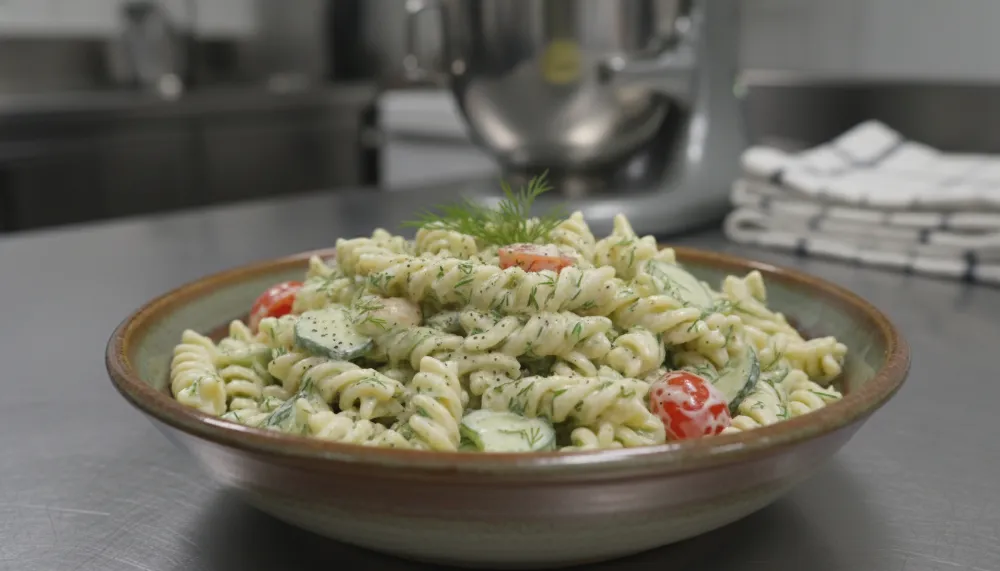
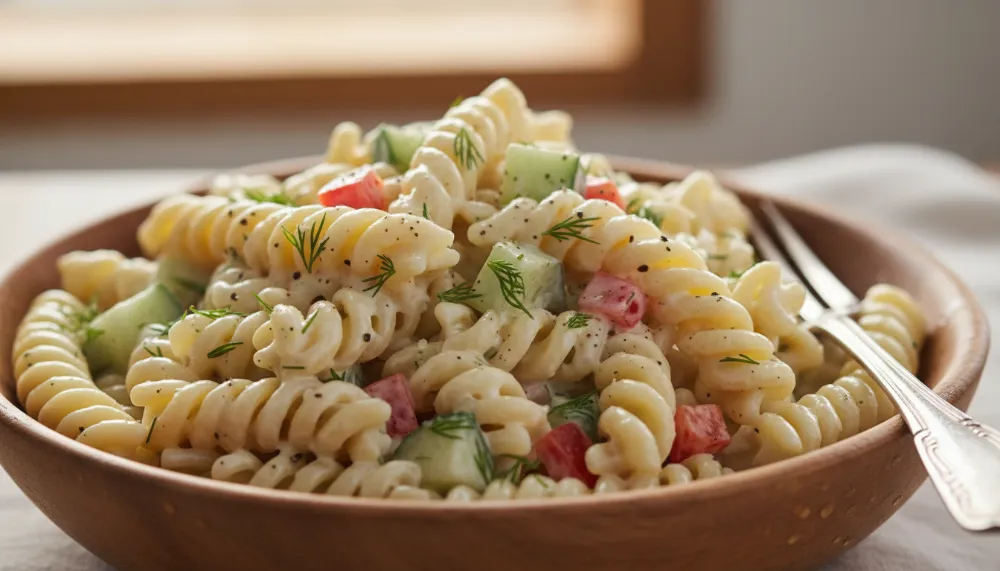
This creamy dill pasta salad is a refreshing fusion of zesty fresh herbs and a velvety smooth dressing that transforms a simple side dish into a gourmet experience. It is the perfect cooling companion for summer barbecues or a hearty, satisfying lunch that keeps well for days.
Creamy Dill Pasta Salad
Ingredients
- 1 16 oz box Rotini or Bowtie pasta
- 2 1 cup high-quality mayonnaise
- 3 1/2 cup Greek yogurt or sour cream
- 4 1/4 cup fresh dill, finely chopped
- 5 2 tbsp apple cider vinegar
- 6 1 tbsp Dijon mustard
- 7 1 tsp garlic powder and 1 tsp onion powder
- 8 1 cup English cucumber, diced
- 9 1/2 cup red onion, finely minced
- 10 1/2 cup frozen peas, thawed
Instructions
- 1 Boil the pasta in salted water until al dente, then drain and rinse with cold water to stop the cooking process.
- 2 In a large mixing bowl, whisk together the mayonnaise, Greek yogurt, vinegar, mustard, dill, and spices until perfectly smooth.
- 3 Add the cooled pasta, cucumbers, red onion, and peas to the bowl and fold gently to coat everything in the dressing.
- 4 Cover and refrigerate for at least 1 hour before serving to allow the flavors to meld together beautifully.
The Fascinating History and Evolution of Creamy Dill Pasta Salad
The concept of cold, dressed pasta has ancient roots, though the modern creamy version is a relatively recent evolution in the culinary world. Chilled pasta dishes, known in Italy as pasta fredda, date back centuries. Traditional recipes often utilized oil and vinegar to preserve ingredients, making them ideal for warm Mediterranean climates where refrigeration was once a luxury. These early versions focused on seasonal vegetables and aromatic herbs like dill, which was plentiful in the Mediterranean and Eastern Europe, often used to cut through the richness of local oils.
Food historians often trace cold pasta traditions back to Italian communities who prepared these dishes to be eaten on days when cooking was restricted due to religious observances or extreme heat. However, the creamy dill pasta salad we recognize today gained widespread popularity in the 1950s and 1960s in the United States. The commercial rise of shelf-stable mayonnaise and the availability of sour cream transformed the dish from a simple oil-based salad into a rich, substantial side dish that became a staple at communal gatherings and outdoor meals across the country.
Dill specifically became a signature flavor in the 1980s as the dill pickle pasta salad variant emerged, combining the creamy texture of American macaroni salad with the sharp, aromatic profile of European herb traditions. This fusion created a unique profile that appeals to both those seeking comfort food and those looking for a sophisticated, herb-forward palette. Today, creamy dill pasta salad remains a versatile bridge between traditional European side dishes and modern comfort food.
The Science of a Perfectly Balanced Creamy Dressing
To achieve the ultimate creamy dill pasta salad, the dressing must be more than just a mixture of ingredients, it must be an emulsion that perfectly coats the ridges of the pasta. The secret lies in the balance of fats, acids, and aromatics. Using a Ninja BN751 Professional Plus DUO Blender (available here: https://amzn.to/3LCDyNR) is highly recommended for this stage. Its 1000W motor is perfect for emulsifying the tahini or yogurt bases often found in professional variations, ensuring the fresh dill is finely incorporated without becoming a paste.
The acid component, whether it is lemon juice or apple cider vinegar, is crucial because it breaks down the proteins in the dairy, creating a thinner but more stable coating that won’t clump. In high-end culinary settings, chefs often avoid alcohol-based vinegars, opting for the bright, natural acidity of citrus or the earthy depth of apple cider vinegar to keep the flavors clean and vibrant. This technique ensures that the creamy dill pasta salad remains light on the palate despite its rich appearance.
Choosing the Right Pasta Shape for Optimal Flavor
Not all pasta shapes are created equal when it comes to a creamy dill pasta salad. The goal is to maximize the surface area for the dressing to cling to. Shapes with ridges, such as Rotini or Fusilli, are ideal because the spiral grooves act like tiny reservoirs for the creamy dill dressing. Farfalle, or bowtie pasta, is another professional favorite as the center pinch provides a satisfyingly firm texture while the “wings” hold onto the sauce.
When preparing the pasta, it is essential to cook it to a true al dente. Because the pasta will sit in a dressing that contains moisture, it will continue to soften over time. If you overcook it initially, the salad will become mushy within hours. To maintain that perfect bite, rinse the pasta under cold water immediately after draining. This removes the surface starch, preventing the pasta from sticking together, and ensures your creamy dill pasta salad has a clean, professional finish.
Essential Tools for Precision Prep
Efficiency in the kitchen is about having the right tools. When dicing your cucumbers, peppers, and red onions, a Cuisinart 8 Cup Food Processor (https://amzn.to/47Nhbg8) is essential for fast chopping and slicing during meal prep. It ensures that every piece of vegetable is uniform in size, which is a hallmark of a professionally prepared creamy dill pasta salad. Consistency in size means that every forkful provides a balanced ratio of pasta, vegetable, and dressing.
Nutritional Profile: Balancing Comfort and Health
A typical serving of creamy dill pasta salad provides a balanced profile of macronutrients. While it is often viewed as a treat, professional versions often use Greek yogurt to replace a portion of the mayonnaise, significantly increasing the protein content while reducing saturated fats. A standard one-cup serving contains approximately 30 to 45 grams of carbohydrates, primarily from the pasta, and 5 to 12 grams of protein.
The addition of fresh vegetables provides a wealth of micronutrients. For instance, the fresh dill is a surprising source of Vitamin C and Vitamin K, while bell peppers and cucumbers add hydration and antioxidants. By using whole-grain or pulse-based pasta, you can further increase the fiber content, making this creamy dill pasta salad a more sustaining meal option. If you are looking to add a crunch without the calories, roasting chickpeas in a Cosori 9-in-1 TurboBlaze Air Fryer 6 Qt (https://amzn.to/4hRWmVq) provides a perfect, high-protein topping that roasts vegetables perfectly with a large family capacity.
Professional Flavor Variations (Pork and Alcohol Free)
To elevate your creamy dill pasta salad, consider these professional variations that adhere to strict dietary guidelines while maximizing flavor. Each of these variations avoids pork and alcohol, focusing instead on high-quality proteins and fresh acids.
The Savory Beef and Peppercorn Variant
Instead of traditional ham or bacon, use thinly sliced, chilled roast beef or smoked beef brisket. This adds a deep, umami richness that pairs exceptionally well with the brightness of the dill. The dressing for this version should include a heavy dose of cracked black peppercorns and caramelized onions. The richness of the beef creates a steakhouse-style experience within the context of a creamy dill pasta salad.
Mediterranean Chicken and Lemon
This lighter, zestier take focuses on fresh poultry and citrus. Use shredded rotisserie chicken as your primary protein. For the dressing, incorporate tahini and Greek yogurt for a nutty, velvety texture. Replace any wine-based vinegars with freshly squeezed lemon juice to highlight the freshness of the chicken. Additions like cucumbers, cherry tomatoes, and kalamata olives make this a complete meal that feels both sophisticated and healthy.
The Garden Harvest Vegetarian Masterpiece
For a vegetarian option that doesn’t compromise on texture, utilize mashed avocado and sour cream for a vibrant green, buttery consistency. Use white vinegar and a splash of vegetable broth to thin the dressing, creating a luxurious mouthfeel without the need for alcohol. Blanched snap peas, radishes, and toasted sunflower seeds add the necessary crunch, making this creamy dill pasta salad a celebration of garden-fresh produce.
Pro-Tips for Making Ahead and Storage
The beauty of a creamy dill pasta salad is that it often tastes better the next day. As the dish sits, the pasta absorbs the flavors of the dill, garlic, and onion. However, the pasta also absorbs moisture, which can sometimes lead to a dry salad. If you are preparing this 24 hours in advance, consider making 25% more dressing than the recipe calls for. Keep this extra dressing in a separate container and toss it into the salad just before serving to revive that signature creaminess.
Always store your creamy dill pasta salad in an airtight glass container. Plastic can sometimes retain odors from the red onion and garlic, whereas glass keeps the flavor profile crisp and clean. When kept at the proper refrigerated temperature, this salad will remain delicious and safe to eat for up to four days, making it one of the most efficient meal-prep options in your culinary arsenal.