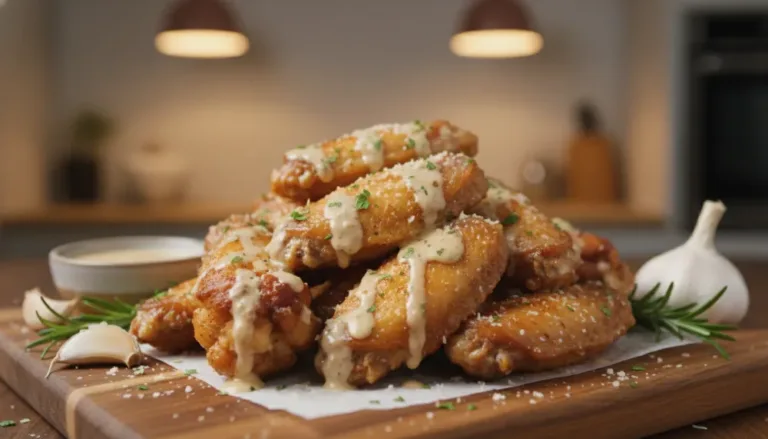
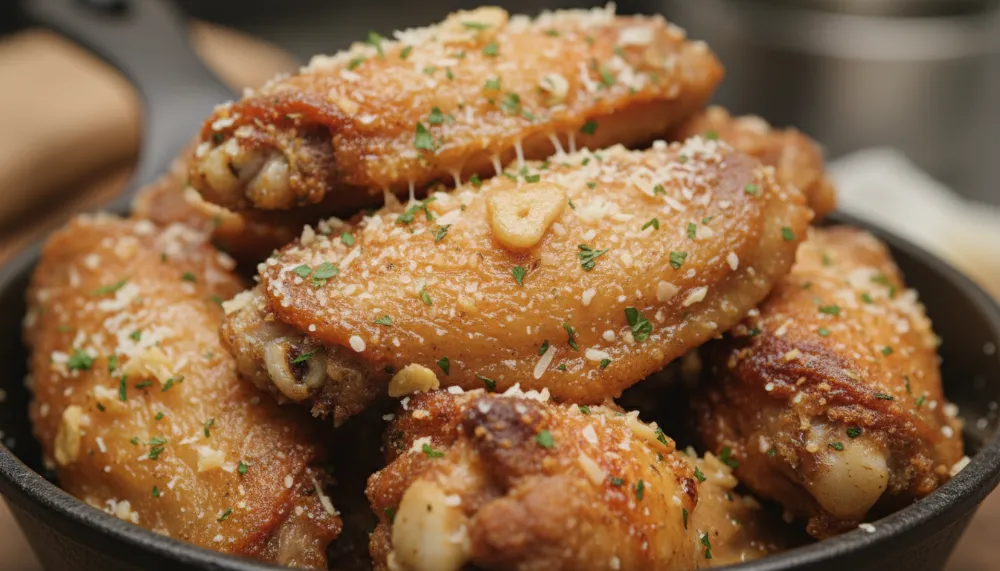
Forget the deep fryer because these Air Fryer Garlic Parmesan Wings deliver ultimate gourmet crunch and savory flavor with half the effort of traditional methods. They are the perfect solution for anyone seeking a restaurant-quality appetizer that prioritizes both texture and bold, cheesy aromatics.
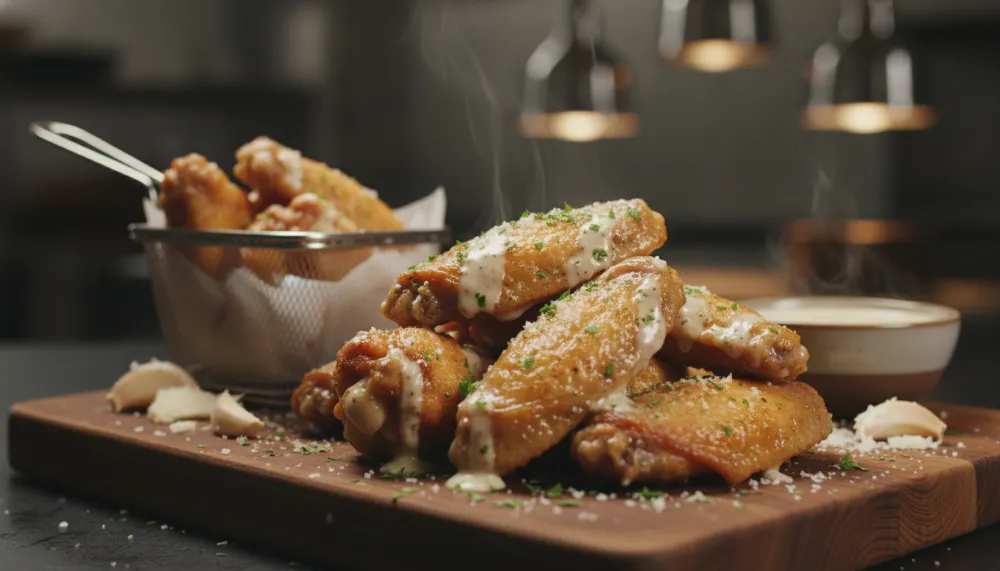
Crispy Air Fryer Garlic Parmesan Wings
Ingredients
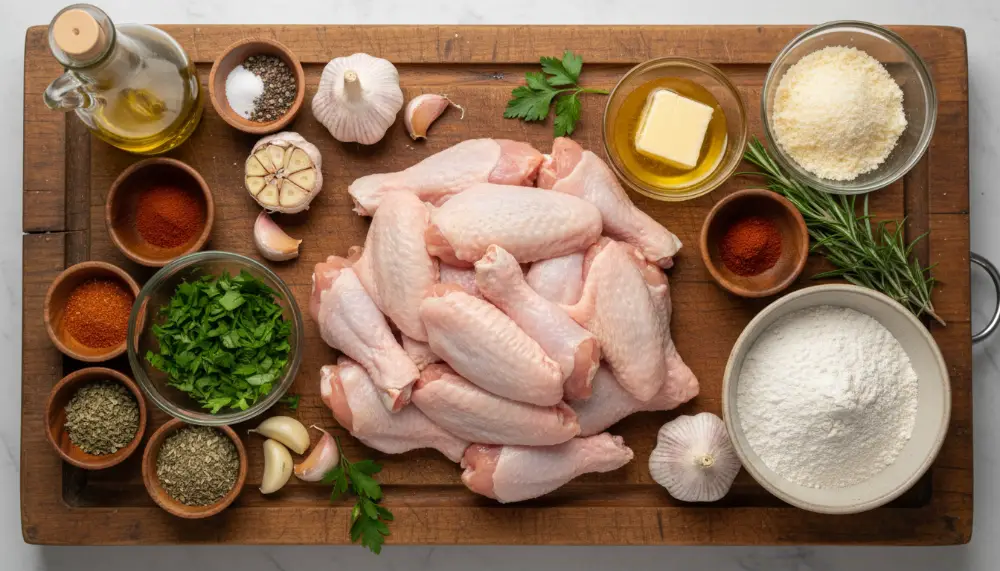
- 1 2 lbs Chicken Wings (split into flats and drumettes)
- 2 1 tbsp Aluminum-Free Baking Powder
- 3 1 tsp Garlic Powder
- 4 1/2 tsp Salt and Cracked Black Pepper
- 5 1/4 cup Unsalted Butter (melted)
- 6 4 cloves Fresh Garlic (finely minced)
- 7 1/2 cup Freshly Grated Parmesan Cheese
- 8 2 tbsp Fresh Parsley (chopped)
Instructions
- 1 Pat the wings completely dry with paper towels to ensure maximum crispiness.
- 2 In a bowl, toss wings with baking powder, garlic powder, salt, and pepper until coated.
- 3 Place wings in the air fryer basket in a single layer at 400°F for 20 to 25 minutes, flipping halfway.
- 4 In a large bowl, whisk melted butter, minced garlic, parmesan, and parsley.
- 5 Add the hot wings to the bowl and toss vigorously until every wing is glazed. Serve immediately.
The Fascinating Evolution of the Garlic Parmesan Wing
Air Fryer Garlic Parmesan Wings have evolved from a regional specialty into a global staple of casual dining. By utilizing air circulation rather than deep-frying, this preparation maintains the signature crispness while significantly reducing the oil content. While the original “Buffalo” chicken wing was famously created in 1964 at the Anchor Bar in Buffalo, New York, by Teressa Bellissimo, the Garlic Parmesan variation emerged later during the national “wing boom” of the late 1980s and 1990s. As the popularity of spicy wings grew, restaurants began diversifying their menus to include milder, savory alternatives. Rick Smichlas, founder of the Wild Wing chain, is often credited with popularizing the proprietary “Gar Par” (Garlic Parmesan) flavor, turning it into a staple item that balanced the pungent heat of fresh garlic with the salty umami of aged cheese. Today, it remains one of the most popular non-buffalo flavors in professional wing houses.
Nutritional Excellence and Modern Adjustments
Understanding the nutritional profile of your meal is key to modern home cooking. Per serving of approximately 4 to 5 wings, you can expect between 250 to 320 calories. The beauty of the air fryer method is that it renders out the internal fat from the chicken skin without adding the external trans fats found in deep-fryer oil. These wings are naturally high in protein, providing roughly 18 to 22 grams per serving, and are exceptionally low in carbohydrates, making them ideal for many contemporary eating plans. To ensure you are storing your meal prep wings correctly, consider using the Rubbermaid Brilliance Glass Storage Set of 9: https://amzn.to/4oD0YkY which is perfect for keeping ingredients leak-proof and stackable.
The Scientific Secret to Ultra-Crispy Air Fried Wings
The quest for the perfect wing always comes down to the skin. In a professional kitchen, achieving that “shatter-crisp” texture involves complex chemistry. When we add baking powder to the raw wing skin, we are essentially raising the pH level of the skin. This alkaline environment encourages the Maillard reaction, the chemical process that creates browning and deep flavor. Furthermore, the baking powder creates tiny bubbles on the surface of the skin, increasing the surface area and allowing the convection heat of the air fryer to dry it out more efficiently. For this process, a high-performance machine is required. We recommend the Cosori 9-in-1 TurboBlaze Air Fryer 6 Qt: https://amzn.to/4hRWmVq because it roasts proteins perfectly with its large family capacity and advanced airflow technology.
Fresh vs. Powder: The Garlic Dilemma
Many home cooks wonder if they should use fresh garlic or garlic powder. The answer is both. Using garlic powder in the initial dry rub allows the flavor to penetrate the skin as it cooks. However, the final toss requires fresh, finely minced garlic to provide that sharp, aromatic punch that defines the dish. To get the perfect mince on your garlic and herbs, the Cuisinart 8 Cup Food Processor: https://amzn.to/47Nhbg8 is a meal prep essential that handles fast chopping with ease.
Professional Chef Variations for Every Palate
Professional chefs often elevate the standard garlic-butter-cheese trio by introducing complex acids and fats. Below are variations that adhere to strict dietary requirements, ensuring no pork or alcohol is utilized in the process.
The Savory Beef Tallow & Roasted Garlic Variation
In high-end culinary settings, chefs may replace traditional butter with beef tallow to provide a deeper, more “steakhouse-style” savory note. Replace half the butter with rendered beef tallow. Instead of raw garlic, use a paste made from slow-roasted garlic cloves. This provides a rich, meaty flavor without the need for any pork-based fats. This variation pairs exceptionally well with a side of roasted root vegetables.
The Zesty Lemon-Peppercorn Variation
This version is designed to cut through the richness of the cheese with bright acidity. Add fresh lemon zest and a tablespoon of lemon juice to the garlic butter. Incorporate coarsely cracked black peppercorns for a floral heat. If the sauce becomes too thick, use a splash of chicken broth or white grape juice to emulsify the mixture, replacing the traditional white wine reduction often found in French-inspired wing sauces.
The “Beef Bacon” Smoky Garlic Twist
To achieve a smoky, salty crunch often found in bacon-topped wings, use a high-quality beef-based alternative. Finely mince beef bacon and fry until shatter-crisp. Fold these bits into the final parmesan coating. You can even use the rendered fat from the beef bacon as a base for your garlic sauce to intensify that smoky profile. To keep your beef bacon and chicken wings fresh for future sessions, use the FoodSaver Vacuum Sealer Machine: https://amzn.to/4qWgVnS to prevent freezer burn.
The Creamy Bistro Style
Common in gastropubs, this variation uses a creamy base for better sauce adhesion. Whisk together melted butter, grated cheese, and a small amount of sour cream or mayonnaise. For the acid component, add a teaspoon of apple cider vinegar or white vinegar to provide the necessary tang. This creates a thick, luxurious coating that clings to every crevice of the air-fried wing. If you need to blend a large batch of this creamy sauce, the Ninja BN751 Professional Plus DUO Blender: https://amzn.to/3LCDyNR with its 1000W motor is the perfect tool for the job.
Troubleshooting Your Air Fryer Wings
Even with a perfect recipe, things can go wrong. If your wings are soggy, the most common culprit is overcrowding the basket. Air fryers rely on rapid air circulation, if the wings are touching or overlapping, the steam gets trapped and prevents the skin from crisping. Always cook in batches if necessary. Another tip is to ensure your wings are room temperature before they hit the basket, as cold wings can cause the temperature of the air fryer to drop too significantly. Finally, ensure you are using real Parmesan cheese from a block, pre-shredded cheeses often contain potato starch or cellulose to prevent clumping, which can lead to a grainy texture rather than a smooth, melted glaze.