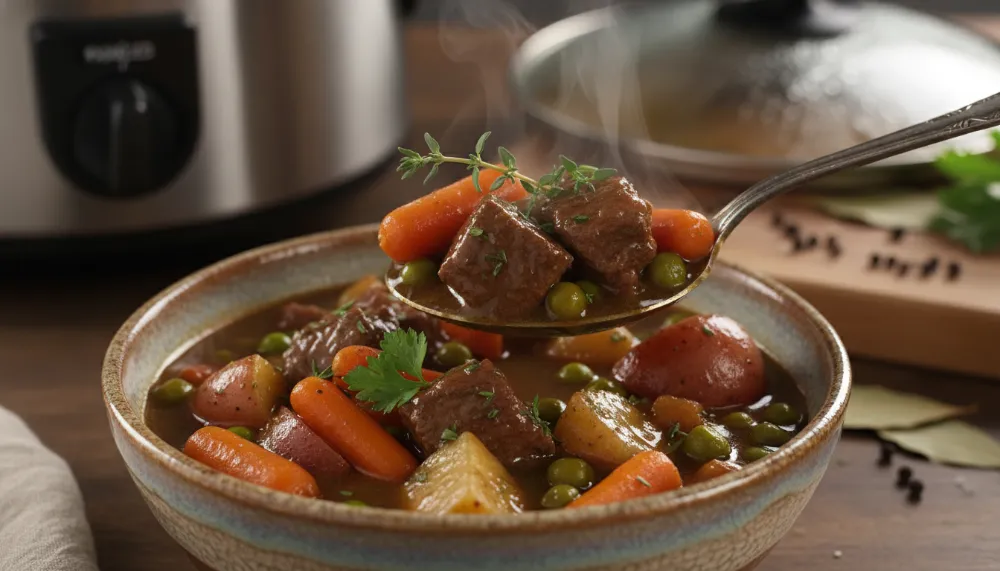
This slow cooker beef stew is the ultimate comfort food, delivering melt-in-your-mouth meat and a thick, savory gravy with almost zero effort. It is the definitive “set it and forget it” meal for busy families who refuse to compromise on professional-grade culinary quality.
Gourmet Slow Cooker Beef Stew
Ingredients
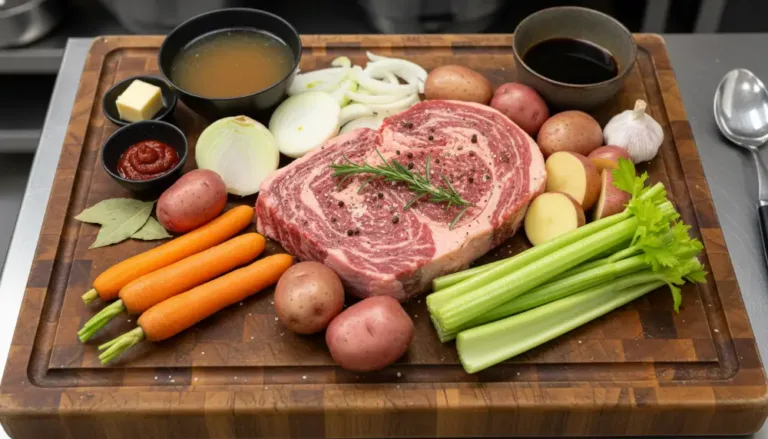
- 1 2.5 lbs Beef Chuck Roast, cut into 1.5-inch cubes
- 2 4 large Yukon Gold potatoes, cubed
- 3 4 large carrots, peeled and sliced into thick rounds
- 4 1 large yellow onion, diced
- 5 3 cloves garlic, minced
- 6 4 cups low-sodium beef bone broth
- 7 2 tbsp tomato paste
- 8 1 tbsp Worcestershire sauce
- 9 1 tbsp balsamic vinegar
- 10 1 tsp dried thyme and 1 tsp dried rosemary
- 11 1 tsp smoked paprika (for depth)
- 12 3 tbsp cornstarch mixed with 3 tbsp cold water (slurry)
Instructions
- 1 Season the beef cubes generously with salt and pepper. Optionally, sear the beef in a hot pan for 2 minutes per side to develop a crust.
- 2 Place the potatoes, carrots, onions, and garlic in the bottom of your slow cooker.
- 3 Layer the beef on top of the vegetables.
- 4 Whisk together the broth, tomato paste, Worcestershire sauce, balsamic vinegar, thyme, rosemary, and smoked paprika.
- 5 Pour the liquid mixture over the beef and vegetables. Cover and cook on LOW for 7-8 hours or HIGH for 4-5 hours.
- 6 Thirty minutes before serving, stir in the cornstarch slurry and cook on HIGH until the sauce thickens.
The Rich History of Slow Cooker Beef Stew
Slow cooker beef stew is more than just a convenient weekday dinner, it is a contemporary evolution of one of humanity’s oldest cooking techniques. The practice of simmering meat with vegetables over long periods has been a cornerstone of global cuisine for millennia. Historically, the practice of stewing dates back to ancient civilizations. One of the earliest recorded recipes appears in the Roman cookbook Apicius, which dates to the 4th or 5th century AD. These early Romans understood that tougher cuts of beef, when simmered with leeks, carrots, and onions, transformed into a delicacy that provided both warmth and essential nutrients.
By the 14th century, the concept of the slow-cooked stew was refined in France by royal chef Guillaume Tirel, famously known as Taillevent. His recipes for “ragouts” focused on maximizing the flavor of available root vegetables and utilizing the natural gelatin found in beef bones to create a thick, luxurious sauce. However, the true “slow cooker” revolution came through the 19th-century tradition of “cholent” in Vilna. Families would place pots of meat and vegetables in bakery ovens overnight to cook slowly, a method that directly inspired the invention of the modern Crock-Pot in 1971. Today, slow cooker beef stew remains the gold standard for home-cooked comfort, bridging the gap between ancient culinary wisdom and modern kitchen convenience.
Nutritional Profile: Why This Stew is a Powerhouse
When you prepare a slow cooker beef stew, you are creating a nutrient-dense powerhouse. A standard serving of this homemade stew provides a balanced macronutrient profile that fuels the body efficiently. High-quality beef chuck or round provides 25g to 35g of protein per serving, which is essential for muscle repair and satiety. Furthermore, the slow cooking process allows the vitamins from the carrots and potatoes to infuse into the broth rather than being lost to high-heat evaporation.
Carrots provide an incredible dose of Vitamin A, while the beef remains a primary source of iron and B-vitamins. By using beef bone broth instead of plain water, you also introduce minerals like calcium and phosphorus into the dish. Unlike store-bought canned versions, this homemade slow cooker beef stew is low in processed sodium and entirely free of artificial preservatives, making it a healthy choice for growing families.

Professional Secrets for Alcohol-Free Flavor
Traditional French stews often rely on red wine for depth, but you can achieve a professional-grade flavor profile without using a single drop of alcohol. The key is to replicate the tannic structure and acidity that wine provides. To create the “Vineyard” profile, chefs often use a blend of unsweetened tart cherry juice or pomegranate juice mixed with a tablespoon of balsamic vinegar. This combination provides the deep color and complex tartness that defines a world-class slow cooker beef stew.
Another secret lies in the “Umami-Rich” approach. Since we are avoiding pork products like bacon or lardons, we use smoked paprika and liquid smoke to replicate that characteristic smokiness. Additionally, incorporating two tablespoons of caramelized tomato paste and a splash of Worcestershire sauce will trigger the savory palate in a way that plain broth cannot. For even more depth, add dried porcini mushrooms, they will rehydrate during the 8-hour cooking cycle, adding an intense, earthy finish that rivals any high-end restaurant dish.
Essential Tools for Your Kitchen
To make the best slow cooker beef stew, having the right preparation tools is essential. Efficiency in the kitchen leads to better results and more enjoyment in the cooking process.
- Ninja BN751 Professional Plus DUO Blender: https://amzn.to/3LCDyNR (Why Perfect: Use this to blend a portion of your vegetables into a thick puree if you prefer a smoother, thicker gravy without using extra flour).
- Cosori 9-in-1 TurboBlaze Air Fryer 6 Qt: https://amzn.to/4hRWmVq (Why Perfect: While the stew cooks, use this to roast extra root vegetables or crispy beef garnish to add a texture contrast to your meal).
- Cuisinart 8 Cup Food Processor: https://amzn.to/47Nhbg8 (Why Perfect: This is a meal prep essential for slicing carrots and onions in seconds, ensuring uniform sizes for even cooking).
- Rubbermaid Brilliance Glass Storage Set: https://amzn.to/4oD0YkY (Why Perfect: These are leak-proof and stackable, making them the best choice for storing leftover stew in the fridge).
- FoodSaver Vacuum Sealer Machine: https://amzn.to/4qWgVnS (Why Perfect: If you make a massive batch of stew, vacuum sealing it prevents freezer burn and keeps the flavors fresh for months).
Flavor Variations: From Goulash to Earthy Herb
One of the best things about slow cooker beef stew is its versatility. You can easily pivot the flavor profile based on your mood or the season. For a global “Goulash” variation, replace the traditional herbs with a high-quality sweet and smoked paprika blend. Adding red bell peppers and a teaspoon of caraway seeds creates a thick, fragrant Central European sauce that is traditionally served over egg noodles.
If you prefer an aromatic, woodier flavor, focus on a “Bouquet Garni” of fresh rosemary and thyme. These herbs release their essential oils slowly over the course of 6 to 8 hours. A professional trick is to add a single star anise to the pot. It will not make the stew taste like licorice, instead, it rounds out the savory beefiness and adds a subtle, professional finish that will have your guests wondering what your “secret ingredient” is.

The Science of Meat: Why Chuck Roast is King
When selecting meat for your slow cooker beef stew, the cut matters more than the price. Slow cooking is a thermal process designed to break down collagen. Lean cuts, like sirloin, will actually become tough and dry if cooked for 8 hours. Instead, the chuck roast, which comes from the shoulder of the animal, is the gold standard. It is marbled with connective tissue that, when heated slowly, transforms into gelatin. This process not only makes the meat tender enough to cut with a spoon but also adds a silky, rich body to the stew’s gravy.
Managing Vegetable Texture
A common pitfall in slow cooker beef stew is ending up with mushy vegetables. To prevent this, always place your hardest vegetables, like carrots and potatoes, at the very bottom of the pot. These require the most direct heat. If you are adding more delicate vegetables like frozen peas or pearl onions, stir them in during the last 20 minutes of cooking. This ensures they maintain their bright color and structural integrity, providing a much better mouthfeel in the finished dish.
Final Tips for Success
Before you turn on your machine, remember the “browning” rule. While you can certainly dump everything into the pot raw, taking 5 minutes to sear the beef in a hot skillet with a little oil creates the Maillard reaction. This chemical reaction between amino acids and reducing sugars gives the stew a much deeper, more complex flavor profile. Finally, always “brighten” your stew at the end. After 8 hours of cooking, flavors can become muted. A small splash of apple cider vinegar or lemon juice right before serving will wake up all the savory notes and make the dish pop.