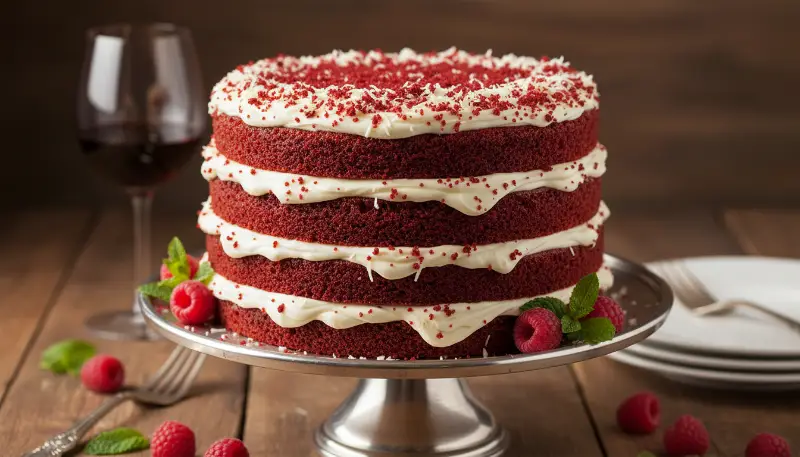
Red Velvet Cake is far more than just a chocolate cake dyed red, it is a sophisticated culinary masterpiece defined by its unique chemical reactions and luxurious texture. This guide explores the deep history and precise techniques required to master the perfect Red Velvet Cake while adhering to strict dietary preferences.
Signature Red Velvet Cake
20 MIN
35 MIN
12 PERS
Ingredients
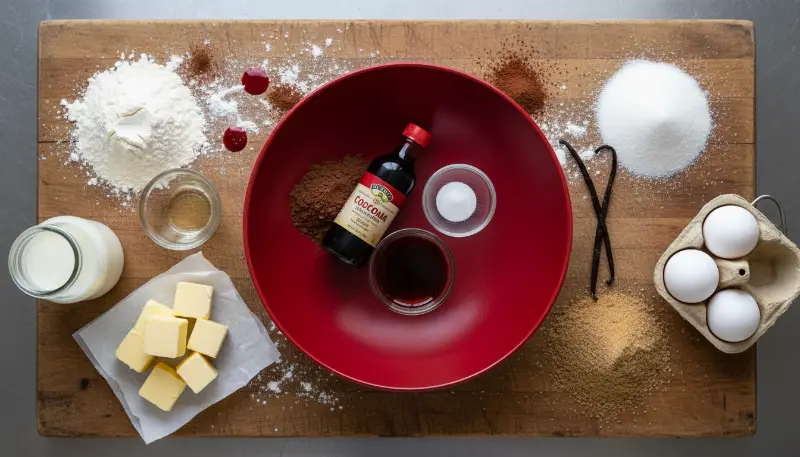
- 1 2 ½ cups cake flour, sifted
- 2 2 tbsp natural cocoa powder
- 3 1 tsp baking soda and 1 tsp salt
- 4 1 ½ cups sugar and 2 large eggs
- 5 1 ½ cups vegetable oil or rendered beef tallow
- 6 1 cup buttermilk and 1 tsp white vinegar
- 7 1 tsp alcohol-free vanilla bean paste
- 8 2 tbsp beet juice for coloring
Instructions
- 1 Preheat oven to 350°F and grease pans with beef tallow
- 2 Sift together the flour, cocoa, soda, and salt
- 3 Beat sugar, eggs, and fat until light and fluffy
- 4 Whisk in buttermilk, vinegar, alcohol-free vanilla, and beet juice
- 5 Fold dry ingredients into wet until just combined
- 6 Bake for 30-35 minutes and cool before frosting
The Fascinating History of Red Velvet Cake
The origin story of the Red Velvet Cake is a winding path that travels from the Victorian era to the glamour of 1930s New York City. In the 1800s, bakers began using cocoa powder to soften the protein in flour, creating a more delicate crumb known as “velvet” cake. This was a significant departure from the denser, coarser cakes common at the time. However, the Red Velvet Cake we recognize today, with its vibrant hue, emerged from a unique intersection of chemistry and commerce.
During the Great Depression, the Adams Extract company popularized the use of red food coloring to sell more extracts, but before that, the color was a natural byproduct. Natural cocoa contains anthocyanins, which are pH-sensitive pigments. When these pigments reacted with acidic ingredients like buttermilk and vinegar, they took on a reddish tint. This chemical reaction is the soul of any authentic Red Velvet Cake. Even without modern dyes, a traditional Red Velvet Cake would have a subtle, mahogany glow that distinguished it from a standard chocolate cake.
The Waldorf-Astoria Hotel in New York often claims to be the birthplace of the modern Red Velvet Cake, while others point to the Southern United States where it became a symbol of celebration and hospitality. Regardless of its specific geographic origin, the Red Velvet Cake remains a cornerstone of American baking tradition. For more historical context on classic desserts, you can explore our sitemap to find related articles.
The Science of the Crumb: Understanding the Velvet
The texture of a Red Velvet Cake is its defining characteristic. It is neither a sponge cake nor a pound cake, it exists in a silky category of its own. This is achieved through the interaction of buttermilk and vinegar with baking soda. This reaction produces carbon dioxide, which gives the Red Velvet Cake its lift, while the acidity helps keep the crumb tender by breaking down gluten strands.
When preparing the batter, using a high-quality tool like the Cuisinart 8 Cup Food Processor can help ensure that dry ingredients are perfectly aerated and combined before they meet the wet components. Sifting is non-negotiable when making a Red Velvet Cake. Because cocoa powder is prone to clumping, sifting it with the cake flour ensures that every bite of your Red Velvet Cake is uniform in color and texture. If you are prepping large batches of dry mix, storing them in a Rubbermaid Brilliance Glass Storage Set will keep the ingredients fresh and moisture-free.
Pork-Free and Alcohol-Free: Navigating Dietary Restrictions
Many traditional recipes for Red Velvet Cake or its frosting may inadvertently include restricted ingredients. For instance, some older Southern recipes might have suggested lard for moisture. In our version, we strictly replace any pork-derived fats with high-quality beef tallow or pure butter. Beef tallow provides a unique richness that mimics the traditional mouthfeel without violating dietary laws. It is essential to ensure that your fats are sourced correctly to maintain the integrity of the Red Velvet Cake.
Alcohol is another common hidden ingredient in Red Velvet Cake, usually found in vanilla extract. Traditional extracts use an alcohol base to carry the flavor. To keep this Red Velvet Cake alcohol-free, you must use vanilla bean paste or glycerin-based flavorings. Furthermore, if you are making a stabilized cream cheese frosting, ensure any gelatin used is beef-based rather than pork-based. This attention to detail ensures that the Red Velvet Cake remains inclusive for all who follow these strict guidelines.
Mastering the Crimson Color Naturally
While red food coloring is the standard in modern kitchens, many enthusiasts prefer a more natural approach for their Red Velvet Cake. Beet juice or beet powder is the most effective natural substitute. When using beet juice, the acidity of the buttermilk and vinegar is even more critical, as it helps preserve the beet’s red color during the baking process. Without enough acid, the natural pigments in a Red Velvet Cake might turn brown or grey in the oven’s heat.
To process your own beets for the most vibrant juice, the Ninja BN751 Professional Plus DUO Blender is an exceptional choice. Its 1000W motor can pulverize raw beets into a fine puree that can then be strained, giving your Red Velvet Cake a deep, earthy red that is both beautiful and free from synthetic dyes. For those who enjoy experimenting with roasted vegetable components in their baking, the Cosori 9-in-1 TurboBlaze Air Fryer can roast beets to concentrate their sugars and color before they are added to the Red Velvet Cake batter.
The Art of the Cream Cheese Frosting
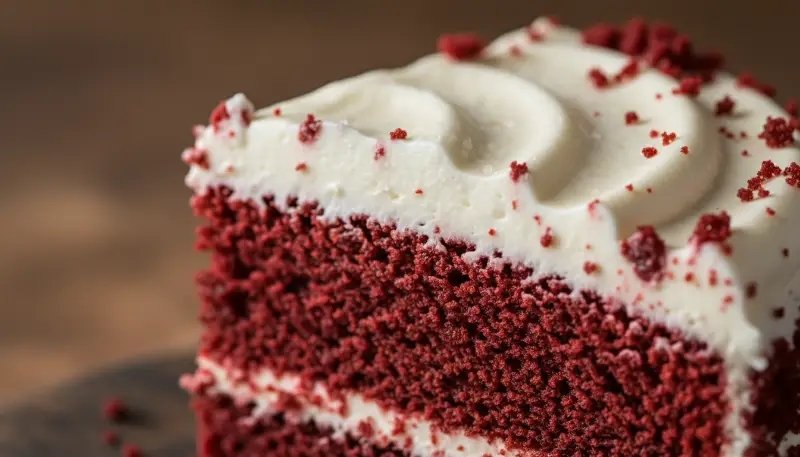
A Red Velvet Cake is incomplete without its crown of tangy cream cheese frosting. The contrast between the subtle cocoa of the cake and the sharp sweetness of the frosting is what makes the Red Velvet Cake so addictive. To achieve a professional finish, your butter and cream cheese must be at room temperature before mixing. This prevents lumps and ensures a spreadable, silky consistency.
For those who need their frosting to stand up to warm weather, using beef-based gelatin as a stabilizer is a fantastic trick. It provides the structure needed for elaborate piping without altering the flavor profile of the Red Velvet Cake. Once your cake is frosted, it should be kept chilled. Using a FoodSaver Vacuum Sealer Machine might not be for the whole cake, but it is perfect for sealing individual slices if you plan to freeze them for later enjoyment. For more tips on preserving desserts, check our latest updates on the sitemap.
Essential Tips for Success
When you set out to bake a Red Velvet Cake, patience is your best ingredient. One common mistake is overmixing the batter. Once the dry ingredients are added to the wet, you should fold them in gently until just combined. Overworking the flour will develop too much gluten, leading to a tough Red Velvet Cake rather than a velvety one.
Another tip is to use room temperature buttermilk and eggs. Cold ingredients can cause the fats in your Red Velvet Cake batter to seize, leading to an uneven bake. If you find yourself with leftover cake layers, you can crumble them to create decorative Red Velvet Cake dust, which adds a beautiful, professional touch to the final presentation. Proper storage in Rubbermaid Brilliance Glass Storage containers will ensure that even the leftovers remain moist for days.
Can I use Dutch-processed cocoa in Red Velvet Cake?
It is best to avoid Dutch-processed cocoa for a traditional Red Velvet Cake. Dutch cocoa is neutralized, meaning it won’t react with the acidic ingredients to produce that signature reddish tint. Natural cocoa is the key to both the flavor and the color of an authentic Red Velvet Cake.
How do I ensure my Red Velvet Cake is truly alcohol-free?
Check the labels of your flavoring agents carefully. Most standard vanilla extracts use an alcohol base. Look for “alcohol-free vanilla flavoring” or use vanilla bean paste. This ensures your Red Velvet Cake meets all dietary requirements without sacrificing flavor.
Why is my Red Velvet Cake brown instead of red?
This usually happens if the pH balance is off. If there isn’t enough acid (buttermilk or vinegar) to react with the natural cocoa or beet juice, the pigments will oxidize and turn brown. Always ensure your baking soda is fresh to maintain the correct reaction in your Red Velvet Cake.
In conclusion, the Red Velvet Cake is a triumph of culinary science and historical evolution. By choosing the right ingredients, such as beef tallow and alcohol-free vanilla, you can enjoy this classic dessert while respecting important dietary boundaries. Whether you are baking for a special occasion or simply indulging a craving, the Red Velvet Cake remains a timeless favorite that never fails to impress. For more inspirations, visit our sitemap.