Experience the absolute pinnacle of brunch sophistication with this decadent Eggs Benedict with Homemade Hollandaise, featuring velvety poached eggs and savory beef alternatives. This masterclass guide ensures a restaurant-quality result without the use of pork or alcohol, focusing on premium ingredients and perfected techniques.
Eggs Benedict with Homemade Hollandaise
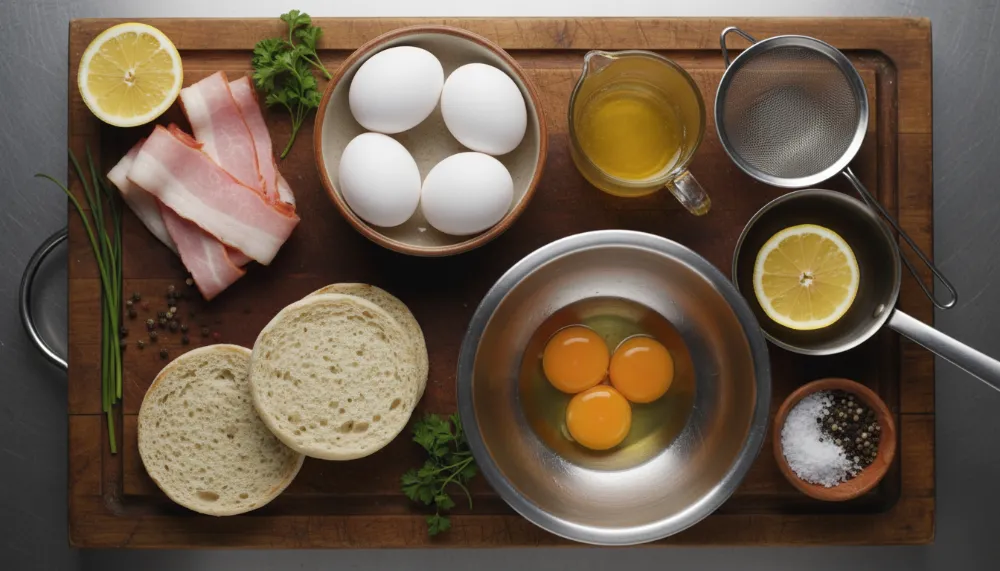
Ingredients
- 1 4 Large Grade A Eggs (Cold for poaching)
- 2 2 Toasted English Muffins (Split)
- 3 4 Slices Beef Bacon or Smoked Turkey Breast
- 4 3 Large Egg Yolks (For Hollandaise)
- 5 1/2 Cup Unsalted Butter (Melted and Hot)
- 6 1 Tablespoon Lemon Juice (Freshly Squeezed)
- 7 1/4 Teaspoon Cayenne Pepper and Salt to Taste
- 8 1 Tablespoon Distilled White Vinegar (For Poaching Water)
Instructions
- 1 Prepare the Hollandaise by placing egg yolks, lemon juice, and cayenne in a high-speed blender; blend on low to combine.
- 2 While the blender is running, very slowly drizzle in the hot melted butter until the sauce is thick, creamy, and emulsified.
- 3 Sear the beef bacon or turkey in a skillet until crisp and toast the English muffins until golden brown.
- 4 Bring a pot of water to a simmer with vinegar; create a gentle vortex and drop in the eggs, poaching for 3 minutes for a runny yolk.
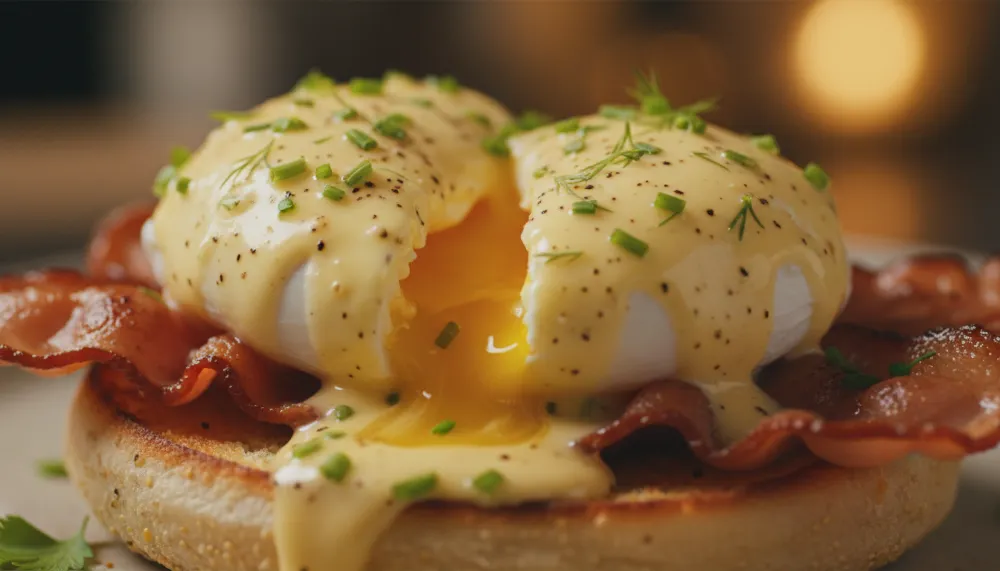
- 5 Assemble by placing the beef on the muffin, followed by the poached egg, and a generous ladle of Homemade Hollandaise.
The Historical Grandeur of Eggs Benedict
The story of Eggs Benedict with Homemade Hollandaise is one deeply rooted in the culinary evolution of New York City during the Gilded Age. While many dishes claim legendary status, the Benedict holds a unique position as the ultimate breakfast luxury. Two primary stories dominate its origin. The first involves Mrs. LeGrand Benedict, a regular at the famed Delmonico’s Restaurant in the 1860s, who requested a new lunch item from Chef Charles Ranhofer. His creation, originally known as Eggs à la Benedick, was a masterpiece of textures, the crunch of the muffin, the salt of the protein, and the richness of the yolk. The second account features Lemuel Benedict, a stockbroker who, in 1894, ordered a combination of poached eggs, toast, and Hollandaise at the Waldorf Hotel as a restorative measure. Regardless of which socialite truly inspired the dish, it remains a cornerstone of high-end dining today.
By removing pork and alcohol from this classic, we respect the original architectural integrity of the dish while adapting it for broader modern palettes. Substituting traditional ham with high-quality beef bacon or smoked turkey breast provides a deep, smoky profile that complements the citrus-forward Hollandaise perfectly. This transition does not diminish the dish, rather, it elevates it by allowing the high-quality beef fats to intermingle with the buttery emulsion of the sauce.
The Science of the Perfect Poached Egg
Achieving the perfect poached egg for your Eggs Benedict with Homemade Hollandaise is often seen as a daunting task, but it is purely a matter of fluid dynamics and temperature control. The goal is a teardrop-shaped egg with a fully set white and a warm, liquid gold center. To achieve this, freshness is paramount. As an egg ages, the proteins in the white break down, leading to those frustrating wisps that scatter in the water.
One professional secret is the fine-mesh strainer technique. By cracking your egg into a strainer first, you allow the watery part of the white to drain away, leaving only the firm, structural white. When this egg hits the water, it stays tight and cohesive. Adding a tablespoon of distilled white vinegar to the poaching water is another non-negotiable step. The acidity helps the proteins in the egg white coagulate faster, essentially shrinking the egg into itself before it has a chance to spread. Avoid using salt in the poaching water, as salt can actually break down the whites, creating a cloudy mess. Aim for a water temperature of roughly 180 to 190 degrees Fahrenheit, just below a rolling boil, to ensure a gentle cook that won’t tear the delicate membrane of the egg.
Mastering the Homemade Hollandaise: An Emulsion Masterclass
Hollandaise is one of the five French Mother Sauces, and for good reason. It is a temperamental but rewarding emulsion of egg yolks and liquid fat. In this recipe for Eggs Benedict with Homemade Hollandaise, we use a blender method to ensure stability and ease, making it accessible for the home cook while maintaining professional standards. Because we are avoiding alcohol, we omit the traditional white wine reduction and instead rely on the bright, sharp acidity of fresh lemon juice to cut through the richness of the butter.
The key to a successful Hollandaise is temperature management. If the butter is too cold, it won’t emulsify, if it is too hot, it will scramble the egg yolks. The ideal temperature for the butter is around 175 degrees Fahrenheit. As you drizzle the butter into the yolks, you are creating a suspension where tiny droplets of fat are surrounded by the emulsifying lecithin in the yolks. This creates that signature thick, pourable consistency. If your sauce begins to separate, or “break,” don’t panic. You can often rescue it by adding a teaspoon of warm water and whisking vigorously, or by starting with a fresh yolk and slowly drizzling the broken sauce into it.
Professional Tools for the Perfect Brunch
To achieve these results consistently, using the right equipment is essential. For the smoothest sauce and most efficient prep, consider these high-performance recommendations:
- Ninja BN751 Professional Plus DUO Blender: https://amzn.to/3LCDyNR (Why Perfect: Its 1000W motor provides the sheer power needed to create a perfectly stable Hollandaise emulsion in seconds.)
- Cosori 9-in-1 TurboBlaze Air Fryer 6 Qt: https://amzn.to/4hRWmVq (Why Perfect: Ideal for crisping up beef bacon or turkey strips without the mess of a stovetop, ensuring even browning every time.)
- Cuisinart 8 Cup Food Processor: https://amzn.to/47Nhbg8 (Why Perfect: A meal prep essential for slicing vegetables or preparing garnishes like chives and red onion.)
- Rubbermaid Brilliance Glass Storage Set of 9: https://amzn.to/4oD0YkY (Why Perfect: These are the gold standard for storing leftover Hollandaise or pre-cut ingredients, keeping them fresh and leak-proof.)
- FoodSaver Vacuum Sealer Machine: https://amzn.to/4qWgVnS (Why Perfect: Use this to keep your English muffins or premium beef cuts fresh for weeks, preventing any freezer burn.)
Premium Non-Pork Protein Alternatives
While the traditional recipe calls for Canadian bacon, the world of beef and poultry offers even more flavorful alternatives for your Eggs Benedict with Homemade Hollandaise. For a deeply savory and traditional feel, beef bacon is the premier choice. It offers a higher fat content than turkey, which renders down to provide a crunchy, salty base that stands up well to the heavy sauce. Alternatively, beef bresaola, an air-dried, salted beef, offers a more sophisticated, lean profile that is often found in high-end European bistros.
If you prefer a lighter option, smoked turkey breast or turkey bacon provides a clean, protein-forward foundation. For those looking to venture into the “Royale” territory, smoked salmon or lox is a classic non-meat substitute that pairs beautifully with the lemon notes of the Hollandaise. For a truly luxurious experience, consider using a pan-seared beef tenderloin medallion (known as Eggs Omar), which transforms the brunch staple into a hearty, steakhouse-style meal. Regardless of your choice, the key is to ensure the protein is served warm and seasoned properly to contrast the creamy egg and sauce.
Troubleshooting and Variations
Even seasoned chefs occasionally face challenges with Eggs Benedict with Homemade Hollandaise. The most common issue is the Hollandaise cooling too quickly. To prevent this, store your finished sauce in a warm thermos until you are ready to plate. This keeps the emulsion stable without additional cooking. Another common hurdle is the poached egg becoming waterlogged. Always drain your poached eggs on a paper towel for a few seconds before placing them on the muffin, this prevents the bread from becoming soggy and keeps the sauce from sliding off the egg.
Exploring Creative Variations
Once you master the base recipe, the variations are endless. The California Benedict replaces the meat with thick slices of ripe avocado and heirloom tomatoes, providing a fresh, creamy alternative. The Eggs Neptune uses lump crab meat or a crab cake as the base, which is an exceptional choice for a coastal-themed brunch. For those who enjoy a bit of heat, adding a teaspoon of chipotle in adobo to your blender Hollandaise creates a Southwestern flair that pairs beautifully with the beef bacon. Each of these variations maintains the core soul of the Benedict while allowing for seasonal and regional expression.
The Nutritional Profile of a Benedict
A serving of Eggs Benedict with Homemade Hollandaise is a calorie-dense, high-protein meal that provides significant energy. Using eggs and beef provides a complete amino acid profile, essential for muscle repair and cognitive function. The fats in the Hollandaise, while high, are primarily sourced from butter and egg yolks, which contain fat-soluble vitamins like A, D, E, and K. To balance the dish, many professional kitchens serve it alongside a crisp green salad or roasted asparagus, which adds necessary fiber and micronutrients to the plate without detracting from the indulgence of the main event.
By choosing high-quality fats and proteins, you ensure that every calorie counts towards a satisfying and luxurious dining experience. This dish is not just a breakfast, it is a culinary statement that proves you do not need pork or alcohol to achieve the highest levels of gastronomic success. Whether you are hosting a holiday brunch or treating yourself on a Sunday morning, this guide to Eggs Benedict with Homemade Hollandaise provides all the tools you need for perfection.