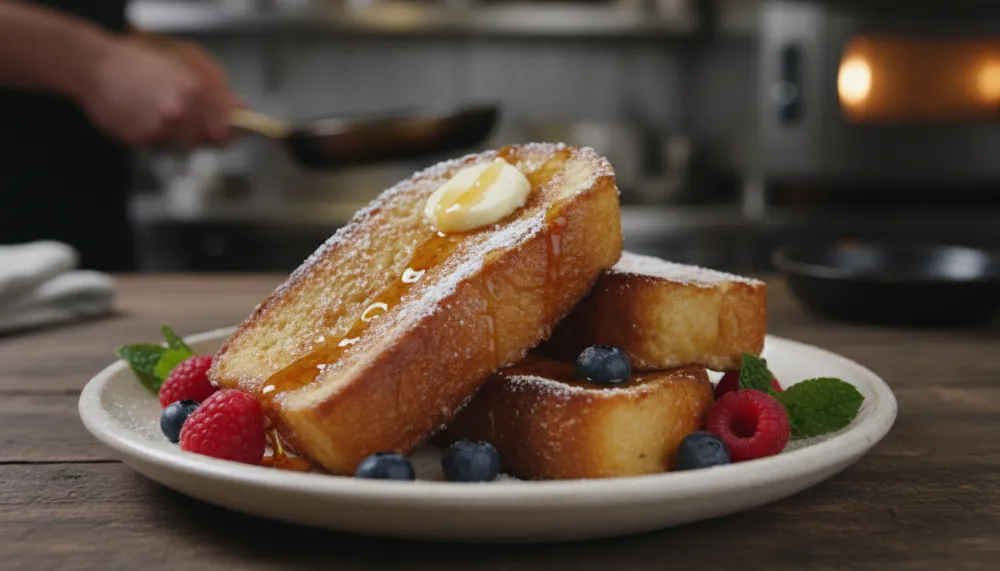
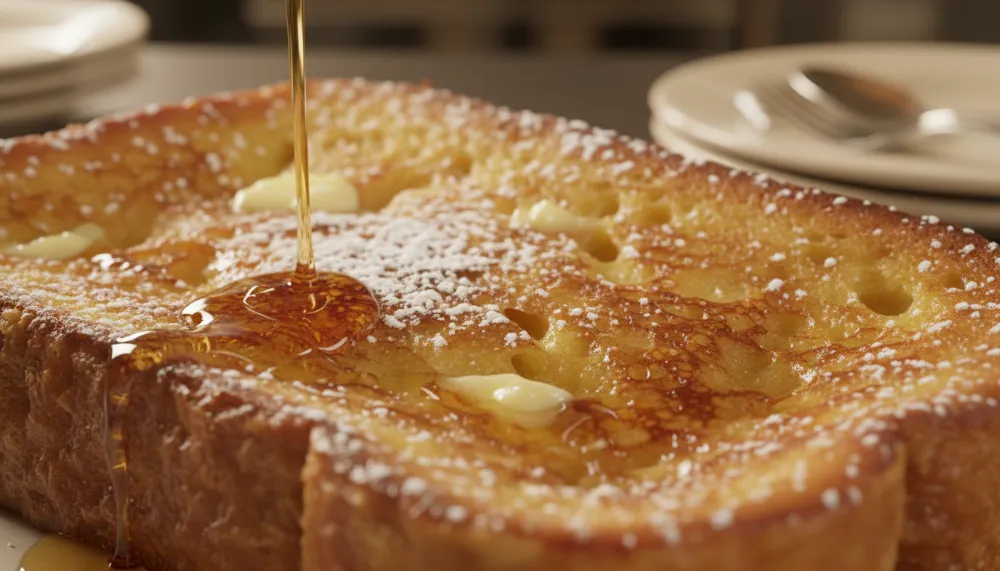
Classic Brioche French Toast is the undisputed king of brunch, offering a pillowy, buttery texture that standard bread simply cannot match. This guide reveals the professional secrets to achieving that iconic golden crust and custard-like center every single time.

Classic Brioche French Toast
Ingredients
- 1 Thick-cut Brioche loaf (approx. 1-inch slices)
- 4 Large Eggs
- 1 Cup Whole Milk
- 1/2 Cup Heavy Cream
- 2 Tbsp Granulated Sugar
- 1 Tsp Ground Cinnamon
- 1 Tbsp Vanilla Extract
- 2 Tbsp Unsalted Butter (for frying)
Instructions
- 1 Whisk together eggs, milk, cream, sugar, cinnamon, and vanilla in a shallow bowl until fully combined.
- 2 Dip each brioche slice into the custard for 30 seconds per side, allowing it to soak deep into the crumb.
- 3 Heat butter in a large skillet over medium heat until foaming.
- 4 Fry slices for 3 to 4 minutes per side until deeply golden brown and cooked through.
- 5 Serve immediately with maple syrup and fresh berries.
The Rich History of French Toast
While we often associate this decadent breakfast with the cafes of Paris, the true origins of Classic Brioche French Toast stretch back much further than the modern era. The earliest recorded instance of soaking bread in egg and milk appears in the 4th-century Roman cookbook, Apicius. The Romans called it aliter dulcia, which translates to “another sweet dish.” Even then, the culinary world understood that stale bread was a canvas for something magnificent.
By the medieval period in France, the dish became a clever solution for minimizing food waste. It was famously dubbed Pain Perdu, or “lost bread.” The idea was simple: revive hardened, inedible loaves by hydrating them in a rich custard and frying them to a crisp. However, it wasn’t until the 17th century in Normandy that the brioche loaf was perfected. With its high butter and egg content, brioche elevated the humble peasant dish into a luxury dessert enjoyed by the upper echelons of society. Today, using brioche is considered the gold standard for achieving a texture that is both sturdy enough to hold the custard and soft enough to melt in your mouth.
Why Brioche is the Ultimate Bread Choice
When making Classic Brioche French Toast, the bread selection is the most critical decision you will make. Unlike sourdough or standard white sandwich bread, brioche is an enriched dough. This means it contains a significantly higher ratio of fat, specifically from butter and egg yolks. This enrichment creates a tight but tender crumb that acts like a sponge, soaking up the custard without disintegrating into a soggy mess.
For the best results, always aim for slices that are approximately one inch thick. This thickness allows for a contrast in textures: a caramelized, slightly crispy exterior and a soft, pudding-like center. If your bread is too fresh, the moisture content might prevent it from absorbing the custard properly. Professional chefs often recommend leaving your brioche slices out on a wire rack overnight or giving them a quick 10-minute toast in a low-temperature oven to “stale” them artificially. This dehydration is key to a perfect soak.
The Science of the Perfect Custard
The custard for Classic Brioche French Toast is more than just mixed eggs and milk. It is an emulsion that requires the right balance of proteins and fats. While many home recipes use only milk, a professional-grade custard utilizes a combination of whole milk and heavy cream. The heavy cream adds a level of silkiness and fat that carries the flavors of vanilla and cinnamon throughout every bite.
To ensure your custard is perfectly smooth, I recommend using a high-powered blender. This prevents any “bits” of egg white from remaining unmixed, which can lead to unsightly white streaks on your finished toast.
- Ninja BN751 Professional Plus DUO Blender: https://amzn.to/3LCDyNR (Why Perfect: 1000W motor, perfect for creating a completely homogenous custard and smooth fruit syrups).
By blending your ingredients, you also aerate the mixture slightly, leading to a lighter, fluffier result after frying.

Professional Cooking Techniques
The cooking process is where many home cooks falter. The goal is to cook the egg-based custard all the way to the center of the thick slice without burning the outside sugar and butter. This requires patience and temperature control. Start with a cold pan and bring it up to medium heat. If the pan is too hot, the exterior will char before the middle is set, leaving you with a raw, eggy center.
Using a combination of butter and a tiny drop of neutral oil can prevent the butter solids from burning too quickly. You are looking for a deep, mahogany brown color. Once the toast is in the pan, resist the urge to move it. Let the sugars in the brioche and the custard caramelize properly. If you find your slices are particularly thick, you can finish them in a 350-degree oven for 5 minutes to ensure they are puffed and cooked through.
The Savory Side: No Pork, No Problem
While Classic Brioche French Toast is usually served sweet, the savory-sweet trend is massive in professional kitchens. Many people reach for bacon, but you can achieve incredible results without using any pork products. Thick-cut beef bacon is an exceptional alternative. When pan-fried until the edges are crispy and the fat has rendered, its smokiness provides a perfect counterpoint to maple syrup.
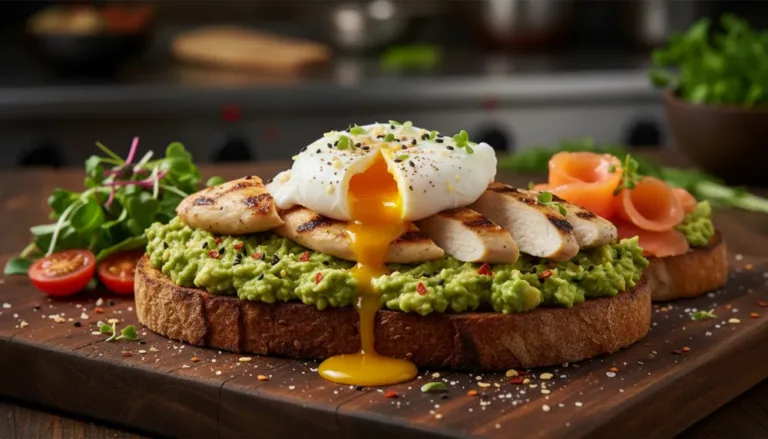
Another gourmet option is the Chicken and Brioche variation. Think of it as a refined version of chicken and waffles. You can use a panko-crusted chicken breast, fried to golden perfection, served atop a slice of brioche French toast. Instead of a traditional honey-bourbon sauce, create a spicy honey reduction using a touch of chicken broth and cayenne pepper for a deep, umami-rich finish without any alcohol.
Essential Tools for Brunch Success
To consistently produce restaurant-quality Classic Brioche French Toast, having the right equipment is non-negotiable. Beyond the blender for your custard, consider these essentials:
- Cosori 9-in-1 TurboBlaze Air Fryer 6 Qt: https://amzn.to/4hRWmVq (Why Perfect: Use the air fry function to perfectly crisp up beef bacon or to quickly dehydrate fresh brioche slices if you didn’t have time to stale them overnight).
- Cuisinart 8 Cup Food Processor: https://amzn.to/47Nhbg8 (Why Perfect: Essential for making quick fruit compotes or nut butters to top your toast).
- Rubbermaid Brilliance Glass Storage Set of 9: https://amzn.to/4oD0YkY (Why Perfect: Ideal for prepping your custard the night before or storing leftovers without them losing freshness).
- FoodSaver Vacuum Sealer Machine: https://amzn.to/4qWgVnS (Why Perfect: If you buy your brioche in bulk, vacuum sealing it ensures it doesn’t get freezer burn before your next big brunch).
Elevated Toppings and Flavor Profiles
The toppings are where you can truly show off your culinary creativity. While maple syrup is the classic choice, professional chefs often look for ways to add acidity and texture. A balsamic vinegar reduction (simmered until syrupy) is a fantastic replacement for alcohol-based glazes. Drizzle it over fresh strawberries on top of your French toast for a sophisticated, tangy twist.
For a nutty profile, skip the flavored liqueurs and use a blend of almond and hazelnut extracts in your custard. Top the finished dish with toasted pistachios or pecans for a crunch that contrasts with the soft bread. If you prefer a creamy element, whip some mascarpone cheese with a bit of honey and orange zest. The citrus notes provide a bright lift that cuts through the richness of the butter and cream.
Nutritional Deep Dive
Classic Brioche French Toast is undoubtedly an indulgent meal. A standard professional serving of one thick-cut slice provides approximately 300 calories, with a significant portion of those coming from the high-quality fats in the brioche and cream. However, it also offers a decent amount of protein (about 8-9g per serving) thanks to the eggs. By incorporating fresh berries and nuts, you can add fiber and essential micronutrients like Potassium and Iron to your morning meal.
If you are looking to manage the sugar content, you can easily substitute the granulated sugar in the custard for a natural sweetener like stevia, or simply rely on the natural sweetness of the brioche and the topping of fresh fruit. Since the recipe uses no pork and no alcohol, it is a versatile option for various dietary needs while remaining a luxurious treat.
Mastering the Make-Ahead Method
Can you make Classic Brioche French Toast ahead of time? Absolutely. In fact, many catering chefs prefer it. You can soak the bread and fry it until it is just golden, then let the slices cool. Store them in your Rubbermaid Brilliance Glass Storage containers in the fridge. When you are ready to serve, simply pop them into the Cosori Air Fryer for 3 minutes at 375 degrees. This will crisp up the exterior and heat the center perfectly, making it easier to serve a large group all at once.
The custard itself also benefits from sitting. If you mix your custard 24 hours in advance, the cinnamon and vanilla flavors have more time to infuse into the dairy, resulting in a more complex and aromatic flavor profile. Just be sure to give it a quick whisk or a spin in the Ninja Blender before dipping your bread to ensure the cinnamon hasn’t settled at the bottom.
Summary of Pro Tips
To recap, the path to the perfect Classic Brioche French Toast involves: using thick-cut, slightly stale brioche, creating a high-fat custard with cream and whole milk, maintaining a steady medium heat during frying, and choosing high-quality toppings. By avoiding pork and alcohol, and focusing on fresh, flavorful ingredients like beef bacon or balsamic reductions, you create a dish that is inclusive, professional, and absolutely delicious.