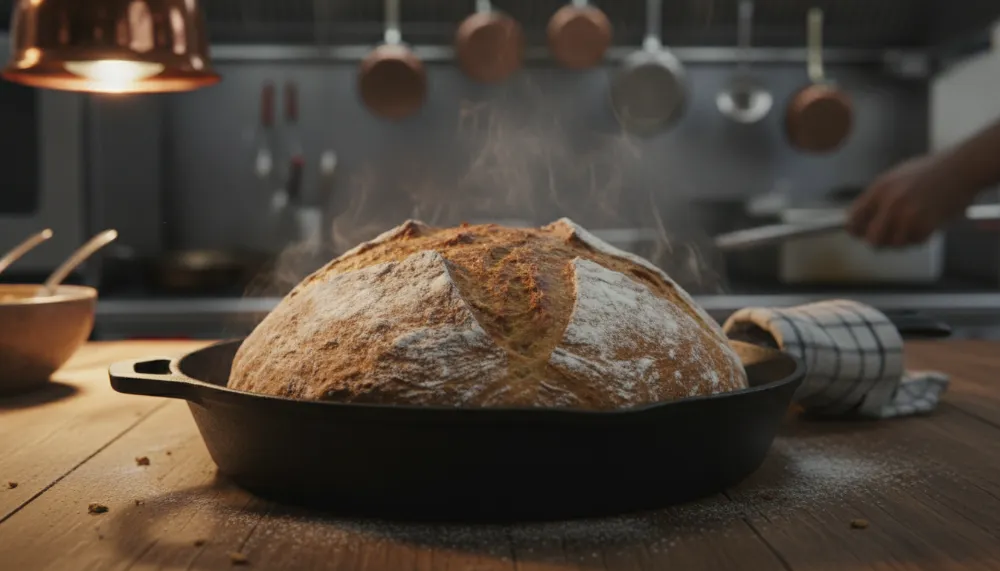
Discover the rustic charm of the ultimate Cast Iron Irish Soda Bread, a dense, crusty loaf that brings the heart of Irish tradition straight to your kitchen table. This no-knead, no-yeast wonder transforms four humble ingredients into a professional-grade masterpiece using the heat-retaining power of a heavy skillet.

Cast Iron Irish Soda Bread
Ingredients
- 1 4 cups All-Purpose Flour (plus extra for dusting)
- 2 1 teaspoon Baking Soda
- 3 1 teaspoon Salt
- 4 1 3/4 cups Real Buttermilk
- 5 4 tablespoons Cold Salted Butter (cubed)
- 6 1 tablespoon Granulated Sugar (optional)
Instructions
- 1 Preheat your oven to 425°F (218°C) and place a 10-inch or 12-inch cast iron skillet inside to preheat.
- 2 In a large mixing bowl, whisk together the flour, baking soda, salt, and sugar.
- 3 Use your fingers or a pastry cutter to work the cold butter into the flour until it resembles coarse crumbs.
- 4 Make a well in the center and pour in the buttermilk. Stir gently with a wooden spoon until a shaggy dough forms.
- 5 Turn dough onto a floured surface and shape into a round loaf about 1.5 inches thick. Carefully remove the hot skillet from the oven, grease lightly with butter, and drop the dough in.
- 6 Score a deep cross into the top with a sharp knife and bake for 30-35 minutes until the bread sounds hollow when tapped.
The Art and Science of Cast Iron Irish Soda Bread
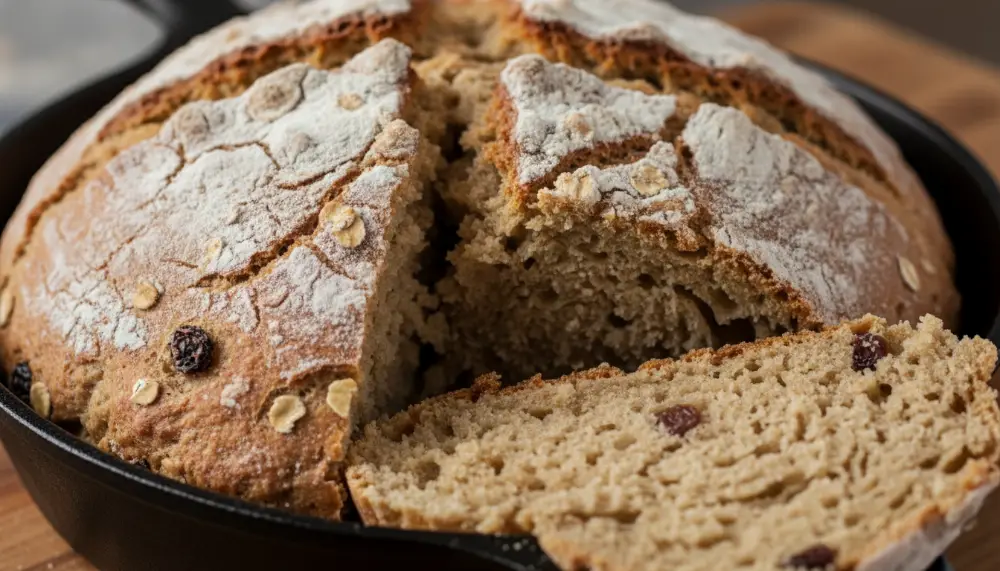
Cast Iron Irish Soda Bread is more than just a quick side dish, it is a historic culinary icon. Unlike traditional loaves that require hours of proofing and the delicate management of yeast, soda bread relies on a rapid chemical reaction between alkaline baking soda and acidic buttermilk. When these two meet, they create carbon dioxide bubbles that instantly lift the dough. However, the secret weapon in achieving a bakery-quality finish at home is the cast iron skillet. By utilizing a heavy, preheated pan, you effectively mimic the intense, even heat of a traditional stone hearth. This results in a thick, mahogany-colored crust that crackles under the knife while maintaining a moist, tender crumb inside.
Professionals favor this method because the thermal mass of cast iron prevents the temperature drops associated with standard thin baking sheets. Whether you are serving this with a hearty beef stew or simply slathering it in salted butter, the texture provided by the skillet is incomparable. It is the bridge between a simple home bake and a professional artisanal loaf.
The Historical Roots: A Response to Necessity
While we often associate Irish Soda Bread with festive celebrations, its origin is rooted in the survival of a nation. In the 1830s, bicarbonate of soda was introduced to Ireland, coinciding with a period where traditional yeast was both expensive and difficult to keep alive in rural kitchens. Irish families typically had access to “soft wheat” flour, which is naturally low in gluten. While this flour was poor for making high-rising yeasted breads, it was the perfect medium for a chemical leavener like baking soda.
During the devastating Great Famine (1845–1852), ingredients were extremely scarce. Families relied on the most basic of pantries: flour, salt, baking soda, and soured milk. The soured milk, a byproduct of butter making, provided the necessary acidity to activate the soda. This bread was not baked in ovens but rather in “bastible” pots, which were heavy cast iron pots placed directly over open turf fires with hot coals heaped on the lids. Modern cast iron baking is a direct homage to this historic “bastible” method, providing that same intense radiant heat that defines the bread’s character.
Symbolism in the Shape
Have you ever wondered why every loaf of Cast Iron Irish Soda Bread is scored with a deep cross? While it adds a beautiful aesthetic, its purpose was originally functional. The thick, dense dough needs a way to expand without bursting at the seams. Scoring the top allows the heat to penetrate the center of the loaf, ensuring it cooks through without becoming gummy. However, folklore added a layer of charm to this necessity, Irish tradition suggests the cross was cut to “let the devil out” or to offer a blessing over the household’s daily bread. Some also cut the bread into four distinct quarters, known as “farls,” which were easy to break apart and share.

Nutritional Profile of Traditional Soda Bread
Understanding what goes into your bread is essential for a balanced lifestyle. Soda bread is naturally lower in sugar and fat than many modern commercial breads. Below is a breakdown of the nutritional profile for a standard 60g slice of a traditional buttermilk-style loaf.
| Nutrient | Amount per Serving |
|---|---|
| Calories | 165–190 kcal |
| Total Fat | 3g – 6g |
| Saturated Fat | 0.5g – 1g |
| Sodium | 225mg – 350mg |
| Total Carbohydrates | 30g – 37g |
| Dietary Fiber | 1.5g – 2.5g |
| Protein | 4g – 6g |
Professional Flavor Variations (No Pork)
Once you master the base recipe, the Cast Iron Irish Soda Bread serves as a canvas for a variety of savory and sweet inclusions. Because the cast iron skillet develops such a high-quality bottom crust, ingredients that touch the surface often caramelize beautifully.
Savory Masterpieces
- Beef and Thyme: For a meal-in-a-loaf, fold in finely minced dried beef or small bits of leftover roasted beef along with fresh thyme. The savory notes of the beef pair perfectly with the tang of the buttermilk.
- Sharp Cheddar and Chive: Add 100g of aged cheddar. As it bakes in the cast iron, the cheese near the edges will melt and fry against the pan, creating “cheese lace” or a crispy frico edge.
- Sundried Tomato and Feta: A Mediterranean twist that uses chopped sundried tomatoes and crumbled feta. Use the oil from the tomato jar to grease your skillet for extra flavor infusion.
Sweet Variations
- The “Spotted Dog”: This is the most famous variation, adding golden raisins (sultanas) and a tablespoon of sugar. In the high heat of the cast iron, the raisins near the surface become slightly chewy and sweet.
- Fig and Toasted Walnut: Chopped dried figs and walnuts provide a sophisticated texture. The cast iron actually helps toast the nuts sitting at the bottom of the loaf while the bread bakes.
- Dark Chocolate and Orange: Use 70% dark chocolate chunks and fresh orange zest. To keep it dairy-compliant, you can even replace some buttermilk with fresh orange juice to boost the acidity and citrus aroma.
Essential Tools for Bread Success
To achieve the perfect loaf, professional-grade equipment is a game changer. Here are my top recommendations for your kitchen:
- Ninja BN751 Professional Plus DUO Blender: Check Price (Why Perfect: 1000W motor, perfect for making homemade herb-infused oils or processing dried beef for savory variations).
- Cosori 9-in-1 TurboBlaze Air Fryer 6 Qt: Check Price (Why Perfect: If you are making a smaller loaf, the air fryer provides excellent convection heat for a fast crust).
- Cuisinart 8 Cup Food Processor: Check Price (Why Perfect: Fast for cutting cold butter into your flour, ensuring those tiny pockets of fat that create a tender crumb).
- Rubbermaid Brilliance Glass Storage Set: Check Price (Why Perfect: Ideal for keeping your leftovers fresh, these leak-proof containers are a meal-prep essential).
- FoodSaver Vacuum Sealer Machine: Check Price (Why Perfect: Keeps your flour and dry ingredients fresh longer, preventing the baking soda from absorbing moisture).
The Secret to the Perfect Crust: Preheating
One common mistake home bakers make is placing dough into a cold cast iron pan. If you want that signature “crack” when you bite into a slice, you must preheat the skillet. By placing the empty skillet in the oven while it reaches 425°F, you create an immediate sear on the bottom of the dough the moment it hits the pan. This effectively “seals” the bottom, preventing sticking and ensuring that the bread rises vertically rather than spreading horizontally. If you are looking for more technical guides, check out our other resources at our homepage.
Another professional tip is to avoid over-mixing. The goal is to hydrate the flour until just combined. Over-working the dough develops gluten, which is great for sourdough but disastrous for soda bread. A tough, rubbery interior is usually the result of over-handling. Treat the dough gently, like you would a scone or a biscuit, and you will be rewarded with a light, crumbly texture.
Troubleshooting Your Soda Bread
Even the most seasoned chefs occasionally run into issues. If your bread is too dense, double-check the freshness of your baking soda. Unlike yeast, baking soda can lose its potency over time. To test it, drop a pinch into a bowl of vinegar, if it doesn’t fizz aggressively, it’s time for a new box. If your bread is burnt on the bottom but raw in the middle, your cast iron might be too close to the heating element. Move your rack to the middle position and consider tenting the top with foil for the last 10 minutes of baking.
Lastly, always let the bread rest. It is tempting to slice into a steaming hot loaf, but the carry-over cooking that happens during the first 20 minutes of cooling is vital for the internal structure. Slicing too early can result in a gummy texture as the steam escapes too quickly.