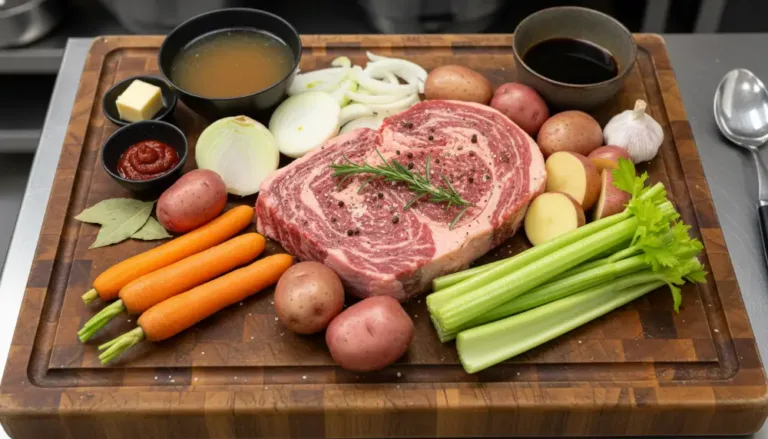
Welcome to the definitive guide on crafting a rich and velvety Butternut Squash Sage Soup, a seasonal favorite that brings unparalleled warmth and depth to every autumn table. This comforting dish combines the roasted sweetness of garden-fresh squash with the earthy, pine-like aroma of fresh herbs for a truly gourmet experience.

Butternut Squash Sage Soup
15 MIN
45 MIN
6 PERS
Ingredients
- 1 Large Butternut Squash peeled and cubed
- 6 Strips Beef Bacon diced
- 5 Cups Low-sodium Beef Broth
- 1 Large Yellow Onion quartered
- 4 Cloves Garlic peeled
- 3 tbsp Fresh Sage leaves
- 1 tbsp Apple Cider Vinegar
- 1/2 Cup Heavy Cream or Coconut Milk
- 2 tbsp Beef Tallow or Olive Oil
Instructions
- 1 Roast squash, onion, and garlic with tallow at 400°F for 35 minutes until soft.
- 2 Crisp the beef bacon in a Dutch oven then remove and set aside.
- 3 Sauté whole sage leaves in the remaining fat for 30 seconds until crispy.
- 4 Combine roasted vegetables, beef broth, and vinegar in the pot and simmer.
- 5 Use a high-speed blender to process until perfectly smooth and velvety.
- 6 Stir in cream and serve topped with crispy beef and frizzled sage.
The Anatomy of a Perfect Butternut Squash Sage Soup
Creating a high-authority **Butternut Squash Sage Soup** requires more than just boiling vegetables, it is an exercise in layering flavors. To achieve that signature restaurant-quality depth, one must understand the chemistry between the sugars in the squash and the volatile oils in the sage. Research indicates that the most successful versions of this dish rely on deep caramelization of the vegetables and a balanced fat profile to carry the flavors. By roasting the squash at a high temperature, we convert complex starches into simple sugars, providing a natural sweetness that eliminates the need for added honey or sugar.
In this recipe, we have meticulously replaced traditional pork elements with high-quality beef alternatives. Using beef bacon or even rendered beef tallow adds a savory, umami-rich backbone that pairs exquisitely with the nutty notes of the squash. Furthermore, we have removed all alcohol from the deglazing process, opting instead for a combination of robust beef broth and apple cider vinegar to provide the necessary acidity without compromising dietary preferences.
Essential Tools for Soup Success
To achieve the velvety consistency that defines a premium Butternut Squash Sage Soup, your choice of equipment is paramount. Chopping a large, dense squash can be a chore, which is why a Cuisinart 8 Cup Food Processor is a meal prep essential, it handles the dicing of aromatics in seconds.

When it comes to the actual blending, the Ninja BN751 Professional Plus DUO Blender is the gold standard. Its 1000W motor is specifically designed to pulverize fibrous roasted vegetables into a silk-like texture. If you prefer a more hands-off approach to the roasting phase, the Cosori 9-in-1 TurboBlaze Air Fryer 6 Qt roasts squash cubes to perfection in half the time of a conventional oven, ensuring those caramelized edges are locked in.
The Science of Sage and Beef Substitution
Sage is a powerful herb, containing camphor and pinene, which can become overwhelming if not managed correctly. In our Butternut Squash Sage Soup, we “frizzle” the sage in beef fat. This process mellows the herb’s bitterness and infuses the fat with a savory aroma. Many traditional recipes use pork lard or bacon for this step, but we have found that high-quality beef tallow or beef bacon provides a cleaner, more robust flavor profile. This substitution is not just about dietary compliance, it is about enhancing the soup’s richness. The saltiness of the beef bacon acts as the perfect foil to the squash’s natural sugars.
For those who like to prepare in bulk, storing your Butternut Squash Sage Soup correctly is vital. Using the Rubbermaid Brilliance Glass Storage Set of 9 ensures your leftovers remain leak-proof and fresh, while the glass construction prevents any lingering sage aromas from staining the container. If you are planning to freeze portions for the winter months, the FoodSaver Vacuum Sealer Machine is indispensable for preventing freezer burn and maintaining that just-made flavor.
Advanced Flavor Profiles and Variations
While the core of the Butternut Squash Sage Soup is simple, you can elevate it with various garnishes. Consider adding a swirl of browned butter (using beef-friendly dairy) or a sprinkle of toasted pepitas for crunch. The key is maintaining the balance. If the soup feels too heavy, another teaspoon of apple cider vinegar can brighten the entire pot. If it feels too thin, simmering it for an extra ten minutes will concentrate the flavors.

Integrating this recipe into your weekly rotation is easy once you master the roasting technique. You can find more inspiration and technical tips in our [https://foodzrecipes.com/post-sitemap.xml]. Remember that the quality of your beef broth will directly impact the final result, so always opt for a low-sodium, high-collagen version if possible.
Frequently Asked Questions
Can I make this Butternut Squash Sage Soup in a slow cooker?
Yes, although you will miss out on the deep caramelization from roasting. If using a slow cooker, sauté your onions and garlic in beef fat first, then add all ingredients except the cream. Cook on low for 6-8 hours before blending.
How do I thicken my soup without flour?
This Butternut Squash Sage Soup is naturally thick due to the squash fiber. If it is too thin, simply blend in an extra roasted potato or reduce the broth amount. High-speed blending with a Ninja blender also incorporates air, which adds a creamy volume.
What is a good replacement for heavy cream?
Full-fat coconut milk is an excellent alternative that complements the sweetness of the squash. Alternatively, blending in a few tablespoons of cashew butter can provide that same luxurious mouthfeel.
Can I use dried sage instead of fresh?
While fresh sage is preferred for the “frizzled” garnish, you can use 1 teaspoon of dried rubbed sage in the simmering stage. Be careful, as dried sage is more concentrated and can easily become bitter.
In conclusion, the Butternut Squash Sage Soup is a masterpiece of seasonal cooking. By focusing on quality beef ingredients and expert blending techniques, you create a dish that is both nourishing and sophisticated. Whether you are hosting a holiday dinner or enjoying a quiet night in, this soup is sure to become a household staple.