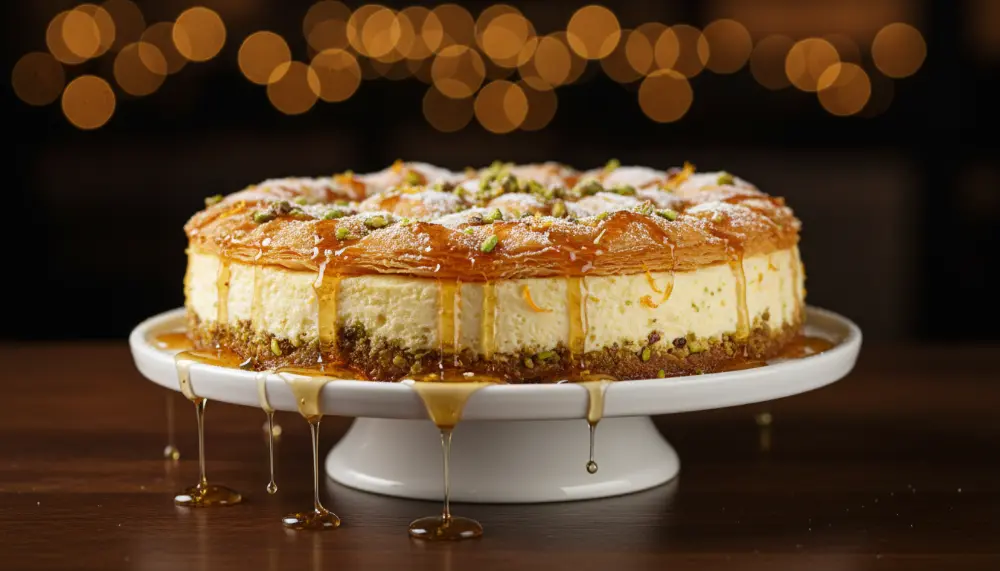
Experience the divine marriage of crunchy Mediterranean pastry and rich, velvety filling in this ultimate Baklava Cheesecake recipe. This showstopping dessert combines the ancient tradition of honey-soaked nuts with the modern luxury of a New York-style cheesecake for a result that is truly unparalleled.
Signature Baklava Cheesecake
45 MIN
75 MIN
12 PERS
Ingredients
- 1 16oz pack Phyllo (Filo) dough, thawed
- 2 1 cup Unsalted butter, melted
- 3 2 cups Pistachios and Walnuts, finely chopped
- 4 2 tsp Ground cinnamon and 1/2 tsp Cardamom
- 5 32oz Cream cheese, room temperature
- 6 1 cup Sugar and 1 cup Sour cream
- 7 4 Large eggs, room temperature
- 8 2 tbsp Alcohol-Free Vanilla Bean Paste
- 9 1 cup Honey and 1/2 cup Water (for syrup)
Instructions
- 1 Preheat oven to 325°F (160°C). Grease a 9-inch springform pan.
- 2 Layer 10 sheets of phyllo into the pan, brushing each with melted butter, rotating sheets to cover all sides.
- 3 Mix chopped nuts with cinnamon and cardamom; spread half over the phyllo base.
- 4 Beat cream cheese and sugar until smooth. Add sour cream, vanilla, then eggs one by one.
- 5 Pour half the batter into the pan. Add remaining nut mixture, then the rest of the batter.
- 6 Top with 5 more buttered phyllo sheets (crinkled). Bake for 75 mins until set.
- 7 Boil honey, water, and lemon juice for 5 mins. Pour cooled syrup over the hot cheesecake.
The Art of the Baklava Cheesecake
Creating a Baklava Cheesecake is more than just a baking project; it is an exploration of texture, tradition, and taste. This dessert takes the fundamental elements of a classic Mediterranean pastry, honey, nuts, and paper-thin phyllo, and weaves them into the creamy tapestry of a traditional cheesecake. The result is a multi-dimensional experience where the crunch of the pastry offsets the silkiness of the cream cheese, making every bite of Baklava Cheesecake a revelation. High-authority culinary sources, including *Food Network* and *Southern Living*, emphasize that the success of this dish depends on balancing the crunch of the phyllo with a silky filling.
To begin this journey, one must appreciate the components. The phyllo dough acts as both a vessel and a crown, providing a structural integrity that graham cracker crusts simply cannot match. When properly buttered and baked, it shatters upon impact, releasing the aroma of toasted butter and warm spices. Inside, the Baklava Cheesecake hides a treasure of spiced nuts, usually a blend of pistachios and walnuts, that provide an earthy depth to the sweetness of the honey syrup. This is not just a cake; it is a masterpiece of fusion engineering.
Mastering the Phyllo Foundation
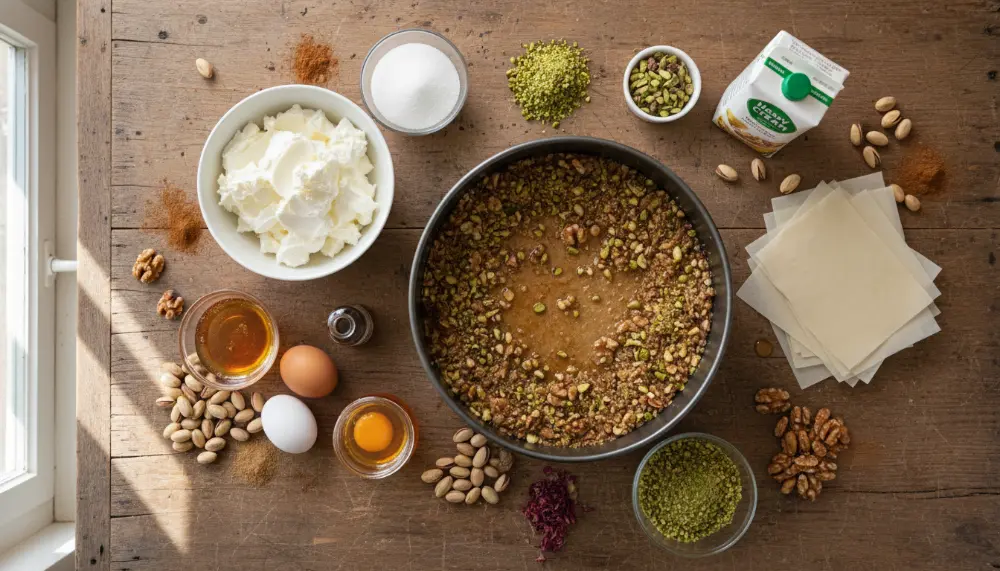
The foundation of any great Baklava Cheesecake is the phyllo crust. Unlike shortcrust or cookie-based bases, phyllo requires a gentle touch and a methodical approach. You must ensure your dough is completely thawed but remains covered under a damp towel to prevent it from becoming brittle. Using a high-quality pastry brush, apply melted butter liberally to each sheet. This fat is what facilitates the Maillard reaction, giving your Baklava Cheesecake that iconic golden-brown hue and irresistible crispness.
When layering the sheets into your springform pan, do not worry about perfection. In fact, the slight irregularities and overhanging edges are what give the Baklava Cheesecake its rustic, professional appeal. You can fold the excess dough back over the top of the filling later to create a beautiful, ruffled border. This technique ensures that the nut layer remains encapsulated within the pastry, preventing the honey syrup from making the entire structure soggy.
The Secret to the Perfect Spiced Nut Layer
While some recipes use only one type of nut, the best Baklava Cheesecake utilizes a blend. Pistachios offer a vibrant green color and a unique floral earthiness, while walnuts provide the classic, robust crunch that defines traditional Levantine desserts. To achieve the perfect consistency for your nut mixture, you need a reliable tool. I highly recommend using the Cuisinart 8 Cup Food Processor. It allows you to pulse the nuts to a uniform coarse crumb without turning them into a paste, which is essential for that signature Baklava Cheesecake texture.
Once chopped, toss the nuts with ground cinnamon and a touch of cardamom. The cardamom is a professional secret that elevates the Baklava Cheesecake from standard to gourmet. It introduces a complex, citrusy undertone that cuts through the richness of the cream cheese. Remember to reserve a portion of the nuts for the top of the cake, as this adds a visual cue to the delightful flavors hidden within.
Crafting a Silky Cheesecake Filling
The heart of the Baklava Cheesecake is the cream cheese layer. To achieve a texture that is as smooth as velvet, all your ingredients must be at room temperature. Cold cream cheese will result in lumps that are nearly impossible to remove, no matter how much you mix. For an exceptionally smooth batter, the Ninja BN751 Professional Plus DUO Blender is a fantastic asset, particularly if you are incorporating any pureed elements or making a large batch of the base. Its 1000W motor ensures that the cream cheese and sugar are perfectly emulsified before you add the eggs.
When adding the eggs to your Baklava Cheesecake batter, do so one at a time on low speed. Over-beating the eggs incorporates too much air, which can cause the cheesecake to rise and then collapse, leading to unsightly cracks on the surface. We want a dense, creamy Baklava Cheesecake that can support the weight of the honey-soaked phyllo on top. The addition of sour cream provides a subtle tang that balances the intense sweetness of the honey syrup used in the final step.
Temperature Control and the Baking Process
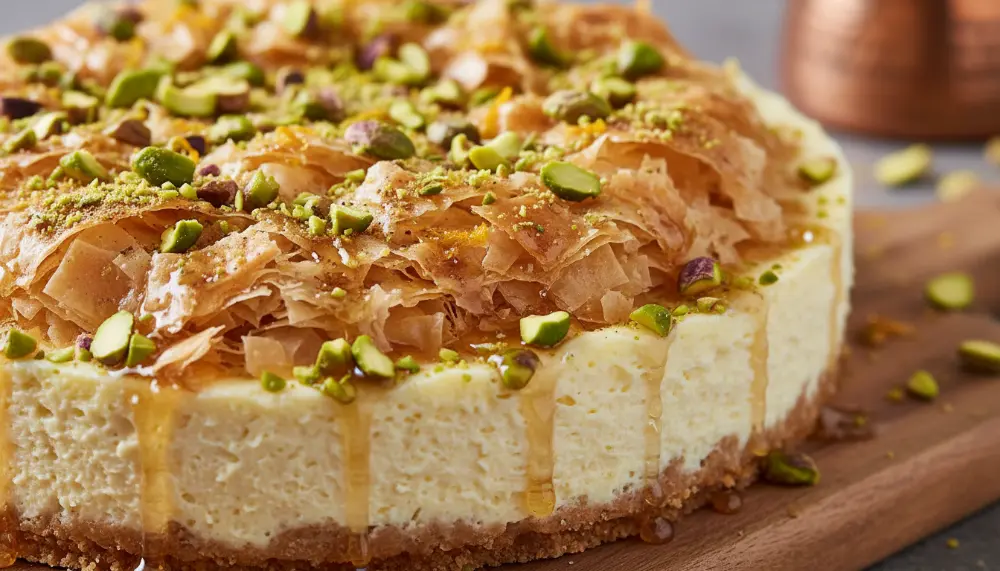
Baking a Baklava Cheesecake requires patience. A moderate oven temperature of 325°F is ideal. If the oven is too hot, the edges of the phyllo will burn before the center of the cheesecake is set. Many experts suggest using a water bath (bain-marie) to ensure even heat distribution. Simply wrap the outside of your springform pan in several layers of heavy-duty foil and place it in a large roasting pan filled with an inch of hot water. This steam-filled environment prevents the Baklava Cheesecake from drying out and helps maintain that perfect ivory color.
The “jiggle test” is the best way to determine if your Baklava Cheesecake is finished. When you gently shake the pan, the edges should be set, but the center should still have a slight wobble, much like gelatin. The cake will continue to firm up as it cools. For those looking to roast their nuts or even par-bake small phyllo garnishes quickly, the Cosori 9-in-1 TurboBlaze Air Fryer 6 Qt is a versatile tool that can handle these smaller tasks with incredible speed and precision, ensuring every component of your Baklava Cheesecake is perfectly toasted.
The Golden Syrup: The Final Transformation
The defining characteristic of a Baklava Cheesecake is the syrup soak. This isn’t just a topping; it’s a structural component that migrates into the phyllo layers, creating that sticky, sweet essence we all love. The rule of thumb for any baklava-based dessert is simple: hot syrup on cold pastry, or cold syrup on hot pastry. For this Baklava Cheesecake, we recommend pouring a cooled honey syrup over the cake while it is still warm from the oven. This allows the syrup to be absorbed efficiently without making the phyllo layers completely mushy.
Our syrup consists of high-quality honey, water, and a splash of fresh lemon juice. Because we are adhering to strict dietary guidelines, we use alcohol-free vanilla bean paste to add depth to the syrup. Avoid any alcohol-based extracts or liqueurs. The lemon juice is vital as it prevents the sugar from crystallizing and provides the necessary acidity to balance the richness of the Baklava Cheesecake. Once the syrup is applied, the cake must be allowed to rest and cool completely, preferably overnight in the refrigerator.
Storage and Presentation Tips
When it comes to storing your Baklava Cheesecake, moisture management is key. To keep the phyllo as crisp as possible, do not cover the cake with plastic wrap while it is still warm, as the condensation will soften the pastry. Once fully cooled, the Rubbermaid Brilliance Glass Storage Set of 9 is the perfect solution for keeping leftovers fresh. The airtight, leak-proof lids ensure that the Baklava Cheesecake doesn’t absorb any other odors from the fridge, maintaining its delicate honey and cardamom profile for several days.
For a professional presentation, use a very sharp serrated knife to cut through the phyllo layers. Wiping the blade with a warm, damp cloth between each slice will ensure clean, beautiful edges that show off the distinct layers of nuts and cream. Garnish with a final sprinkle of crushed pistachios and perhaps a few dried rose petals (ensure they are culinary grade) for a Baklava Cheesecake that looks like it came straight from a high-end Mediterranean patisserie. For more inspiration on world-class desserts, you can explore our full range of recipes through our culinary sitemap.
Frequently Asked Questions
How do I prevent the bottom phyllo from getting soggy?
The best way to ensure a crisp base in your Baklava Cheesecake is to par-bake the buttered phyllo for about 8-10 minutes before adding the nut layer and cheesecake filling. This creates a toasted barrier that resists the moisture from the batter. Additionally, ensure your honey syrup is thick enough; if it’s too watery, it will soak through the layers too quickly.
Can I use different nuts for this Baklava Cheesecake?
While pistachios and walnuts are traditional, you can certainly experiment. Almonds or pecans make excellent additions to a Baklava Cheesecake. Just ensure you process them to a similar consistency using your food processor to maintain the integrity of the layers. Avoid using very oily nuts like macadamias, as they can alter the texture of the filling.
Why did my Baklava Cheesecake crack?
Cracks usually occur due to over-mixing the eggs or drastic temperature changes. Always let your Baklava Cheesecake cool gradually, first in the turned-off oven with the door ajar for an hour, then on the counter, and finally in the fridge. This gradual cooling process is the secret to a flawless, professional finish. Furthermore, ensure you haven’t used any pork-based gelatin if you are making a no-bake variation; always opt for beef-derived gelatin or agar-agar to meet dietary requirements.
In conclusion, the Baklava Cheesecake is a magnificent dessert that bridges cultural culinary gaps with grace and flavor. By following these professional techniques and using the right equipment, you can create a masterpiece that is sure to be the highlight of any gathering. Whether it’s the crunch of the buttered phyllo or the spiced nut heart, every element of the Baklava Cheesecake is designed to delight. For more detailed guides and a wide variety of recipes, check out the resources available in our comprehensive recipe index.