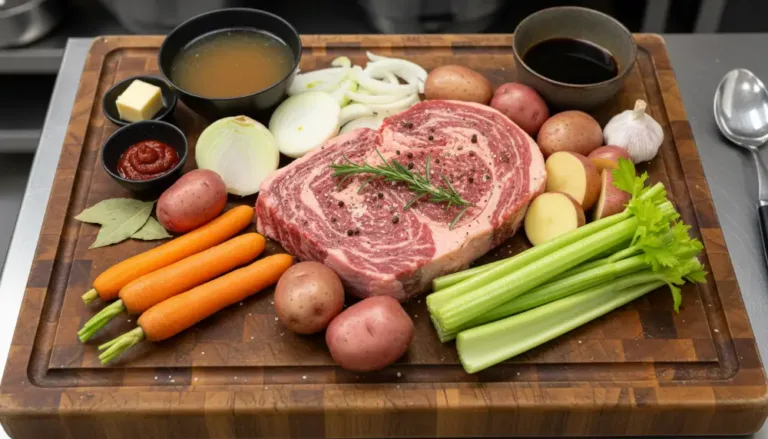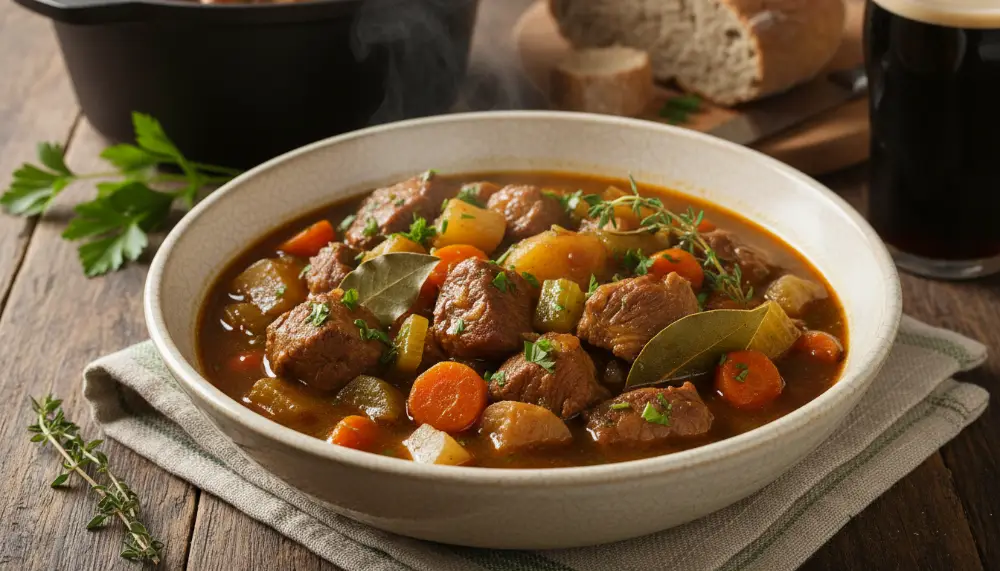
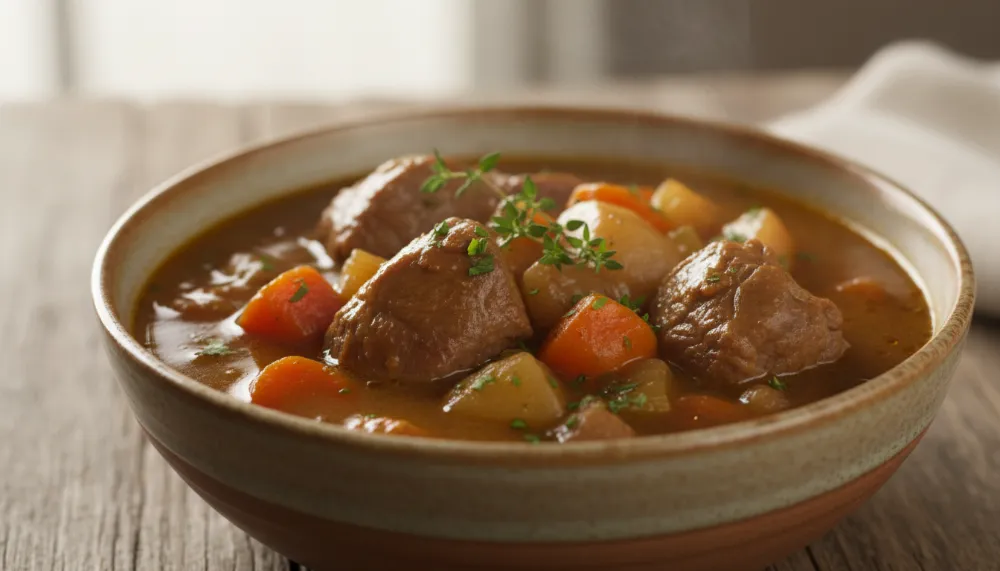
Irish Lamb Stew is more than just a meal, it is a warm embrace in a bowl that celebrates the rugged beauty and culinary heritage of the Emerald Isle. This recipe focuses on deep, savory flavors and tender textures through the traditional art of slow, low-heat braising.
Traditional Irish Lamb Stew
Ingredients
- 1 2 lbs Lamb Shoulder, cut into 1.5-inch chunks
- 2 3 tbsp Grapeseed Oil or Olive Oil
- 3 2 Large Onions, thickly sliced
- 4 2 Large Leeks, cleaned and sliced into rounds
- 5 4 Large Carrots, cut into thick chunks
- 6 1.5 lbs Russet or Yukon Gold Potatoes, peeled and quartered
- 7 4 cups High-Quality Beef Broth
- 8 1 tbsp Tomato Paste
- 9 2 tbsp Apple Cider Vinegar
- 10 3 Fresh Thyme sprigs and 2 Bay Leaves
Instructions
- 1 Season the lamb generously with salt and pepper. In a large heavy-bottomed pot, brown the meat in oil over medium-high heat until caramelized.
- 2 Remove the meat and add onions and leeks. Sauté for 5 minutes. Stir in the tomato paste and cook for 2 minutes to deepen the color.
- 3 Deglaze the pot with apple cider vinegar, scraping up the browned bits from the bottom.
- 4 Return the lamb to the pot. Add broth, carrots, herbs, and potatoes. Bring to a boil, then reduce to a very low simmer.
- 5 Cover and cook for 1.5 to 2 hours until the lamb is fork-tender. Season to taste and serve.
The Fascinating Heritage of Irish Lamb Stew
Irish Lamb Stew, or stobhach Gaelach in the native tongue, stands as a cornerstone of Northern European comfort food. Its origins are humble, rooted in the 18th and 19th centuries as a practical survival meal for tenant farmers. In its earliest form, the stew was a minimalist creation. It relied on the most accessible ingredients available on a rural farm: mutton, potatoes, and onions. Mutton was the preferred meat because sheep were primarily kept for their wool and milk, only when an animal reached the end of its life was it used for meat. This older, tougher meat required hours of gentle simmering to break down, a necessity that birthed the slow-cooking technique we still cherish today.
Over the decades, as the Irish economy and agricultural practices evolved, lamb replaced mutton as the primary protein. This shift resulted in a shorter cooking time and a milder, sweeter flavor profile. While purists might argue that a “true” stew should only contain meat, water, and potatoes, the modern iteration is a vibrant tapestry of root vegetables and rich broths. The inclusion of carrots and leeks has become standard, providing a necessary sweetness and aromatic base that complements the earthy lamb perfectly.
Choosing the Perfect Cut: Why Lamb Shoulder Reigns Supreme
When preparing an authentic Irish Lamb Stew, the quality of the meat is paramount. While many supermarkets sell generic “stew meat,” the professional choice is always the lamb shoulder. The shoulder is a hard-working muscle, which means it is rich in connective tissue and intramuscular fat. During a long braise, this connective tissue, primarily collagen, transforms into silky gelatin. This process not only makes the meat melt-in-your-mouth tender but also thickens the cooking liquid, giving the stew its characteristic luxurious mouthfeel.
If you cannot find shoulder, lamb neck is an excellent secondary option. It contains a similar ratio of fat and bone, which adds incredible depth to the broth. For a faster prep time, you can use the Cuisinart 8 Cup Food Processor to quickly dice your aromatics, allowing you more time to focus on the careful searing of the meat. Avoid using lean cuts like lamb leg for a long-simmered stew, as they can become dry and stringy when subjected to prolonged heat.
The Science of the Braise: Transforming Tough Cuts into Tenderness
Braising is a dual-action cooking method that involves both dry and moist heat. The process begins with searing the meat at high temperatures to trigger the Maillard reaction, the chemical process that creates those complex, savory, toasted flavors on the surface of the lamb. Once the meat is browned, it is submerged in liquid and cooked at a low temperature. This gentle heat is the key to breaking down tough fibers without overcooking the delicate proteins.
Temperature control is critical. If the stew boils vigorously for too long, the muscle fibers will contract and squeeze out their moisture, resulting in rubbery meat regardless of how much fat is present. A gentle quiver on the surface of the liquid, roughly 190°F to 200°F, is the sweet spot for a perfect braise. This slow transformation is what separates a mediocre stew from a world-class culinary experience.
Building Flavor Foundations without Alcohol
Many modern recipes rely on wine or dark beer to add complexity to stews. However, you can achieve a sophisticated, deep flavor profile using entirely non-alcoholic ingredients. The secret lies in the balance of umami and acidity. Using a high-quality beef or lamb broth provides the base, but adding a tablespoon of tomato paste during the sautéing of the onions creates a concentrated savory note that mimics the depth of a dark ale.
The Role of Acidity
To replace the brightness usually provided by wine, professional chefs turn to vinegars. Apple cider vinegar is a particularly good match for lamb because its fruity undertones complement the natural sweetness of the meat and carrots. A splash of vinegar at the deglazing stage helps lift the browned bits (the fond) from the bottom of the pot, ensuring every bit of flavor is integrated into the sauce. You can also finish the dish with a squeeze of fresh lemon juice just before serving to provide a vibrant top note that cuts through the richness of the fat.
Essential Root Vegetables and Their Roles
While the lamb is the star, the vegetables in an Irish Lamb Stew are far from mere supporting actors. Potatoes serve two purposes: they provide hearty substance and act as a natural thickener. As the potatoes cook, they release starches into the broth. Russet potatoes, being high in starch, will partially break down and create a thicker sauce, while Yukon Gold potatoes hold their shape better, providing a creamy texture.
Carrots and leeks provide the aromatic backbone. For the best results, cut your vegetables into large, uniform chunks. This ensures they don’t turn into a mushy puree before the lamb has finished tenderizing. If you want to add an extra layer of texture, consider roasting some separate root vegetables in the Cosori 9-in-1 TurboBlaze Air Fryer 6 Qt and adding them at the very end. This provides a roasted, caramelized contrast to the soft, braised vegetables within the stew.
Professional Tools for the Perfect Stew
To achieve professional-grade results, the right equipment is essential. A heavy-bottomed cast iron Dutch oven is the gold standard for Irish Lamb Stew because it retains heat exceptionally well and provides even distribution, preventing hot spots that could burn the bottom of your stew.
For prep work, the Cuisinart 8 Cup Food Processor is a lifesaver for slicing through large quantities of onions, leeks, and carrots with precision. If you prefer a smoother, more velvety sauce, you can use the Ninja BN751 Professional Plus DUO Blender to puree a small portion of the cooked potatoes and carrots with some broth, then stir it back into the pot. This technique, used by many high-end chefs, creates a naturally thick and rich consistency without the need for a flour-based roux.
Mastering the Texture: Thickening Like a Chef
One of the hallmarks of a great Irish Lamb Stew is its consistency. It should be thick enough to coat the back of a spoon but still clearly a stew, not a gravy. Beyond the potato-puree method mentioned above, you can also control thickness by adjusting the lid of your pot. If your stew looks too thin toward the end of the cooking time, remove the lid for the final 20 minutes of simmering. This allows some of the liquid to evaporate, concentrating the flavors and thickening the remaining broth.
Nutritional Excellence of Slow-Cooked Lamb
Irish Lamb Stew is a nutritional powerhouse. Lamb is an excellent source of high-quality protein and is particularly rich in Vitamin B12, which is vital for brain function and blood health. It also provides significant amounts of Zinc and Selenium, which support the immune system. Because the vegetables are cooked directly in the broth, the vitamins and minerals that often leach out during boiling are preserved within the dish, making every spoonful nutrient-dense. The combination of healthy fats from the lamb and complex carbohydrates from the root vegetables provides sustained energy, making it the perfect meal for colder months.
Serving Suggestions and Pairings
To serve your Irish Lamb Stew in the most traditional way, pair it with a thick slice of Irish soda bread. The dense, slightly tangy bread is the perfect vessel for soaking up the rich, savory broth. A garnish of freshly chopped parsley adds a burst of color and a fresh, herbaceous note that balances the heavy, slow-cooked flavors. For a modern twist, serve the stew over a bed of colcannon, which is mashed potatoes mixed with kale or cabbage, for an even heartier meal.
Storage and the Day Two Flavor Boost
Like many braised dishes, Irish Lamb Stew often tastes even better the next day. As the stew cools, the flavors continue to meld and develop. The starches from the potatoes further stabilize the sauce, and the meat absorbs more of the aromatic broth. To store, allow the stew to cool to room temperature before transferring it to airtight containers. It will keep in the refrigerator for up to three days or can be frozen for up to three months. When reheating, do so gently on the stovetop over low heat, adding a splash of extra broth if the sauce has thickened too much in the fridge.