Master the art of the perfect Slow Cooker Pot Roast with this comprehensive guide that transforms tough cuts of beef into melt-in-your-mouth masterpieces. This savory, comforting meal practically cooks itself while you go about your day, delivering professional-grade results with minimal effort.
Slow Cooker Pot Roast
Ingredients
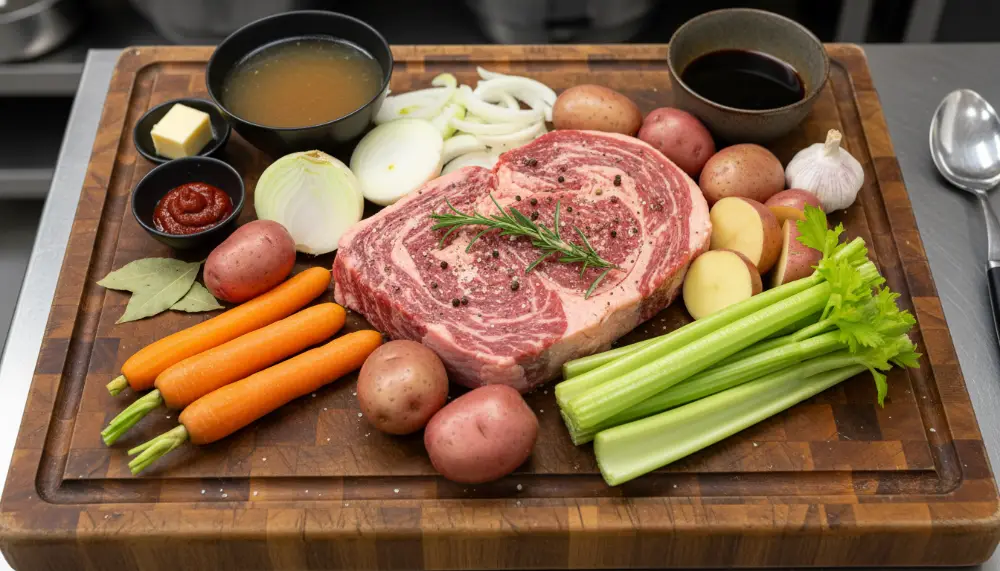
- 1 3-4 pound Beef Chuck Roast
- 2 1 pound Carrots, peeled and cut into chunks
- 3 1.5 pounds Baby Potatoes, halved
- 4 1 Yellow Onion, quartered
- 5 4 cloves Garlic, smashed
- 6 2 cups Beef Broth
- 7 2 tbsp Tomato Paste
- 8 2 tbsp Worcestershire Sauce
- 9 2 sprigs Fresh Rosemary and Thyme
Instructions
- 1 Season the beef generously with salt and black pepper on all sides.
- 2 Heat oil in a large skillet over high heat and sear the beef until a dark crust forms.
- 3 Place the carrots, potatoes, and onions in the bottom of the slow cooker.
- 4 Rest the seared beef on top of the vegetables.
- 5 Whisk broth, tomato paste, and Worcestershire sauce, then pour over the beef.
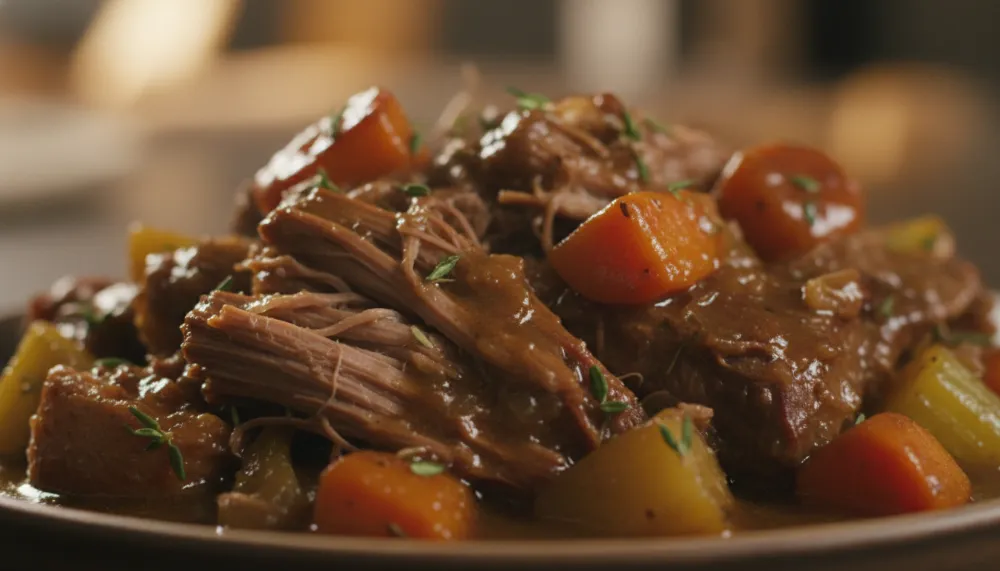
- 6 Add garlic and fresh herbs. Cover and cook on LOW for 8 to 10 hours.
The Historical Journey of the Pot Roast
The “Slow Cooker Pot Roast” is a modern adaptation of the centuries-old technique of braising, cooking tough cuts of meat slowly in liquid to break down connective tissue. This culinary method was not born in a vacuum but evolved from European methods brought to North America by immigrants. Key influences include the French boeuf à la mode (beef in a modern fashion) and the German sauerbraten. French immigrants in New England utilized a method called à l’étouffée (smothered), which eventually became known as “Yankee Pot Roast.” In the 19th century, the heavy cast-iron Dutch oven became the standard vessel for this dish, prized for its ability to distribute heat evenly over an open fire or in wood-burning stoves. The modern iteration was born in the early 1970s with the widespread commercial success of the Crock-Pot. Originally patented by Irving Naxon as a bean cooker, the device was rebranded and marketed for all-day meat cookery, making the pot roast a staple of the busy household.
Understanding the Nutritional Profile
When you prepare a slow cooker pot roast, you are creating a nutrient-dense meal that provides high levels of protein and essential minerals. Nutritional values vary based on the cut of beef (e.g., chuck vs. top round) and the ratio of vegetables. Below is a standard profile for a single serving (approximately 3 oz of beef and 1/2 cup of vegetables):
| Nutrient | Average Amount |
|---|---|
| Calories | 320 – 450 kcal |
| Protein | 35 – 48 g |
| Total Fat | 12 – 18 g |
| Carbohydrates | 22 – 30 g |
| Fiber | 4 – 6 g |
Note: Beef chuck roast provides significant amounts of Vitamin B12, Iron, and Zinc. Using root vegetables like carrots and potatoes adds Vitamin A, Potassium, and Dietary Fiber.
Professional Flavor Variations (Pork-Free & Alcohol-Free)
These variations strictly avoid all pork products and alcohol, utilizing acids and umami-rich liquids to build complexity. By replacing wine with high-quality broths and juices, you can achieve a depth of flavor that rivals any restaurant preparation.
1. Pomegranate and Balsamic Glaze
This variation replaces the traditional acidity of wine with a deep, fruity tartness. The base liquid consists of 2 cups beef broth, 1/2 cup 100% pomegranate juice, and 2 tablespoons balsamic vinegar. Use whole cloves of garlic, sprigs of fresh rosemary, and red onions as your aromatics. The pomegranate juice mimics the tannins and color of red wine, while the balsamic vinegar provides the necessary bright finish to cut through the fat of the beef.
2. Black Coffee and Soy Umami
A sophisticated, earthy profile that emphasizes the savory notes of the beef. Mix 1.5 cups strong brewed black coffee with 1/4 cup low-sodium soy sauce. Aromatics include star anise, sliced ginger, and green onions. Coffee adds a dark, smoky depth that complements the Maillard reaction of the beef without leaving a coffee flavor in the final sauce.
3. Apple Cider and Sage
This is an autumnal style that is sweeter and more aromatic. Pair your beef with 2 cups beef stock and 1/2 cup unfiltered apple cider. Fresh sage leaves, dried bay leaves, and shallots create a beautiful herbal profile. The natural sugars in the apple cider help thicken the sauce into a natural glaze during the long cooking process.
4. The Beef-Centric Mississippi Variation
A popular modern style adapted to strictly use beef-based ingredients. Instead of pork-based fats, use 1 cup beef broth and a blend of dried dill, chives, garlic powder, and onion powder. Top the roast with 5 to 8 whole pepperoncini peppers and 3 tablespoons of high-quality unsalted butter. The acidity comes entirely from the pepperoncini brine, creating a tender, tangy shred.
The Importance of the Sear
Many home cooks skip the searing step to save time, but for a truly high-authority pot roast, it is non-negotiable. Searing the beef over high heat triggers the Maillard reaction, a chemical reaction between amino acids and reducing sugars that gives browned food its distinctive flavor. This creates a complex crust that dissolves into the braising liquid, enriching the gravy with deep, savory notes. When searing, ensure the pan is smoking hot and do not crowd the meat. If you are using a Cuisinart 8 Cup Food Processor to prep your aromatics, ensure they are uniform in size so they release their flavors at the same rate as the beef cooks.
Recommended Kitchen Essentials
- Ninja BN751 Professional Plus DUO Blender: https://amzn.to/3LCDyNR (Why Perfect: 1000W motor, perfect for blending the braising liquid into a smooth, thick tahini-style sauce or gravy).
- Cosori 9-in-1 TurboBlaze Air Fryer 6 Qt: https://amzn.to/4hRWmVq (Why Perfect: Roasts side vegetables perfectly if you prefer them crisp rather than soft-boiled in the slow cooker).
- Cuisinart 8 Cup Food Processor: https://amzn.to/47Nhbg8 (Why Perfect: Fast chopping and slicing for carrots and onions, a true meal prep essential).
- Rubbermaid Brilliance Glass Storage Set of 9: https://amzn.to/4oD0YkY (Why Perfect: Perfect for meal prep storage, leak-proof and stackable for those leftover roasts).
- FoodSaver Vacuum Sealer Machine: https://amzn.to/4qWgVnS (Why Perfect: Keeps beef portions fresh longer and prevents freezer burn).
Top Tips for Pot Roast Success
Always cook on the “Low” setting if time allows. While “High” can cook the meat in 4 to 5 hours, the connective tissue requires the gentle, sustained heat of the “Low” setting to truly transform into gelatin, providing that signature fork-tender texture. If your sauce is too thin at the end of the cooking cycle, whisk together a slurry of cornstarch and cold water, then stir it into the slow cooker for the last 30 minutes. This will result in a glossy, thick gravy that clings to the beef and potatoes. For storage, always use high-quality glass containers like the Rubbermaid Brilliance Glass Storage Set to prevent the meat from drying out in the refrigerator.