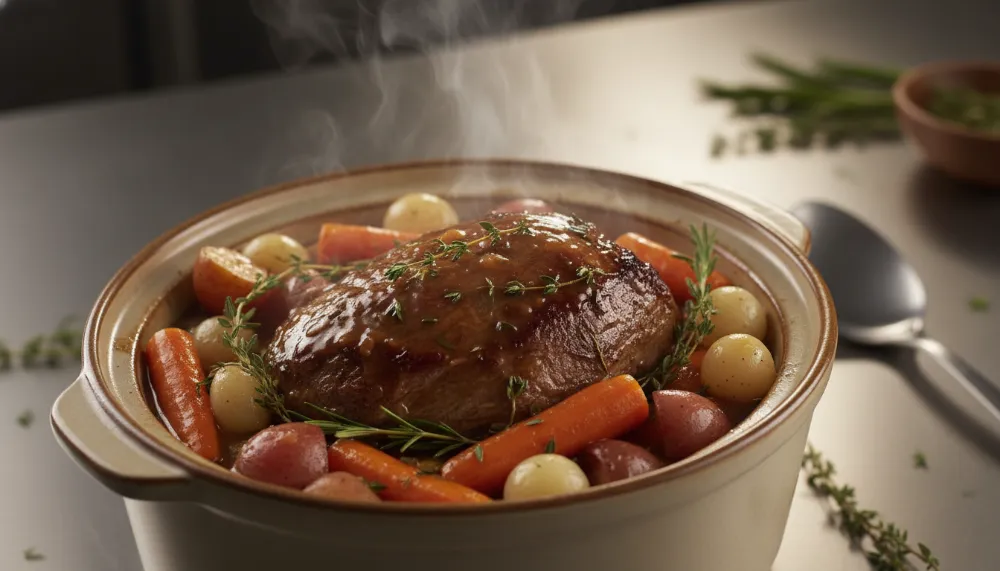
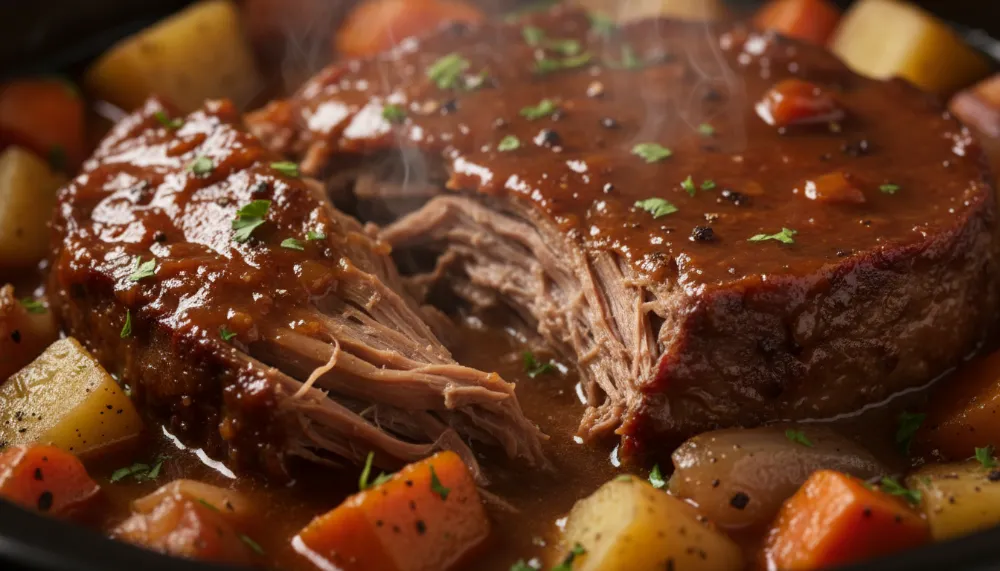
Experience the ultimate comfort food with this melt-in-your-mouth Slow Cooker Pot Roast that defines family dinner perfection. This foolproof method guarantees tender beef and rich, savory gravy every single time without the need for complicated steps.
Slow Cooker Pot Roast
Ingredients
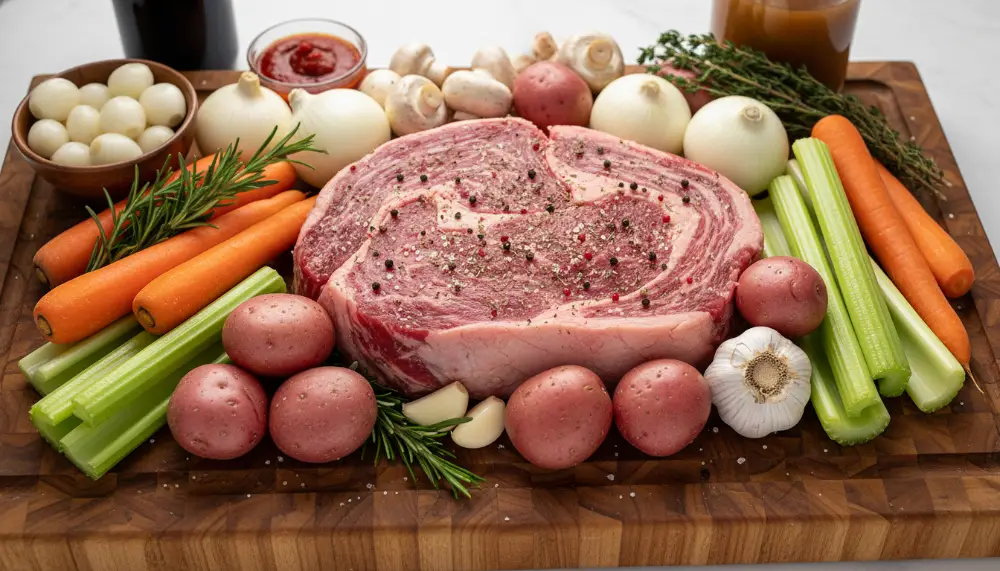
- 1 3-4 lb Beef Chuck Roast
- 2 2 tbsp Olive Oil
- 3 1 tsp Salt and 1 tsp Black Pepper
- 4 2 cups Low-Sodium Beef Broth
- 5 2 tbsp Balsamic Vinegar
- 6 4 cloves Garlic, minced
- 7 1 large Onion, quartered
- 8 4 large Carrots, cut into chunks
- 9 1 lb Baby Potatoes
- 10 2 sprigs Fresh Rosemary
Instructions
- 1 Season the beef roast generously with salt and pepper on all sides.
- 2 Heat olive oil in a large skillet and sear the beef until browned on all sides.
- 3 Place potatoes, carrots, and onions in the bottom of the slow cooker.
- 4 Place the seared roast on top of the vegetables.
- 5 Mix beef broth, vinegar, and garlic, then pour over the roast. Add rosemary sprigs.
- 6 Cover and cook on LOW for 8-10 hours or HIGH for 5-6 hours until tender.
The Historical Journey of the Pot Roast
The concept of the pot roast is rooted in the centuries-old culinary technique of braising, which involves browning meat and then simmering it slowly in liquid within a covered vessel. This method was not just a culinary choice but a necessity in eras where tougher, more economical cuts of beef were the primary source of protein for many families.
European roots play a significant role in how we view the modern Slow Cooker Pot Roast today. The dish draws heavily from European traditions designed to tenderize meat through long exposure to moisture and heat. Key influences include the French boeuf à la mode, beef cooked in a modern fashion with vegetables, the German sauerbraten, which is a pot roast typically marinated before cooking, and various meat stews from Central and Eastern Europe. In the United States, the dish became known as Yankee Pot Roast in New England, where it was traditionally prepared with beef chuck and root vegetables like carrots, potatoes, and turnips.
The Slow Cooker Era changed everything. During the late 19th century, the term pot roast appeared frequently in American cookbooks. The dish saw a massive surge in popularity after World War II, but the invention of the electric slow cooker in the 1970s revolutionized its preparation. It transformed the labor-intensive Sunday dinner into a staple set-it-and-forget-it comfort food for modern, busy families. Today, the Slow Cooker Pot Roast is a symbol of domestic warmth and efficient meal planning.
The Science of Slow Cooking: Why It Works
Cooking a Slow Cooker Pot Roast is essentially an exercise in chemistry. Tougher cuts of beef, such as the chuck, are laden with connective tissue, primarily collagen. At high temperatures, these fibers tighten and become rubbery. However, when cooked slowly at a low temperature, specifically between 160°F and 180°F, the collagen begins to break down into gelatin. This gelatin coats the muscle fibers, giving the meat a succulent, silky mouthfeel and making it easy to shred with just a fork.
This transformation requires time and moisture. The slow cooker provides a closed environment where the steam stays inside the pot, continuously basting the beef. This is why a Slow Cooker Pot Roast often tastes better the longer it sits in the liquid. Furthermore, the vegetables surrounding the meat absorb the juices and fats released during the breakdown process, creating a harmonious flavor profile that cannot be achieved through quick frying or roasting.
Selecting the Perfect Cut of Beef
The success of your Slow Cooker Pot Roast depends heavily on the cut of meat you choose. You want a cut that is high in connective tissue and fat marbling. Here are the top professional recommendations:
- Chuck Roast: The gold standard. It comes from the shoulder and has the perfect balance of fat and collagen.
- Bottom Round: Leaner than chuck, this cut is great if you prefer distinct slices rather than shredded meat. It requires a bit more liquid to ensure it doesn’t dry out.
- Brisket: While often smoked, brisket makes an excellent pot roast due to its long muscle fibers and fat cap.
When selecting your meat, look for deep red color and white flecks of fat (marbling) throughout the muscle. Avoid meat that appears gray or has a yellowish tint to the fat. For best results, use the FoodSaver Vacuum Sealer Machine (https://amzn.to/4qWgVnS) to store your beef if you buy it in bulk, ensuring it stays fresh and free from freezer burn until you are ready to slow cook.
Professional Flavor Variations Without Alcohol
Many traditional recipes call for red wine to add acidity and depth. However, you can achieve incredible results without any alcohol by using high-acid and high-umami substitutes. Chefs use diverse flavor profiles to create depth, focusing on these sophisticated alternatives:
- Balsamic & Rosemary: Replace wine with high-quality balsamic vinegar and beef broth. The vinegar provides acidity that cuts through the richness of the beef, while fresh rosemary adds an earthy, aromatic quality.
- Pomegranate & Garlic: Use pomegranate juice as the primary braising liquid along with beef stock. The juice offers a sophisticated tartness and deep color similar to dark beverages, pairing excellently with roasted garlic cloves.
- Apple Cider & Mustard: Use apple cider vinegar and a splash of unsweetened apple juice combined with stone-ground mustard. This creates a bright, slightly tangy profile that complements the sweetness of carrots and parsnips.
- Umami-Rich Soy & Ginger: For a savory depth, use a combination of soy sauce, beef broth, and fresh ginger. This variation skips traditional herbs in favor of a robust, savory umami punch.
- Coffee-Braised Beef: Using strongly brewed black coffee as part of the liquid base adds a roasted, slightly bitter complexity that mimics the tannins found in dark beverages, enhancing the natural beefiness of the roast.
Recommended Liquid Substitute Ratios
When a recipe calls for wine or alcohol, professionals recommend the following tiered replacements:
- Red Wine Substitute: 1 cup beef broth mixed with 1 tablespoon of balsamic vinegar or pomegranate juice.
- White Wine Substitute: 1 cup chicken or vegetable broth mixed with 1 tablespoon of apple cider vinegar or lemon juice.
- Deglazing: Use a splash of beef broth or verjus, the pressed juice of unripened grapes, to loosen the flavorful browned bits from the pan before transferring to the slow cooker.
The Importance of Searing
While it is tempting to just throw everything into the slow cooker, skipping the sear is a mistake. Searing the beef in a hot pan with olive oil initiates the Maillard reaction, a chemical reaction between amino acids and reducing sugars that gives browned food its distinctive flavor. This crust adds a layer of complexity to the final Slow Cooker Pot Roast that cannot be replicated by simmering alone. For efficient prep, use the Cuisinart 8 Cup Food Processor (https://amzn.to/47Nhbg8) to quickly chop your onions and garlic before you start the searing process.
Nutritional Profile of Pot Roast
A standard serving, approximately 3–4 oz of beef plus 1/2 cup of vegetables, of slow-cooked beef pot roast provides a nutrient-dense profile. It is a powerhouse of essential vitamins and minerals:
- Calories: 250–350 kcal per serving.
- Protein: 25–35g, high-quality protein essential for muscle repair and metabolic health.
- Fats: 10–18g, varies by the cut of beef, chuck roast is higher in fat, while bottom round is leaner.
- Iron: An excellent source of heme iron, which is vital for oxygen transport in the blood.
- B-Vitamins: Rich in B12 and B6, which support energy metabolism and brain function.
- Zinc: Critically important for supporting immune health.
- Fiber: Provided by the inclusion of skin-on baby potatoes, carrots, and onions.
Expert Tips for the Best Vegetables
Vegetables in a Slow Cooker Pot Roast serve two purposes: they provide a side dish and they flavor the broth. To prevent them from becoming mushy, follow these guidelines:
Use waxy potatoes like Yukon Gold or red baby potatoes. These hold their shape better than starchy Russet potatoes. Cut your carrots into large, uniform chunks to ensure they cook at the same rate as the meat. If you want to add a different texture, try roasting some chickpeas or extra vegetables in the Cosori 9-in-1 TurboBlaze Air Fryer 6 Qt (https://amzn.to/4hRWmVq) and adding them at the very end for a bit of crunch.
Meal Prep and Storage Solutions
Pot roast is the ultimate meal prep food because it actually tastes better the next day. The flavors continue to meld in the refrigerator. For storage, use the Rubbermaid Brilliance Glass Storage Set of 9 (https://amzn.to/4oD0YkY). These are leak-proof and stackable, making them perfect for storing beef and gravy without any mess. If you find yourself with extra gravy, you can blend the leftover vegetables into a thick sauce using the Ninja BN751 Professional Plus DUO Blender (https://amzn.to/3LCDyNR). This creates a velvet-like consistency that is perfect over mashed potatoes.
Frequently Asked Questions
Can I cook pot roast on high?
Yes, you can cook it on high for 5-6 hours, but for the most tender results, the low and slow method for 8-10 hours is always preferred. This gives the collagen more time to melt into gelatin.
Do I need to add water?
Never use plain water. Always use a high-quality beef broth to build flavor. The liquid should cover about one-third to one-half of the meat, it does not need to be fully submerged.
Why is my pot roast tough?
If the meat is still tough, it usually means it hasn’t cooked long enough. Put the lid back on and give it another hour. Even tough cuts will eventually give in to the heat and moisture.