
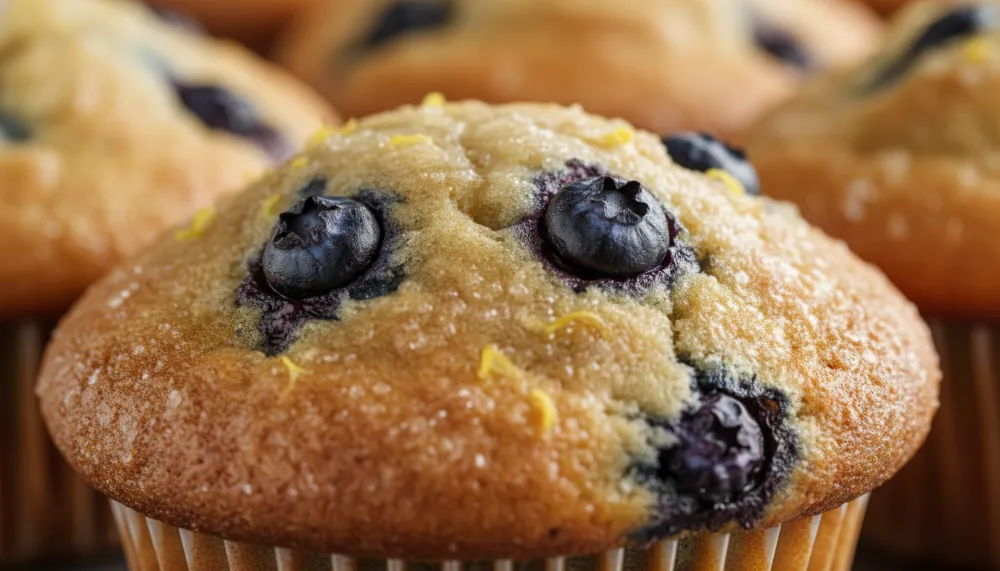
These bakery-style Blueberry Lemon Muffins are the ultimate morning treat, offering a perfect balance of zesty citrus brightness and bursting, jammy fruit in every bite. With their towering high domes and tender, moist crumb, they bring the professional pastry shop experience directly into your home kitchen.

Signature Blueberry Lemon Muffins
Ingredients
- 1 3 cups All-purpose flour
- 2 1 cup White granulated sugar
- 3 1 tablespoon Baking powder
- 4 1/2 teaspoon Baking soda
- 5 1/2 teaspoon Sea salt
- 6 1 cup Plain Greek yogurt or Sour cream
- 7 2 large Eggs, room temperature
- 8 1/2 cup Unsalted butter, melted and cooled
- 9 2 tablespoons Fresh lemon juice
- 10 1 tablespoon Lemon zest
- 11 1 teaspoon Vanilla extract
- 12 1.5 cups Fresh blueberries
Instructions
- 1 Preheat your oven to 425°F (220°C). Line a muffin tin with paper liners or grease heavily with butter.
- 2 In a large bowl, whisk together the flour, sugar, baking powder, baking soda, and salt. Set aside.
- 3 In a medium bowl, combine the Greek yogurt, eggs, melted butter, lemon juice, lemon zest, and vanilla. Whisk until perfectly smooth.
- 4 Gently fold the wet ingredients into the dry ingredients using a spatula. Do not overmix, some lumps are necessary for a tender crumb.
- 5 Carefully fold in the blueberries until evenly distributed.
- 6 Scoop the batter into the muffin tin, filling each cavity to the very top for that classic bakery dome.
- 7 Bake at 425°F for 5 minutes, then reduce oven heat to 350°F (175°C) and bake for an additional 15 to 18 minutes.
The Fascinating History of Blueberry Lemon Muffins
The blueberry lemon muffin is more than just a convenient breakfast item, it is a culinary fusion of European pastry techniques and North American botanical treasures. While we often view the muffin as a humble kitchen staple, its evolution tells a story of industrial innovation and regional pride. The term “muffin” first entered the English lexicon in the early 18th century, though these early versions were far from the cake-like structures we enjoy today. They were originally yeasted griddle breads, similar to what we now call English muffins.
As European colonists arrived in North America, they encountered wild blueberries, which were a dietary staple for Indigenous populations. These native berries were smaller, more flavorful, and more intensely colored than the European bilberries the settlers knew. By the 19th century, with the discovery of chemical leaveners like pearl ash and later baking powder, the “American-style” muffin began to take shape as a quick bread. It was the Jordan Marsh department store in Boston that eventually propelled the blueberry muffin to legendary status, creating a recipe so rich in fruit and sugar that it set the benchmark for the modern bakery-style muffin.

The Science of the Perfect Lemon-Blueberry Pairing
Why do lemon and blueberry work so well together? It is not just about the flavor contrast between the tart citrus and the deep sweetness of the berries. There is significant chemistry involved in this pairing. Blueberries contain anthocyanins, which are the pigments responsible for their vibrant blue and purple hues. These pigments are highly pH-sensitive. In an alkaline environment (which can happen if too much baking soda is used without enough acid), blueberries can actually turn a dull, unappealing green or gray color during baking.
By introducing lemon juice and zest, you are increasing the acidity of the batter. This acidic environment stabilizes the anthocyanins, ensuring that your blueberries remain a bright, jammy purple. Furthermore, the citric acid in the lemon acts as a flavor enhancer, cutting through the richness of the butter and sugar to highlight the floral notes of the berries. This is why professional bakers rarely make a blueberry muffin without at least a hint of citrus.
Professional Secrets for High-Domed Muffin Tops
The most common complaint from home bakers is that their muffins come out flat. To achieve that majestic, high-domed top found in professional bakeries, you must master two specific techniques: temperature control and batter resting. Professionals often start their ovens at a very high heat, 425°F, for the first five minutes of baking. This intense heat creates an immediate burst of steam within the batter, forcing the muffin to rise rapidly before the edges set. Once the initial lift is achieved, the temperature is lowered to allow the center to cook through without burning the exterior.
Additionally, resting your batter can make a world of difference. Allowing the batter to sit for 30 to 60 minutes allows the flour to fully hydrate and the gluten to relax. This results in a more uniform crumb and a more controlled rise. If you are serious about your baking results, using the right tools is essential. We recommend the following items for the best experience:
- Ninja BN751 Professional Plus DUO Blender: https://amzn.to/3LCDyNR (Why Perfect: 1000W motor, perfect for creating smooth fruit purees if you want to marble your muffins).
- Cosori 9-in-1 TurboBlaze Air Fryer 6 Qt: https://amzn.to/4hRWmVq (Why Perfect: Excellent for reheating muffins to keep the top crispy while warming the center).
- Cuisinart 8 Cup Food Processor: https://amzn.to/47Nhbg8 (Why Perfect: Fast chopping for making streusel toppings or zesting large quantities of lemons).
- Rubbermaid Brilliance Glass Storage Set of 9: https://amzn.to/4oD0YkY (Why Perfect: Keeps your muffins fresh and moist for days, leak-proof and stackable).
- FoodSaver Vacuum Sealer Machine: https://amzn.to/4qWgVnS (Why Perfect: Prevents freezer burn if you choose to bake in bulk and store for the month).
Nutritional Profile and Ingredient Deep Dive
A professional-grade blueberry lemon muffin is a powerhouse of textures. When using high-quality ingredients like Greek yogurt or sour cream, you are adding protein and calcium while ensuring a tender crumb that stays moist longer than milk-based recipes. A standard large muffin typically contains around 310 to 360 calories, with a healthy dose of Vitamin C from the fresh lemon and Vitamin K and antioxidants from the blueberries.
The choice of fat is also crucial. While many recipes call strictly for butter, a professional tip is to use a blend of butter and vegetable oil. Butter provides the flavor we all love, but oil remains liquid at room temperature, which means your muffins will feel softer and moister even the next day. For those watching their intake, substituting a portion of the flour with whole wheat pastry flour can increase the fiber content without making the muffin too dense.
Variations to Elevate Your Baking
Once you have mastered the basic Blueberry Lemon Muffins, you can begin to experiment with gourmet additions. One popular variation in high-end pastry shops is the addition of herbal infusions. Finely ground cardamom or fresh thyme can be rubbed into the sugar before mixing, adding a sophisticated, earthy layer that complements the fruit. Another option is the “molten” center, where a small dollop of lemon curd is frozen into a ball and dropped into the center of the batter before baking.
Toppings also play a major role in the sensory experience. While a simple dusting of sugar is traditional, an oat and ginger streusel provides a crunch that contrasts beautifully with the soft muffin. Mixing flour, oats, brown sugar, and a pinch of ground ginger creates a crumble that stands up to the high baking temperatures. For a final touch, a sharp lemon-vinegar glaze, made by whisking powdered sugar with lemon juice and a tiny drop of white vinegar, can be drizzled over the warm muffins for an extra punch of acidity.
Storage and Reheating for Maximum Freshness
Blueberry Lemon Muffins are best enjoyed the day they are made, but they can be stored effectively. If kept in an airtight container like the Rubbermaid Brilliance Glass set, they will stay moist for up to three days at room temperature. For longer storage, freezing is the best option. To reheat, avoid the microwave if possible, as it can make the berries too hot and the cake rubbery. Instead, use a Cosori TurboBlaze Air Fryer at 300°F for 3 to 5 minutes to restore the “just-baked” texture and crisp the muffin top.