Experience the ultimate breakfast fusion with this decadent Cinnamon Roll French Toast Bake, a dish that combines the gooey warmth of a classic pastry with the rich, custardy texture of slow-baked French toast. This recipe is the perfect solution for feeding a hungry crowd with minimal effort and maximum flavor impact.
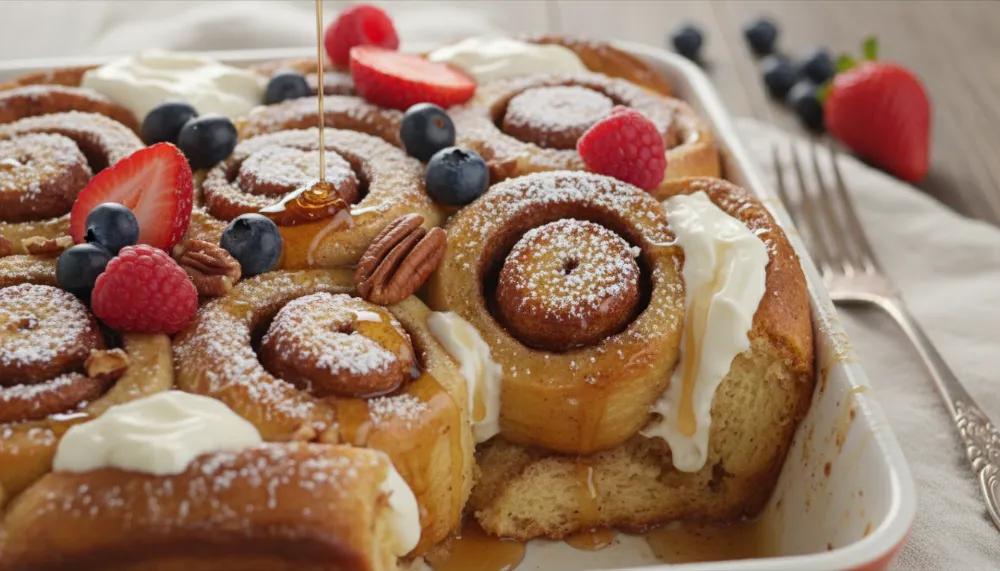
Cinnamon Roll French Toast Bake
Ingredients
- 2 Cans (12.4 oz each) refrigerated cinnamon rolls with icing
- 4 Large eggs
- 1/2 cup Heavy cream
- 2 tsp Pure vanilla extract
- 1 tsp Ground cinnamon
- 1/4 cup Melted butter
- 1/3 cup Maple syrup
Instructions
- 1 Preheat your oven to 375°F (190°C) and grease a 9×13-inch baking dish with butter or non-stick spray.
- 2 Open the cinnamon roll cans and set the icing aside. Cut each individual roll into 8 bite-sized pieces.
- 3 Place the cut pieces into the prepared baking dish, spreading them out evenly.
- 4 In a separate mixing bowl, whisk together the eggs, heavy cream, vanilla, and cinnamon until well combined.
- 5 Pour the egg mixture evenly over the cinnamon roll pieces. Drizzle the melted butter and maple syrup over the top.
- 6 Bake for 25-28 minutes until the top is golden brown and the custard is set. Drizzle with the reserved icing while warm.
The Fascinating Evolution of Breakfast Comfort Food
To truly appreciate the Cinnamon Roll French Toast Bake, one must understand the centuries of culinary history that converged to create this modern masterpiece. The dish is an ingenious hybrid of two beloved lineages: the ancient practice of salvaging bread known as French toast and the aromatic, spiced indulgence of European cinnamon rolls. French toast, or pain perdu, finds its origins in 4th-century Roman texts, where it was a practical solution for making stale bread palatable. By soaking the bread in a mixture of milk and eggs, the Romans created a dish that was both filling and luxurious, a concept that migrated across Europe and eventually to the Americas.
Cinnamon rolls, on the other hand, represent the spice trade’s historical influence. Emerging from Sweden (the kanelbulle) and Germany (the schnecken) during the 15th to 18th centuries, these spiral pastries became symbols of celebration. It wasn’t until the late 20th century that the “bake” or casserole format transformed these individual items into a communal breakfast event. The popularity of the Cinnamon Roll French Toast Bake exploded in the early 2000s, specifically catalyzed by the 2004 Pillsbury Bake-Off, where home cooks discovered that combining refrigerated dough with traditional custard produced a texture that was superior to either dish on its own.
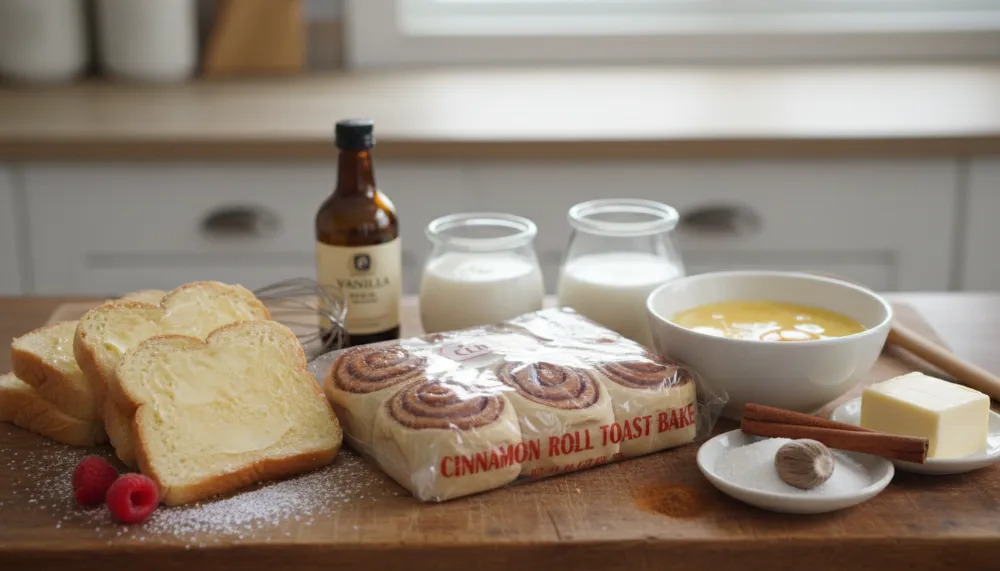
The Culinary Science: Why This Bake Works
The magic of a Cinnamon Roll French Toast Bake lies in the structural integrity of the dough and the chemical reaction of the custard. Unlike standard sliced white bread, which can become soggy or disintegrate when soaked, cinnamon roll dough is enriched with fats and yeast, allowing it to maintain a chewy, bready core while the exterior absorbs the egg and cream mixture. This creates a multi-layered textural experience: a crisp, caramelized top, a soft, custardy center, and a gooey bottom layer where the cinnamon sugar from the rolls melts into the maple syrup.
To achieve the ultimate consistency, using high-quality tools is essential. For instance, the Ninja BN751 Professional Plus DUO Blender is perfect for emulsifying the custard base or creating a homemade vanilla bean icing with its powerful 1000W motor. A perfectly blended custard ensures that every piece of dough is coated in an even ratio of egg to dairy, preventing “scrambled egg” pockets in the corners of your dish.
Professional Flavor Variations to Elevate Your Brunch
While the classic version is iconic, professional chefs often use this recipe as a canvas for more complex flavor profiles. One high-end variation is the Gourmet Sourdough & Cream Cheese Bake. In this version, chefs replace the refrigerated rolls with thick-cut cubes of artisanal sourdough, tossing them in a cinnamon-sugar slurry. Small dollops of whipped cream cheese are then folded throughout the mixture, creating pockets of tart, melted creaminess that balance the sugar. When preparing these thick-cut cubes, the Cuisinart 8 Cup Food Processor is essential for fast chopping of nuts or processing a cinnamon-sugar crumble topping for added crunch.
Another sophisticated take is the Orchard Spiced Apple & Pecan variation. By adding thinly sliced Granny Smith apples and toasted pecans, you introduce acidity and texture. To provide a professional depth of flavor without the use of alcohol, chefs often use a reduction of apple juice and a splash of apple cider vinegar. This mimicry of a “rum” or “brandy” glaze provides a sharp, bright finish that cuts through the richness of the heavy cream. For roasting the pecans to absolute perfection before adding them to the bake, the Cosori 9-in-1 TurboBlaze Air Fryer 6 Qt is a game-changer, providing even heat distribution for that golden-brown finish.
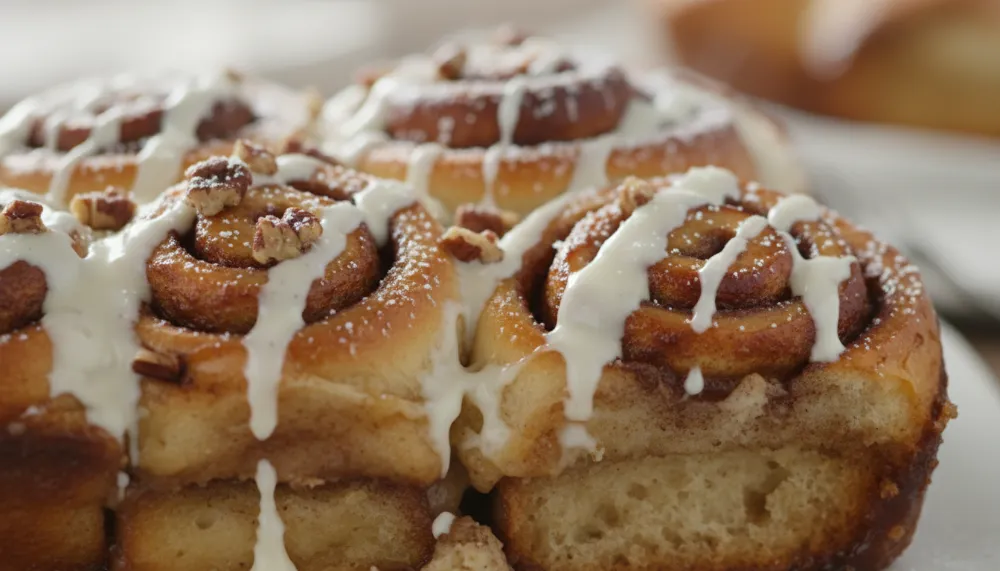
The Savory-Sweet Counterpoint: No-Pork Pairings
A massive trend in modern brunch is the “sweet and savory” plate. To complement the sugar-forward Cinnamon Roll French Toast Bake, high-authority chefs recommend serving it alongside savory proteins. Since we avoid pork in this kitchen, the best alternatives are maple-glazed beef breakfast strips or seasoned chicken apple sausages. The saltiness of the beef strips provides a necessary contrast to the maple syrup and cinnamon icing. For a truly professional presentation, crumble crispy beef strips over the top of the bake just before serving. This creates a “Beef Strip Toffee” effect that is incredibly popular in gourmet breakfast bistros.
Nutritional Deep Dive: Energy for the Day
A standard serving of this Cinnamon Roll French Toast Bake is a powerhouse of energy. A 4-inch square typically contains between 350 and 500 calories. While it is an indulgent dish, it provides significant protein from the eggs and heavy cream, essential for morning satiety. The use of enriched flour in the cinnamon rolls also provides a baseline of iron and B-vitamins. If you are looking to increase the nutritional density, incorporating fresh berries like blueberries or raspberries provides antioxidants and fiber, further balancing the glycemic load of the sugars.
Pro-Tips for the Perfect Bake Every Time
- The Soak: If you have the time, let the cut cinnamon rolls sit in the custard for 15 minutes before putting them in the oven. This allows the liquid to penetrate the dense dough.
- Temperature Control: Ensure your eggs and cream are at room temperature before whisking. This allows the fats to emulsify better, leading to a silkier custard.
- The Glaze: Always wait about 3 minutes after removing the bake from the oven before drizzling the icing. If the bake is too hot, the icing will simply melt into a clear oil, if it is too cold, it won’t spread into the crevices.
- Leftovers: This dish reheats beautifully. Use your air fryer at 350°F for 3 minutes to regain the crispy exterior that a microwave often destroys.
Frequently Asked Questions
Can I make this Cinnamon Roll French Toast Bake overnight?
Yes! You can assemble the bake, cover it tightly with foil, and refrigerate it overnight. In the morning, let it sit on the counter for 20 minutes to take the chill off before baking as directed. You may need to add 5 minutes to the total bake time.
What can I use instead of heavy cream?
Whole milk or half-and-half can be used, though the final result will be slightly less rich. For a dairy-free option, coconut milk (the canned, full-fat variety) provides a wonderful creaminess and a subtle tropical note that pairs surprisingly well with cinnamon.
Why is my bake soggy in the middle?
This usually happens if the oven temperature is too high, causing the outside to brown before the custard in the center has set. Ensure your oven is calibrated correctly, and if the top is browning too fast, tent it with a piece of aluminum foil for the last 10 minutes of baking.