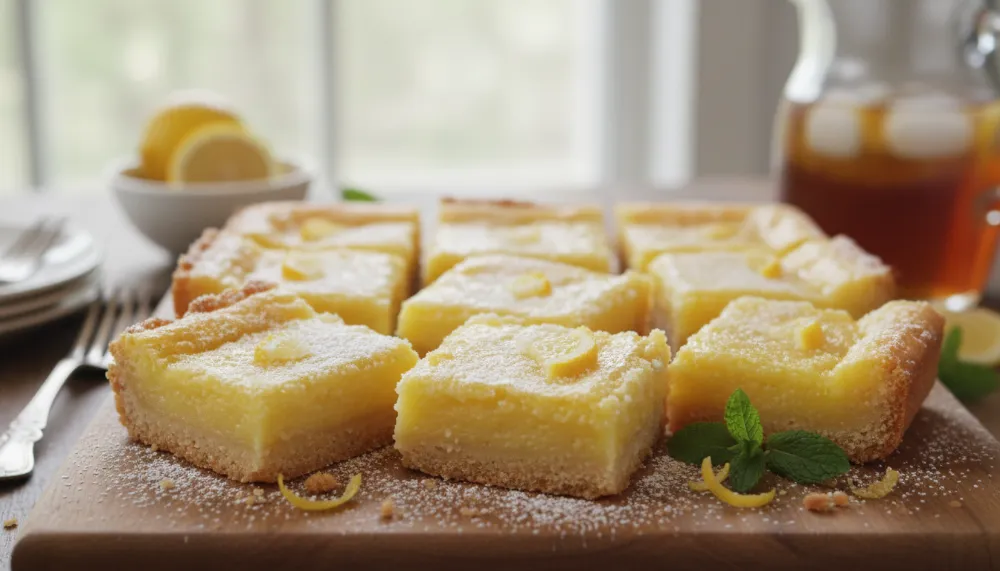
These Easy Lemon Bars from Scratch feature a buttery, melt-in-your-mouth shortbread crust topped with a vibrant, tangy citrus custard. They are the perfect balance of sweet and tart, making them an essential addition to your dessert repertoire.
Ultimate Easy Lemon Bars from Scratch
Ingredients
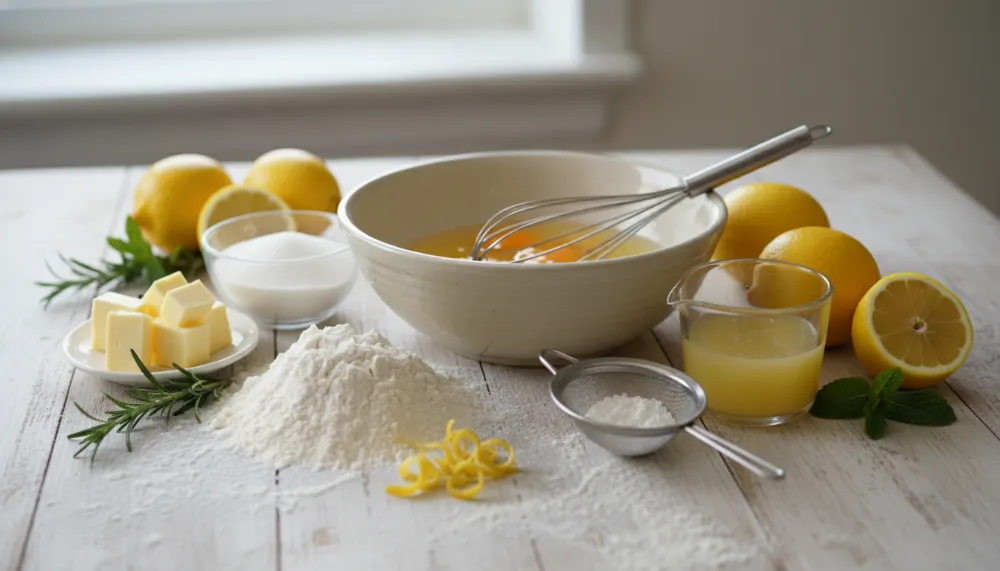
- 1 2 cups all-purpose flour
- 2 1/2 cup granulated sugar (for crust)
- 3 1 cup unsalted butter, chilled and cubed
- 4 1/4 teaspoon sea salt
- 5 6 large eggs, room temperature
- 6 2 1/2 cups granulated sugar (for filling)
- 7 1 cup fresh lemon juice
- 8 2 tablespoons lemon zest
- 9 1/2 teaspoon alcohol-free vanilla powder
- 10 Powdered sugar for dusting
Instructions
- 1 Preheat your oven to 350°F (175°C) and line a 9×13 inch baking pan with parchment paper.
- 2 Combine flour, 1/2 cup sugar, and salt. Cut in the cold butter using a food processor or pastry cutter until crumbly.
- 3 Press the mixture firmly into the bottom of the prepared pan. Bake for 20 minutes or until lightly golden.
- 4 In a large bowl, whisk together eggs, 2 1/2 cups sugar, lemon juice, zest, and vanilla powder until smooth.
- 5 Pour the lemon mixture over the hot crust and return to the oven for 25-30 minutes until the filling is set.
- 6 Allow to cool completely in the pan before refrigerating for at least 2 hours. Dust with powdered sugar before slicing.
The Rich History of Citrus Squares
The journey of Easy Lemon Bars from Scratch begins in the kitchens of mid-century America, but its heritage is a tapestry of global culinary traditions. The foundation, a classic shortbread, traces its lineage back to 16th-century Scotland, where it was perfected as a buttery biscuit often reserved for special occasions. When combined with lemon curd, a staple of 19th-century British tea service, the modern lemon bar was born. It was not until 1962, however, that the recipe became a household name. Eleanore Mickelson submitted a recipe for “Lemon Squares” to the Chicago Daily Tribune, effectively launching the dessert into the spotlight of American baking culture.
By 1963, the iconic Betty Crocker Cooky Book included a version of this recipe, cementing its status as a quintessential bake sale and holiday staple. The beauty of these bars lies in their simplicity, utilizing basic pantry items like flour, butter, and sugar, and transforming them into a sophisticated dessert that feels both rustic and refined. This historical evolution highlights how home cooks have always sought ways to bring bright, citrusy flavors into the kitchen, creating a legacy that continues with every batch of Easy Lemon Bars from Scratch made today.
Why You Should Make These Easy Lemon Bars from Scratch Today
There is something inherently joyful about the process of making Easy Lemon Bars from Scratch. Unlike many complex pastries that require hours of proofing or delicate tempering, lemon bars are approachable yet produce professional-quality results. The contrast between the crisp, buttery shortbread and the silky, tart filling provides a sensory experience that is hard to replicate with store-bought alternatives. When you bake these from scratch, you have complete control over the quality of the ingredients, particularly the lemons.
Using fresh lemons rather than bottled juice ensures a bright, clean acidity that elevates the entire dish. Furthermore, the absence of preservatives and artificial flavorings means the true essence of the citrus can shine. Whether you are hosting a summer garden party or simply looking for a bright pick-me-up on a cloudy afternoon, these bars are the perfect solution. They are versatile, portable, and universally loved, making them the ultimate crowd-pleaser for any occasion.
Essential Equipment for Perfect Baking
To achieve the perfect texture for your Easy Lemon Bars from Scratch, having the right tools in your kitchen is paramount. Professional results often come down to the precision of your equipment. For instance, creating the ideal shortbread crust requires cutting cold butter into flour until it reaches a specific consistency. The Cuisinart 8 Cup Food Processor: https://amzn.to/47Nhbg8 is essential for fast chopping and slicing during meal prep, and it is particularly effective at pulsing butter into flour to create those coveted pea-sized crumbs that lead to a flaky, delicious base.
Additionally, processing your lemon zest and sugar together can release the essential oils of the citrus more effectively. The Ninja BN751 Professional Plus DUO Blender: https://amzn.to/3LCDyNR is perfect for creating a smooth lemon filling, and its 1000W motor ensures that your ingredients are fully emulsified for a luxurious mouthfeel. While these bars are baked in a traditional oven, modern kitchens often rely on versatile appliances for surrounding tasks. The Cosori 9-in-1 TurboBlaze Air Fryer 6 Qt: https://amzn.to/4hRWmVq roasts chickpeas and vegetables perfectly with a large family capacity, which is great for preparing the savory meal that precedes your citrus dessert.
The Science of the Perfect Lemon Curd Filling
At the heart of every Easy Lemon Bars from Scratch recipe is the lemon curd filling. This is a delicate emulsion of eggs, sugar, and citrus juice. Understanding the science behind it can help you achieve a better bake every time. When eggs are heated, their proteins begin to uncoil and bond together, a process known as coagulation. In a lemon bar, we want the eggs to coagulate enough to set into a sliceable bar, but not so much that they become rubbery or scrambled. The sugar in the recipe acts as a stabilizer, raising the temperature at which the egg proteins coagulate and ensuring a smooth, custard-like texture.
Why Fresh Citrus is Non-Negotiable
The acidity of the lemon juice plays a dual role, it provides the characteristic tart flavor and it aids in the setting of the curd. However, too much acidity can hinder the proteins from bonding correctly. This is why using fresh, zest-heavy lemons is superior to bottled alternatives, which often contain citric acid and preservatives that can alter the pH balance of your bake. For a truly professional touch, consider using a mix of Eureka lemons for their sharp acidity and Meyer lemons for their floral, sweeter notes. This blend creates a depth of flavor that is often missing in standard recipes.
Anatomy of a Perfect Crust
The crust of your Easy Lemon Bars from Scratch is just as important as the filling. A classic shortbread crust relies on a high ratio of fat to flour, which inhibits gluten development and results in a tender, crumbly texture. Using cold butter is vital because as the butter melts in the oven, it creates small steam pockets that contribute to a light, crisp structure. If the butter is too warm when it goes into the oven, the crust may become overly dense or greasy. This is why many professional bakers recommend chilling the crust for 15 minutes after pressing it into the pan and before par-baking.
Par-baking is the process of partially baking the crust before adding the liquid filling. This step is non-negotiable when making Easy Lemon Bars from Scratch. Without it, the moisture from the lemon filling would soak into the raw dough, resulting in a “soggy bottom.” By baking the crust until it is lightly golden, you create a barrier that keeps the shortbread crisp and sturdy enough to hold the weight of the citrus custard.
Pro Tips for a Clean Cut and Professional Presentation
One of the most common challenges with Easy Lemon Bars from Scratch is getting those perfect, clean squares seen in professional bakeries. The secret lies in the cooling and the cutting technique. You must allow the bars to cool completely at room temperature, and then refrigerate them for at least two to four hours, or even overnight. This gives the custard time to fully set and firm up. If you try to cut them while they are even slightly warm, the filling will likely stick to the knife and create jagged edges.
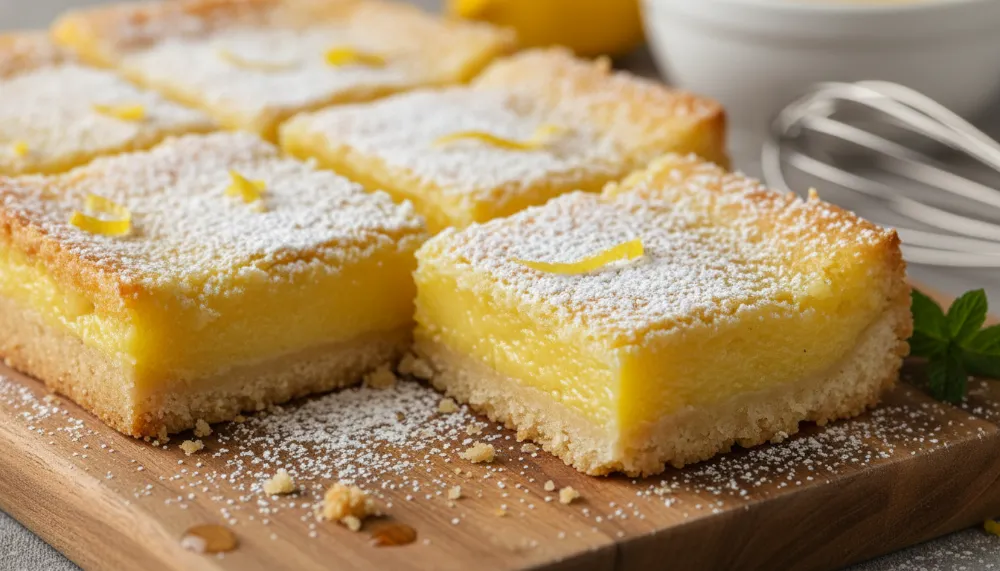
When you are ready to slice, use a very sharp chef’s knife and dip it into hot water, then wipe it dry between every single cut. The heat from the blade will glide through the butter in the crust and the proteins in the filling, leaving a pristine edge. For an extra touch of elegance, use a fine-mesh sieve to dust a uniform layer of powdered sugar over the bars just before serving. If you dust them too early, the sugar will absorb the moisture from the bars and disappear.
Troubleshooting Common Baking Issues
Even with a recipe for Easy Lemon Bars from Scratch, issues can occasionally arise. One common problem is the appearance of tiny white bubbles on the surface of the bars. These are simply air bubbles from the eggs that have risen to the top during baking. While they don’t affect the flavor, you can minimize them by whisking your filling gently rather than vigorously, or by straining the filling through a fine-mesh sieve before pouring it over the crust. Another issue is a cracked surface, which usually indicates over-baking. The bars are done when the edges are set and the center has a slight jiggle, much like a cheesecake.
If your crust is too hard to cut, it might be due to over-mixing the dough, which develops too much gluten. Ensure you pulse the ingredients just until they come together. Conversely, if the crust is too crumbly, you may not have pressed it firmly enough into the pan. Use the bottom of a flat measuring cup to pack the dough tightly and evenly across the base of the pan to ensure a solid foundation for your lemon filling.
Gourmet Flavor Variations
Once you have mastered the basic recipe for Easy Lemon Bars from Scratch, you can begin to experiment with professional variations. For a savory twist, try adding a teaspoon of dried culinary lavender or finely chopped fresh thyme to the shortbread dough. These herbal notes pair beautifully with the brightness of the lemon. For a more intense citrus experience, you can substitute half of the lemon juice with lime or grapefruit juice, creating a citrus medley bar that is incredibly refreshing.
Another professional trick is to brown your butter before making the crust. Browning the butter removes the water content and toasts the milk solids, resulting in a nutty, rich flavor profile that complements the tartness of the filling perfectly. Simply melt the butter over medium heat, stirring constantly until it turns a golden brown and smells like toasted hazelnuts. Let it solidify in the fridge before using it in your crust recipe. These small adjustments can transform a simple home-baked treat into a gourmet patisserie-style dessert.
Final Thoughts on Baking Excellence
Mastering Easy Lemon Bars from Scratch is a journey in balancing flavors and textures. It is a testament to the fact that you do not need complex ingredients or advanced degrees in pastry arts to create something truly spectacular. By focusing on the quality of your citrus, the temperature of your butter, and the precision of your baking times, you can produce a dessert that stands the test of time. These bars are more than just a sweet treat, they are a slice of culinary history and a celebration of simple, honest ingredients. We hope this guide empowers you to step into your kitchen with confidence and bake the best lemon bars you have ever tasted.