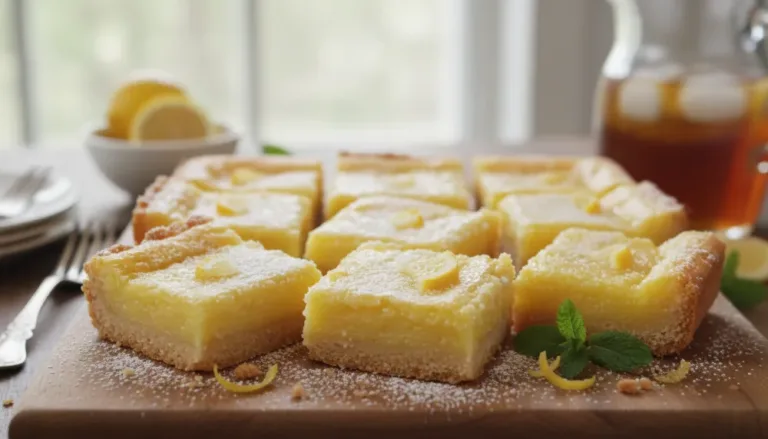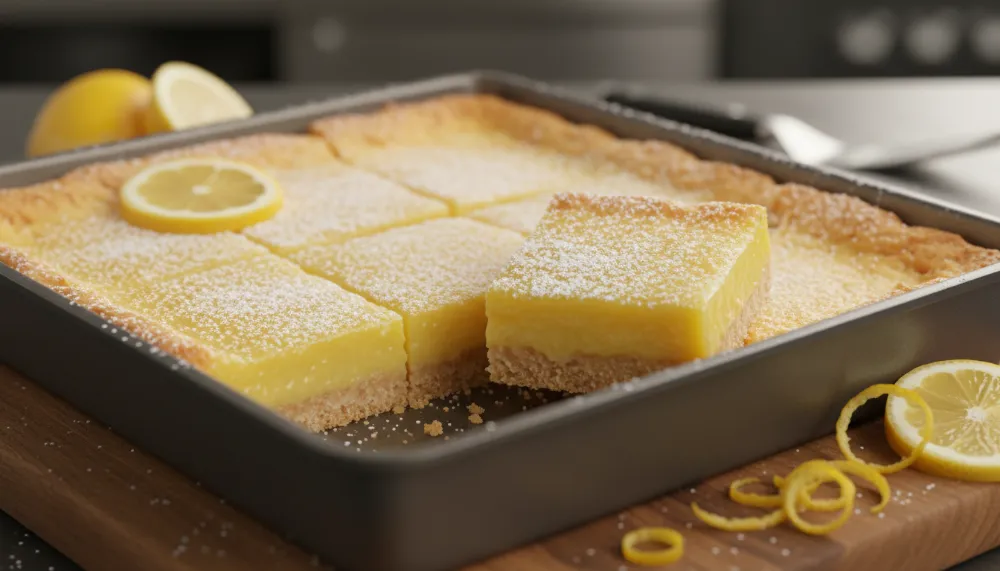
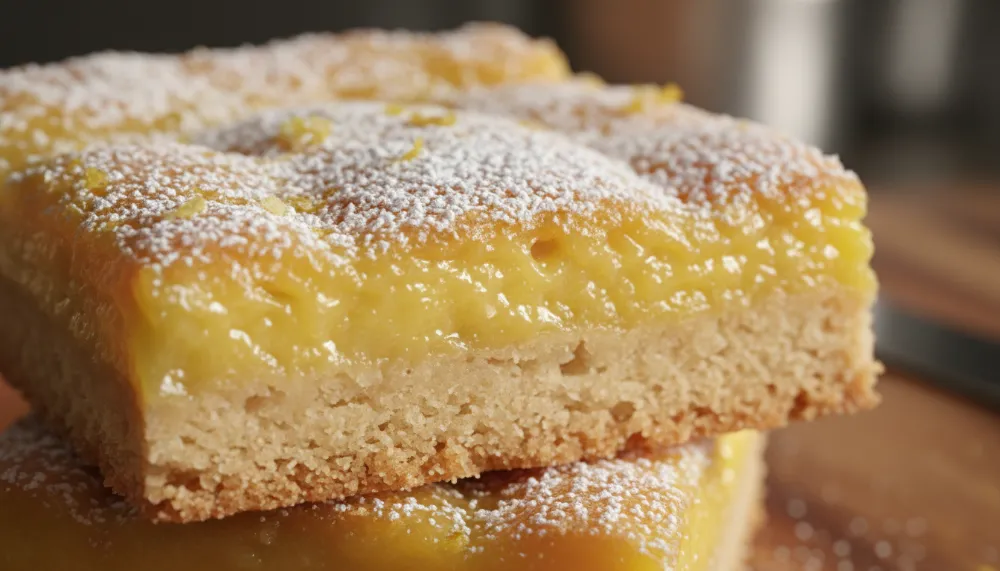
These Classic Lemon Bars with Shortbread Crust are the definitive balance of buttery, flaky pastry and vibrant, tart citrus custard. They represent the gold standard of home baking, offering a sophisticated flavor profile that appeals to every palate.
Classic Lemon Bars with Shortbread Crust
Ingredients
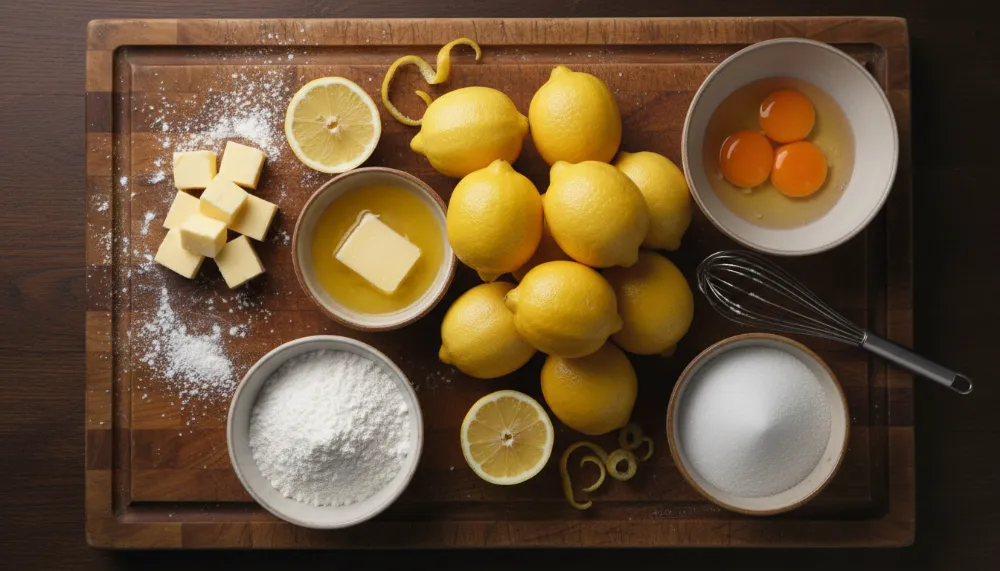
- 1 cup unsalted butter, softened
- 1/2 cup granulated sugar (for crust)
- 2 cups all-purpose flour
- 1/4 tsp salt
- 4 large eggs
- 1.5 cups granulated sugar (for filling)
- 1/4 cup all-purpose flour (for filling)
- 2/3 cup fresh lemon juice
- 1 tbsp lemon zest
- OPT Powdered sugar for dusting
Instructions
- 1 Preheat your oven to 350°F (175°C) and grease a 9×13 inch baking pan or line with parchment paper.
- 2 In a medium bowl, cream together the softened butter, 1/2 cup sugar, 2 cups flour, and salt until a crumbly dough forms.
- 3 Press the dough firmly into the bottom of the prepared pan and bake for 18 to 20 minutes until lightly golden.
- 4 While the crust bakes, whisk together the eggs, 1.5 cups sugar, 1/4 cup flour, lemon juice, and lemon zest until smooth and frothy.
- 5 Pour the lemon mixture over the hot, pre-baked crust and return to the oven for 20 to 25 minutes until the filling is set.
- 6 Remove from oven and let cool completely on a wire rack, then refrigerate for at least 2 hours before slicing.
- 7 Dust with powdered sugar right before serving for a classic finish.
The Historical Origin of Classic Lemon Bars with Shortbread Crust
The lemon bar is a relatively modern invention that combines two much older European traditions: Scottish shortbread and English lemon curd. While we often think of them as a timeless classic, their specific identity as a baked “bar” dessert solidified in the mid-20th century. Shortbread itself dates back to 12th-century Scotland, though it reached its refined, buttery form in the 16th century. Lemon curd originated in 19th-century England, where it was originally a sharp, creamy spread made by curdling cream with lemon juice. The genius of Classic Lemon Bars with Shortbread Crust lies in the marriage of these two elements into a single, portable square.
The first widely recognized recipe for lemon bars appeared in the Chicago Daily Tribune on August 27, 1962. It was submitted by home cook Eleanore Mickelson for a recipe contest. Her version used only three tablespoons of lemon juice, making it much sweeter than modern versions. However, the dessert became a household name in 1963 when it was featured in the Betty Crocker Cooky Book. This publication helped standardize the ratio of the thick, custard-like filling to the crumbly shortbread base, leading to the recipe we love today.
The Science of the Shortbread Crust
To achieve the perfect Classic Lemon Bars with Shortbread Crust, one must understand the physics of shortbread. Shortbread is defined by its “short” texture, a term used in baking to describe a crumbly, tender pastry that breaks easily. This is achieved by having a high fat-to-flour ratio. When you cream the butter and sugar, you are creating a matrix that coats the flour particles, preventing long gluten strands from forming. This results in a delicate snap rather than a chewy or bread-like consistency.
Using the right tools can make or break your crust. For example, a Cuisinart 8 Cup Food Processor is a meal prep essential that is perfect for fast chopping and slicing, and it is also the ideal tool for pulsing cold butter into flour to ensure your crust remains flaky and cold. If the butter melts before it hits the oven, the crust will be greasy rather than crumbly. Always bake your crust until it is just beginning to turn golden, this ensures it can stand up to the moisture of the lemon curd without becoming soggy.
Mastering the Lemon Curd Filling
The filling of Classic Lemon Bars with Shortbread Crust is essentially a baked custard or curd. The magic happens through the coagulation of egg proteins. When eggs are mixed with sugar and acid (lemon juice), they form a structural network that thickens as it heats. The addition of a small amount of flour to the filling acts as a stabilizer, preventing the eggs from weeping and giving the bars a clean, sliceable edge.
For the smoothest filling possible, some professional bakers use a high-powered blender. The Ninja BN751 Professional Plus DUO Blender features a 1000W motor, which, while perfect for tahini sauce and harissa paste, is also excellent for fully emulsifying your egg and sugar mixture for a bubble-free, silky curd. Ensuring there is no air trapped in the batter prevents those unsightly white bubbles from forming on the surface during the bake.
Professional Flavor Variations and Elevators
Chefs often elevate the classic recipe by introducing complex aromatic profiles. One popular method is botanical infusion. By adding minced rosemary or dried lavender to the shortbread crust, you introduce an earthy, floral dimension that balances the sharp acidity. Another “gold standard” technique is using brown butter (beurre noisette) in the crust. By gently cooking the butter until the milk solids toast, you add a deep, nutty flavor that complements the bright citrus.
You can also experiment with citrus medleys. While the Classic Lemon Bars with Shortbread Crust typically use Eureka or Lisbon lemons, gourmet versions may swap them for Meyer lemons, which are sweeter and more floral, or a combination of Key lime and blood orange for a more complex acidity profile. Always ensure your citrus is fresh, bottled juice lacks the volatile oils found in the zest which provide the essential “lemony” aroma.
The Importance of Cooling and Storage
Patience is the most difficult ingredient in this recipe. Classic Lemon Bars with Shortbread Crust must cool completely at room temperature before being moved to the refrigerator. If you place a hot pan directly into the fridge, condensation will form on the surface, ruining the texture of the curd and making the crust mushy. Once chilled for at least two to four hours, the fats in the butter and the proteins in the eggs will have fully set, allowing for those perfect, sharp-edged squares.
For storage, you want to keep the bars airtight to prevent them from absorbing refrigerator odors. The Rubbermaid Brilliance Glass Storage Set of 9 is perfect for meal prep storage as it is leak-proof and stackable, making it ideal for keeping your lemon bars fresh for up to five days. If you plan on keeping them longer, they actually freeze remarkably well. Use a FoodSaver Vacuum Sealer Machine to keep ingredients fresh longer and prevent freezer burn if you are storing large batches of pre-baked crusts or individual bars.
Troubleshooting Common Baking Issues
Even with a simple recipe, things can go wrong. If your lemon bars have a thin, crackly white crust on top, do not worry, this is simply a layer of air bubbles and sugar that rose to the top during baking. It is perfectly edible and usually hidden by the final dust of powdered sugar. If your crust is too hard to cut, you may have over-baked it during the initial blind-bake or used too much sugar in the dough.
To get those legendary clean cuts, use a large chef’s knife dipped in hot water and wiped clean between every single slice. This melts the butter and sugar just enough to glide through the bar without dragging the curd into the crust. If the filling seems too soft even after cooling, it may need more lemon zest or a slightly longer bake time next time to ensure the egg proteins have fully bridged. For perfectly roasted chickpeas and vegetables to serve as a savory contrast to your sweet bars, the Cosori 9-in-1 TurboBlaze Air Fryer 6 Qt is a fantastic kitchen addition for large family capacity cooking.
Final Professional Tips
Always use fresh lemons. The acidity levels in bottled juice can vary wildly, which affects how the curd sets. Furthermore, ensure your eggs are at room temperature before whisking, this allows the sugar to dissolve more efficiently, leading to a more stable emulsion. Finally, do not dust with powdered sugar until the very moment you are ready to serve, the moisture in the lemon curd will eventually absorb the sugar, making it disappear if left for too long.