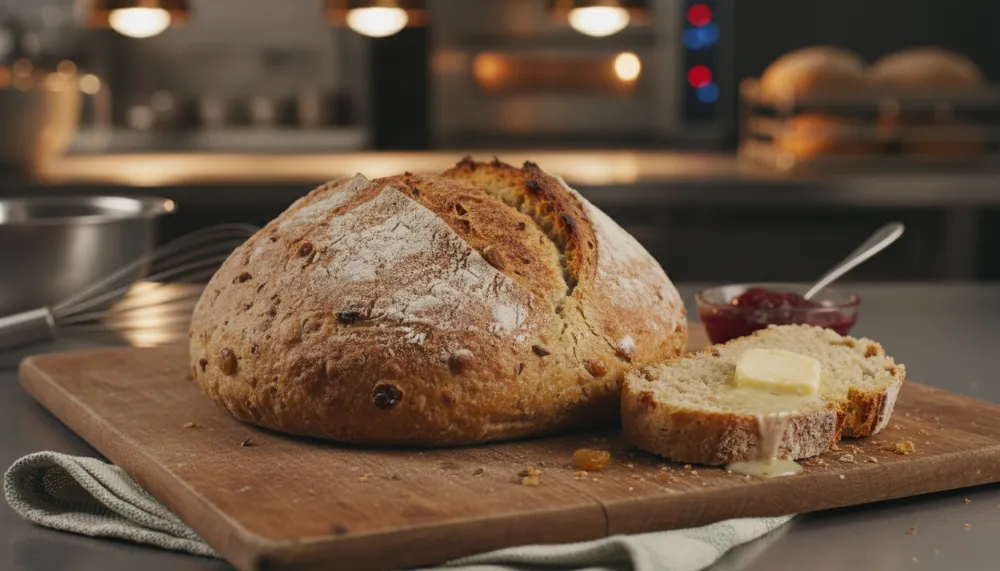
Quick Irish Soda Bread is a rustic, no-yeast miracle that delivers a crusty loaf with a tender, dense crumb in under an hour. This historic staple relies on the simple chemistry of buttermilk and baking soda to create the perfect companion for hearty soups and stews.
Quick Irish Soda Bread
Ingredients
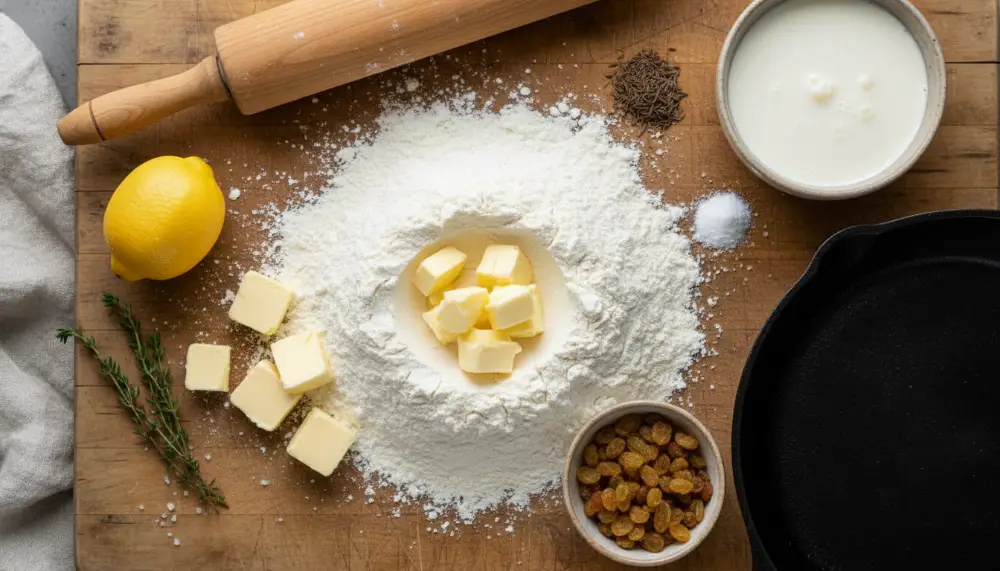
- 1 4 cups All-Purpose Flour (plus extra for dusting)
- 2 1 tsp Baking Soda (Bicarbonate of Soda)
- 3 1 tsp Fine Salt
- 4 1.75 cups Cold Buttermilk
- 5 2 tbsp Butter (cubed, optional for richness)
Instructions
- 1 Preheat your oven to 425°F (220°C) and lightly flour a baking sheet or cast-iron skillet.
- 2 Sift the flour, baking soda, and salt into a large mixing bowl to ensure even distribution.
- 3 Make a well in the center of the dry ingredients and pour in the buttermilk, stirring with a wooden spoon until a shaggy dough forms.
- 4 Turn the dough onto a floured surface and gently shape into a round loaf about 1.5 inches thick. Do not overwork!
- 5 Score a deep cross into the top with a sharp knife and bake for 30 to 35 minutes until the loaf sounds hollow when tapped.
The Origins of Quick Irish Soda Bread
The history of Quick Irish Soda Bread is a fascinating tale of survival, adaptation, and culinary ingenuity. While many people associate bread-making with hours of yeast fermentation, the Irish soda bread tradition emerged in the early 1830s as a response to the specific climate of Ireland. The soft wheat grown in the emerald isle was low in gluten, meaning it did not respond well to yeast-based leavening. When bicarbonate of soda became widely available, it provided a way for Irish families to bake nutritious bread in their own homes using only the simplest of ingredients: flour, salt, soured milk, and soda. During the Great Famine of the 1840s, this bread became a primary source of sustenance. Its ability to be cooked in a bastible (a large cast-iron pot over an open fire) meant that even families without expensive ovens could produce a warm, filling loaf. The cross on top, which we see as decorative today, served the functional purpose of letting the thick dough expand while baking and, according to legend, let the spirits out of the bread. Today, it remains a symbol of Irish heritage, loved for its crusty exterior and dense, satisfying crumb.
The Science Behind the Rise
Unlike traditional loaves that rely on yeast to convert sugars into carbon dioxide over several hours, Quick Irish Soda Bread utilizes a chemical reaction for its lift. The baking soda, an alkaline compound, reacts immediately with the lactic acid in the buttermilk. This reaction releases bubbles of carbon dioxide that expand when the dough hits the hot oven. Because this reaction begins as soon as the wet and dry ingredients meet, speed is of the essence, hence the name “Quick.” If you wait too long or over-handle the dough, the bubbles will escape, resulting in a flat, brick-like loaf. This is why professional bakers use the “claw” method, stirring the dough just enough to bring it together without developing the gluten or crushing the air pockets. The result is a texture more akin to a giant, savory scone than a standard sandwich loaf.
Professional Kitchen Tools for Better Bread
To achieve professional results at home, having the right equipment is essential. While this bread is simple, modern tools can streamline the process and ensure consistency. For example, the Cuisinart 8 Cup Food Processor (https://amzn.to/47Nhbg8) is a meal prep essential that can quickly pulse dry ingredients and even cold butter if you are making an enriched version of this bread. For those who want to serve their bread with a side of homemade hummus or a vibrant vegetable spread, the Ninja BN751 Professional Plus DUO Blender (https://amzn.to/3LCDyNR) is perfect for creating smooth textures. Once your bread is baked, storing it properly is key to keeping that crust fresh. The Rubbermaid Brilliance Glass Storage Set (https://amzn.to/4oD0YkY) is leak-proof and stackable, making it ideal for keeping leftovers moist. If you find yourself baking large batches for the week, the FoodSaver Vacuum Sealer Machine (https://amzn.to/4qWgVnS) keeps ingredients and even sliced portions fresh longer, preventing freezer burn. Finally, for those making a modern savory version of this loaf, the Cosori 9-in-1 TurboBlaze Air Fryer (https://amzn.to/4hRWmVq) can roast the chickpeas or vegetables you might serve alongside your fresh bread with perfect efficiency.
Nutritional Depth of Soda Bread
Quick Irish Soda Bread is a powerhouse of energy. A standard 100g serving provides approximately 280 to 310 calories, primarily from complex carbohydrates. This makes it an excellent source of sustained energy. It also offers a respectable 7g to 9g of protein, derived from the combination of wheat and buttermilk. If you choose to use whole-meal flour, the fiber content increases significantly, providing 4g to 6g per serving, which aids in digestion. Furthermore, the buttermilk contributes essential minerals like calcium and phosphorus, while the flour provides a significant dose of iron, often covering 15-20% of your daily value. It is a hearty, functional food that has fueled generations through cold winters and physical labor.
Professional Variations: No-Pork and Alcohol-Free
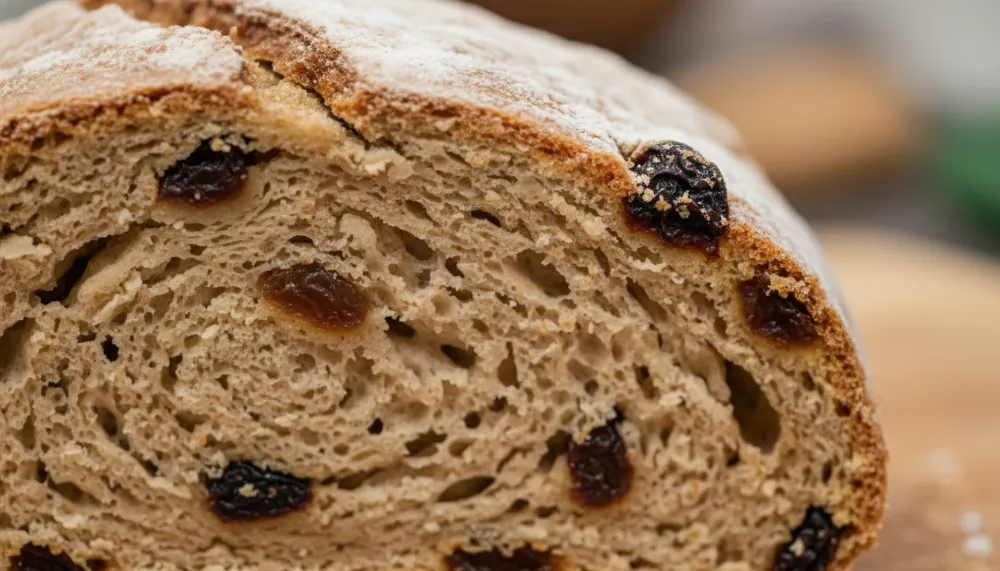
In a professional culinary setting, we often look to elevate the basic recipe while respecting dietary boundaries. Since we strictly avoid pork and alcohol in this guide, here are three sophisticated ways to reinvent your Quick Irish Soda Bread. First is the Savory Beef & Cheddar Loaf. Instead of traditional bacon, use finely diced, crispy smoked beef strips. Fold these into the dough along with one cup of sharp aged white cheddar and a handful of fresh chives. The result is a smoky, savory bread that tastes like a steakhouse favorite. Second, for those looking for a malty depth usually provided by Guinness, try the Malt-Alternative Dark Loaf. Replace half of the buttermilk with a rich, dark vegetable broth mixed with a tablespoon of balsamic vinegar. The vinegar provides the necessary acid for the soda to react, while the broth mimics the deep, fermented notes of a stout without any alcohol. Finally, the Spotted Dog Sweet Variation is a classic tea cake version. Add 1 cup of dried currants and 2 tablespoons of sugar to the dough. To keep the fruit plump, soak them in warm apple juice for 10 minutes before adding them to the flour mixture. This adds a natural sweetness and moistness that is absolutely irresistible when served with butter and honey.
Common Mistakes and Troubleshooting
Even though this bread is fast, beginners often face a few common hurdles. If your bread is too dense, it is likely because you over-worked the dough. Remember, the more you knead, the more gluten you develop, and the harder the bread becomes. Use the “claw” hand and stop the second the flour is hydrated. If you notice a slightly metallic or bitter taste, you may have used too much baking soda or failed to sift it properly, leaving small clumps in the crumb. Always ensure your baking soda is fresh, as it loses its potency over six months. If your loaf is pale and doesn’t have a crusty finish, your oven temperature might be too low. Start high at 425°F to set the crust and get that initial spring, then lower it slightly if the bread is browning too quickly.
Storing and Serving Your Quick Irish Soda Bread
This bread is undoubtedly at its peak about 20 minutes after it leaves the oven, once it has had just enough time to set but is still warm enough to melt butter. To store it, wrap the cooled loaf in a clean tea towel and place it in an airtight container like the Rubbermaid Brilliance series. It will stay fresh for about two days. On the third day, Irish tradition suggests slicing it and toasting it under a broiler, then topping it with a generous smear of salted butter. It is the perfect side for a thick chicken or beef stew, or even a simple bowl of roasted tomato soup. Because it is so quick to make, it is the ideal recipe for when you realize you are out of bread but want something better than a store-bought loaf.