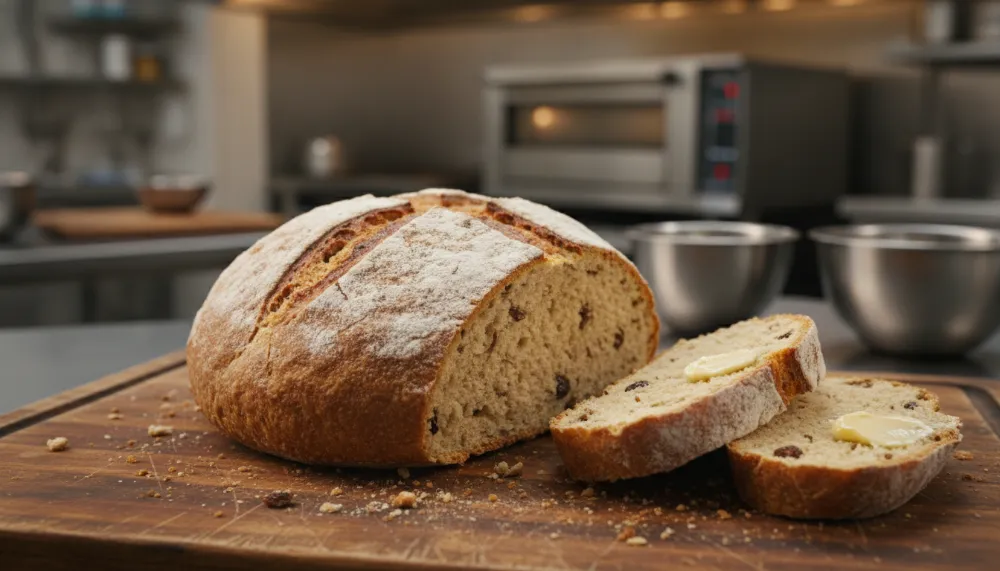
Master the art of rustic baking with our definitive Gluten Free Irish Soda Bread, a crusty, golden loaf that perfectly balances traditional texture with modern dietary needs. This recipe delivers a dense, scone-like crumb and a signature crunchy crust that will make you forget it is gluten-free.
Gluten Free Irish Soda Bread
Ingredients
- 4 cups Gluten-Free All-Purpose Flour (with Xanthan Gum)
- 1 tsp Baking Soda
- 1 tsp Salt
- 2 tbsp Granulated Sugar
- 4 tbsp Cold Unsalted Butter (cubed)
- 1.5 cups Buttermilk
- 1 Large Egg (beaten)
- 1 cup Raisins (optional)
Instructions
- Preheat oven to 400°F (200°C) and grease a cast-iron skillet or baking sheet.
- Whisk flour, baking soda, salt, and sugar in a large bowl.
- Cut in cold butter using a pastry cutter or fork until it resembles coarse crumbs.
- Stir in raisins if using.
- Whisk buttermilk and egg, then pour into dry ingredients.
- Mix until a shaggy dough forms, then gently shape into a round loaf on a floured surface.
- Cut a deep ‘X’ into the top and bake for 40-45 minutes.
The Fascinating History of Irish Soda Bread
Gluten Free Irish Soda Bread might seem like a modern invention, but the roots of this bread are deeply embedded in the history of Ireland. The history of Irish Soda Bread is rooted in the mid-19th century, specifically the 1830s, when bicarbonate of soda (baking soda) was first introduced to Ireland. This discovery revolutionized baking for a population that faced significant economic and agricultural challenges. During the Great Famine (1845, 1852), Ireland faced extreme poverty. Traditional yeasted breads were difficult to make because yeast was expensive and the locally grown “soft” wheat did not have the high protein content required for yeast to rise effectively.
Irish families discovered that combining baking soda with soured milk (buttermilk) created a chemical reaction that allowed the bread to rise without yeast. This was a response to hardship that eventually became a cultural staple. Many lower-class households lacked ovens, so they baked the bread in iron pots, known as bastibles, or on griddles over open hearths. The signature “cross” cut into the top allowed heat to reach the center and was traditionally said to “let the devil out,” though it also served the practical purpose of helping the bread expand evenly.

Essential Tools for Perfect Gluten-Free Baking
Baking the perfect Gluten Free Irish Soda Bread requires precision and the right equipment to ensure the dough is aerated and the crust is perfectly browned. Here are our top professional recommendations:
- Ninja BN751 Professional Plus DUO Blender: https://amzn.to/3LCDyNR (Why Perfect: 1000W motor, perfect for grinding oats into flour or mixing wet ingredients effortlessly).
- Cosori 9-in-1 TurboBlaze Air Fryer 6 Qt: https://amzn.to/4hRWmVq (Why Perfect: Roasts vegetables and seeds for savory variations perfectly, large family capacity).
- Cuisinart 8 Cup Food Processor: https://amzn.to/47Nhbg8 (Why Perfect: Fast chopping and slicing for adding fruit or nuts, meal prep essential).
- Rubbermaid Brilliance Glass Storage Set of 9: https://amzn.to/4oD0YkY (Why Perfect: Perfect for storing leftover bread slices, leak-proof, stackable).
- FoodSaver Vacuum Sealer Machine: https://amzn.to/4qWgVnS (Why Perfect: Keeps bread and dry flour blends fresh longer, prevents freezer burn).
Gluten-Free Nutritional Profile
When you enjoy a slice of Gluten Free Irish Soda Bread, you are consuming a dense, nutrient-rich food. A typical slice (approx. 90g) of gluten-free Irish Soda Bread differs from the traditional version by incorporating nutrient-dense gluten-free flour blends, such as rice, potato, or sorghum flour, and often adding eggs for structure. Calories: ~240, 250 kcal. Total Fat: 4g, 6g (primarily from butter/buttermilk). Carbohydrates: 45g, 48g (varies with the inclusion of raisins or sugar). Protein: 4g, 5g (enhanced by the addition of eggs in gluten-free recipes). Fiber: 2g (can be increased using psyllium husk or flaxseed meal). Sodium: 190mg, 250mg. Key Vitamins: Often fortified with Iron, Calcium, and Vitamin B from the gluten-free flour blends.
Professional Flavor Variations
Savory Variations
For those who prefer a more robust loaf to serve with dinner, these savory options are exceptional. They pair wonderfully with hearty soups and beef stews.
- Aged Cheddar & Rosemary: Incorporate 1 cup of sharp shredded cheddar and 1 tablespoon of finely chopped fresh rosemary. This version is excellent served alongside beef stew.
- Smoked Chicken & Chive: For a “meaty” savory loaf, fold in 1/2 cup of finely diced smoked chicken breast and a handful of fresh chives.
- Truffle & Herb: Use 1/2 teaspoon each of dried sage, thyme, and oregano, finished with a drizzle of truffle-infused olive oil on the crust before baking.
- Beef Broth “Stout” Style: To mimic the deep, malty flavor of a traditional stout-based soda bread without using alcohol, replace 1/2 cup of the buttermilk with a concentrated beef broth or a mix of dark molasses and balsamic vinegar.
Sweet Variations
Traditional Irish Soda Bread often featured a bit of sweetness, making it perfect for tea time or breakfast. These variations keep the tradition alive while meeting gluten-free requirements.
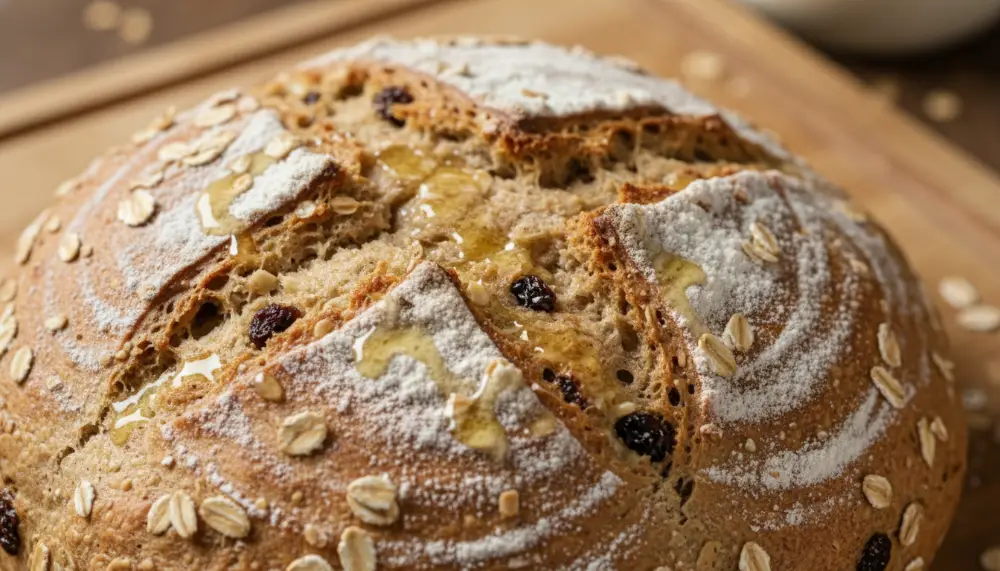
- The “Spotted Dog” (Traditional Sweet): Fold in 1.5 cups of raisins or currants and 1/2 cup of sugar. This is the most famous historical variation and is best served warm with butter.
- Orange & Cranberry: Add the zest of one large orange and 1 cup of dried cranberries. Replace 2 tablespoons of buttermilk with fresh orange juice for a bright, citrusy acidity.
- Honey & Walnut: Use 3 tablespoons of honey as the primary sweetener and add 3/4 cup of toasted, crushed walnuts for texture.
- Apple & Cinnamon: Fold in 1 cup of finely diced tart apples, like Granny Smith, and 1 teaspoon of ground cinnamon. Use apple juice to thin the dough if it becomes too dry from the fruit.
Expert Tips for Gluten-Free Success
Working with gluten-free dough can be tricky because it lacks the elastic properties of gluten. To ensure your Gluten Free Irish Soda Bread doesn’t crumble, make sure your flour blend contains xanthan gum. If it doesn’t, add 1 teaspoon of xanthan gum per 2 cups of flour. Additionally, do not overwork the dough. Unlike traditional bread, you do not want to develop structure through kneading, as this can make the gluten-free bread tough. Simply mix until combined and shape gently. If the dough is too sticky, use a light dusting of gluten-free flour on your hands rather than adding too much to the bowl. For the best crust, bake the bread in a pre-seasoned cast-iron skillet, which distributes heat more evenly than a thin baking sheet.
Storage and Serving
Gluten Free Irish Soda Bread is best enjoyed on the day it is baked. However, if you have leftovers, they make excellent toast. Store the bread in an airtight container for up to 2 days at room temperature. For longer storage, slice the bread and freeze it in vacuum-sealed bags using your FoodSaver. To reheat, simply pop a frozen slice into the toaster or oven until warm and crispy. Serve with a generous smear of high-quality butter, a drizzle of honey, or alongside a hot bowl of chicken or beef soup for a comforting meal.