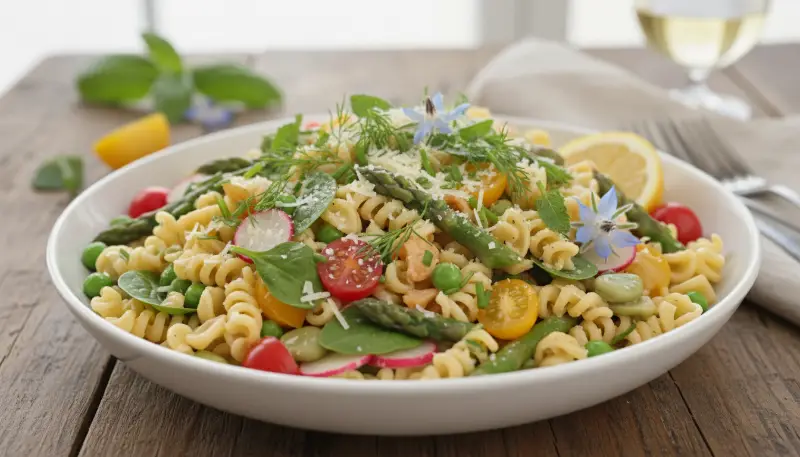
Spring is finally here, and there is no better way to celebrate the season’s bounty than with a vibrant, nutrient-packed Spring Vegetable Pasta. This dish combines the freshness of seasonal greens with savory beef to create a meal that is both light and satisfying.
Spring Vegetable Pasta with Crispy Beef
15 MIN
15 MIN
4 PERS
Ingredients
- • 1 lb (450g) Pasta (Penne or Fusilli)
- • 6 oz Beef Bacon or Thinly Sliced Sirloin
- • 2 tbsp Extra Virgin Olive Oil
- • 2 medium Leeks (white/light green parts)
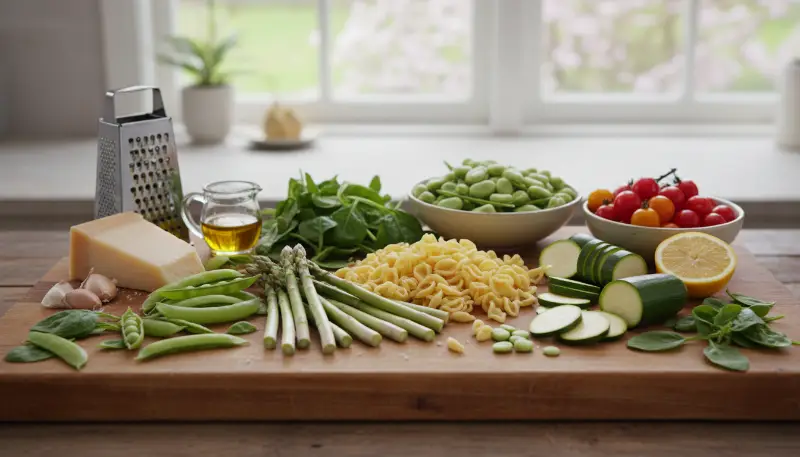
- • 1 bunch Fresh Asparagus, trimmed
- • 1 cup Sweet Green Peas
- • 3 cloves Garlic, minced
- • 1/2 cup Rich Vegetable Broth
- • 1 Lemon (zest and 2 tbsp juice)
- • 1/2 cup Grated Parmesan Cheese
- • 1/4 cup Fresh Parsley, chopped
- • Sea Salt and Cracked Black Pepper to taste
Instructions
- 1 Boil pasta in salted water until al dente; reserve 1/2 cup pasta water.
- 2 Sauté beef in 1 tbsp olive oil until crispy; remove and set aside.
- 3 Sauté leeks and asparagus in remaining oil for 5 minutes.
- 4 Add garlic and peas; cook for 1 minute until fragrant.
- 5 Deglaze with broth and lemon juice; simmer for 2 minutes.
- 6 Toss pasta, beef, cheese, zest, and herbs with the vegetable mix.
- 7 Add reserved water if needed for a silky sauce; serve hot.
The Essence of Spring in a Single Bowl
As the weather warms and the gardens begin to bloom, our culinary cravings naturally shift from heavy stews to lighter, more vibrant dishes. This Spring Vegetable Pasta is the ultimate transition meal. It celebrates the short but glorious season of early produce like tender asparagus spears and sweet leeks. By incorporating a base of high-quality pasta and savory beef, we ensure that while the dish feels light, it still provides the satiety required for a busy weeknight dinner.
Making a successful Spring Vegetable Pasta requires a delicate balance of textures. You want the snap of the asparagus to remain intact, the leeks to become buttery and soft, and the beef to offer a salty, umami crunch that contrasts the sweetness of the peas. This recipe avoids the heavy creams often found in pasta dishes, instead relying on a bright reduction of vegetable broth and lemon juice to create a sophisticated, silky coating for the noodles.
Key Ingredients for the Perfect Spring Vegetable Pasta
Selecting your ingredients is the most important step in crafting an authentic Spring Vegetable Pasta. When you head to the farmer’s market or grocery store, look for asparagus that is firm to the touch with tightly closed tips. Thinner spears will cook faster and offer a more delicate texture, while thicker spears provide a heartier bite. Both work beautifully in this Spring Vegetable Pasta, but you should adjust your sauté time accordingly.
Leeks are another essential component. Unlike standard yellow onions, leeks offer a mild, almost floral sweetness that won’t overpower the other spring greens. If you cannot find leeks, shallots are a suitable alternative, but the leeks truly define the character of this Spring Vegetable Pasta. For the beef component, using a high-quality beef bacon or very thinly sliced sirloin provides a savory depth that elevates the dish from a simple side to a main course masterpiece.
Essential Kitchen Tools for Meal Prep
Efficiency in the kitchen starts with the right equipment. To get your vegetables perfectly sliced and your beef crisped to perfection, we recommend several high-performance tools that make the process of cooking Spring Vegetable Pasta a breeze.
- For Prepping Vegetables: The Cuisinart 8 Cup Food Processor is a meal prep essential. It allows you to slice leeks and mince garlic in seconds, ensuring your Spring Vegetable Pasta comes together quickly.
- For the Perfect Sauté: While this recipe uses a skillet, you can also roast your chickpeas or supplementary veggies in the Cosori 9-in-1 TurboBlaze Air Fryer 6 Qt for an added layer of texture.
- For the Sauce: If you decide to make a creamy variation, the Ninja BN751 Professional Plus DUO Blender is perfect for emulsifying tahini or herbs into a smooth dressing.
- Storing Leftovers: Keep your Spring Vegetable Pasta fresh for days with the Rubbermaid Brilliance Glass Storage Set. For long-term ingredient freshness, the FoodSaver Vacuum Sealer Machine is a game changer.
The Art of the Alcohol-Free Deglaze
Many traditional pasta recipes call for a splash of white wine to deglaze the pan. However, you can achieve an even more complex flavor profile in your Spring Vegetable Pasta by using a combination of rich vegetable broth and fresh lemon juice. This technique allows the natural flavors of the asparagus and peas to shine without being masked by the tannins of wine. When the broth hits the hot skillet after you’ve browned the beef, it releases all those flavorful “fond” bits, the caramelized proteins from the bottom of the pan, which become the base of your Spring Vegetable Pasta sauce.
Step-by-Step Culinary Techniques
To ensure your Spring Vegetable Pasta reaches restaurant-quality status, follow the sequence of cooking carefully. The most common mistake home cooks make is overcooking the vegetables until they become mushy and grey. To prevent this, add your asparagus and peas toward the end of the sauté process. They only need a few minutes of heat to become tender-crisp. The vibrant green color of your Spring Vegetable Pasta is a sign of perfectly timed cooking.
Another crucial tip involves the “starchy pasta water.” Before you drain your pasta, scoop out about half a cup of the cloudy water. This water contains dissolved starches that act as a natural emulsifier. When added to the broth, lemon, and Parmesan, it helps the sauce cling to every strand of your Spring Vegetable Pasta, creating a luxurious mouthfeel without the need for heavy cream or butter.
Variations and Customizations
The beauty of the Spring Vegetable Pasta is its versatility. While the recipe highlights asparagus and peas, you can easily adapt it based on what is available in your region. Sliced radishes, when sautéed, lose their peppery bite and become sweet and succulent. Fava beans or edamame can be added for extra protein. If you want a more herbaceous Spring Vegetable Pasta, don’t be afraid to experiment with fresh dill or mint in addition to the parsley.
Can I use frozen vegetables for Spring Vegetable Pasta?
Yes, frozen peas work exceptionally well in this Spring Vegetable Pasta and often retain their sweetness better than fresh peas out of season. However, for the asparagus, fresh is highly recommended to maintain the characteristic snap of the dish.
How do I store leftover Spring Vegetable Pasta?
Store leftovers in an airtight container like the Rubbermaid Brilliance Glass set in the refrigerator for up to 3 days. When reheating, add a teaspoon of broth or water to loosen the sauce, as the pasta will absorb moisture over time.
What pasta shape is best for Spring Vegetable Pasta?
Short, ridged shapes like Penne Rigate or Fusilli are ideal because they catch the small peas and bits of beef within their grooves, ensuring every bite of your Spring Vegetable Pasta is perfectly balanced.
Can I make this Spring Vegetable Pasta vegetarian?
Absolutely. Simply omit the beef and use a savory mushroom blend or smoked paprika-dusted chickpeas to maintain that smoky, umami element in your Spring Vegetable Pasta.
Final Thoughts on This Seasonal Classic
The Spring Vegetable Pasta is more than just a meal; it’s a celebration of renewal and the transition to warmer days. By using fresh, high-quality ingredients and mindful cooking techniques, you can create a dish that is as beautiful to look at as it is delicious to eat. Whether you are hosting a garden party or simply looking for a quick and healthy family dinner, this Spring Vegetable Pasta is sure to become a staple in your recipe rotation.