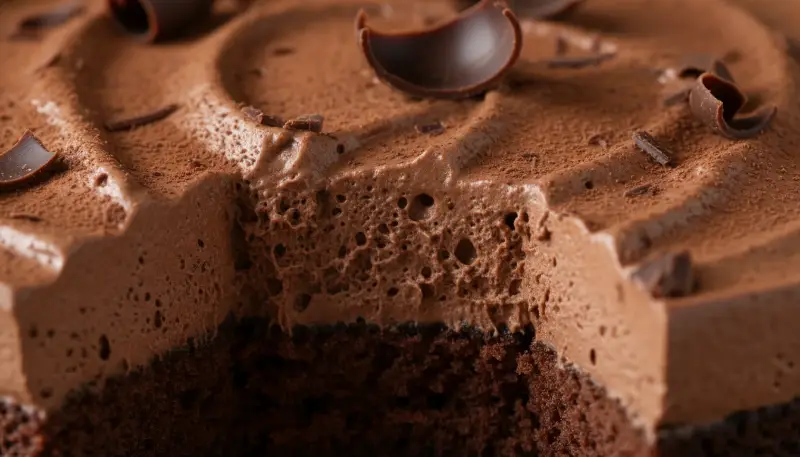
Creating a truly professional Chocolate Mousse Cake is a journey through textures and rich flavors, requiring a delicate balance between a dense, moist base and a light, airy topping. This recipe provides a high-level approach to crafting a masterpiece that satisfies the most intense chocolate cravings while maintaining structural perfection.
Signature Chocolate Mousse Cake
45 MIN
35 MIN
12 PERS
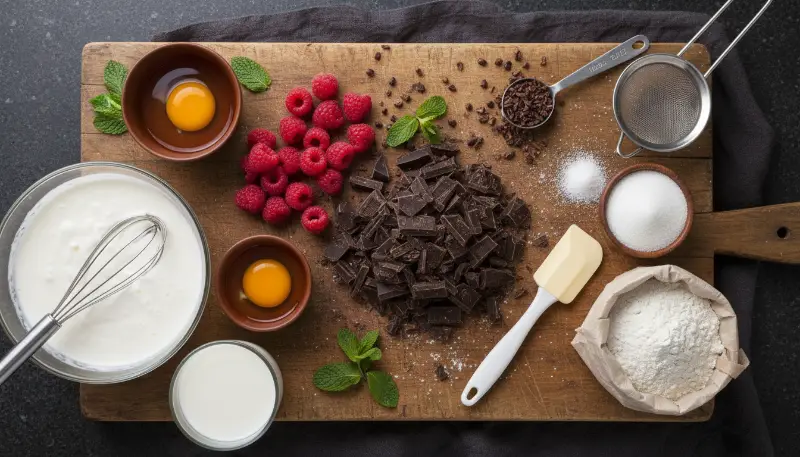
Ingredients
- 1 1 ½ cups All-purpose flour
- 2 ¾ cup Unsweetened cocoa powder
- 3 1 ½ tsp Baking soda and ¾ tsp Salt
- 4 2 Large eggs and ¾ cup Buttermilk
- 5 ½ cup Vegetable oil and ½ cup Apple juice
- 6 ½ cup Hot strong coffee
- 7 1 ½ tsp Unflavored beef gelatin
- 8 2 cups Heavy whipping cream and 2 tbsp orange juice
- 9 2 cups Semi-sweet chocolate chips (divided)
Instructions
- 1 Bake the cake base using flour, cocoa, buttermilk, oil, and apple juice at 350°F for 35 minutes
- 2 Bloom the beef gelatin in cold orange juice for 5 minutes then dissolve over low heat
- 3 Melt 1.5 cups chocolate chips with a splash of cream and whisk in the dissolved beef gelatin
- 4 Whip the remaining heavy cream to stiff peaks and gently fold into the cooled chocolate mixture
- 5 Pour the mousse over the cooled cake base and refrigerate for 4 hours before adding ganache
The Anatomy of a World-Class Chocolate Mousse Cake
When we talk about a high-quality Chocolate Mousse Cake, we are discussing a multi-dimensional dessert that requires more than just mixing cocoa and cream. The base must be structurally sound, providing a firm foundation for the cloud-like mousse that sits atop it. In many traditional bakeries, the complexity of this cake is heightened by using various stabilizing agents. However, achieving that perfect sliceability often comes down to the choice of gelatin and the temperature of your ingredients. By using beef gelatin, we ensure the mousse maintains its shape even at room temperature for short periods, without ever relying on pork-derived products.
The moisture content of the cake base is another critical factor. Many amateur bakers end up with a dry cake that crumbles under the weight of the mousse. To prevent this, we utilize buttermilk and apple juice. The acidity in these ingredients reacts with the baking soda to create a tender crumb, while the apple juice provides a natural sweetness and depth that replaces the need for alcohol-based extracts. This attention to detail is what separates a standard Chocolate Mousse Cake from a gourmet experience found in the world’s finest patisseries.
Selecting the Right Cocoa for Your Chocolate Mousse Cake
Not all cocoa powders are created equal. For a truly dark and rich Chocolate Mousse Cake, you must decide between Dutch-processed and natural cocoa powder. Natural cocoa is acidic and reacts well with baking soda, whereas Dutch-processed cocoa has been treated with an alkalizing agent to neutralize its acidity, resulting in a darker color and a smoother, more mellow flavor. In this specific recipe, we use natural cocoa powder because its acidity works in tandem with the apple juice and buttermilk to create the ultimate lift in the sponge layer.
If you are looking to prep your ingredients efficiently, using a Cuisinart 8 Cup Food Processor can help you sift and mix your dry ingredients in seconds, ensuring there are no lumps in your cocoa. This is an essential step because cocoa powder is notorious for clumping, which can lead to bitter pockets of dry powder in your finished Chocolate Mousse Cake. For those who enjoy a more complex flavor profile, adding a pinch of high-quality salt is non-negotiable, it enhances the chocolate notes and balances the sugar perfectly.
Stabilizing the Mousse: The Science of Beef Gelatin
One of the biggest challenges in making a Chocolate Mousse Cake is ensuring the mousse layer doesn’t collapse once the springform pan is removed. This is where beef gelatin becomes the hero of the dessert. Unlike chemical stabilizers, beef gelatin provides a clean, neutral set that doesn’t interfere with the rich chocolate taste. To bloom the gelatin correctly, it must be sprinkled over cold orange juice. The vitamin C and natural sugars in the orange juice actually help brighten the chocolate flavor, providing a subtle citrus undertone that is far superior to using plain water.
Once the gelatin has bloomed, it must be gently dissolved. If the chocolate mixture is too hot when the gelatin is added, it can lose its setting power. If it is too cold, the gelatin will create rubbery strings. Achieving the perfect “marriage” of temperatures is the secret to a silky Chocolate Mousse Cake. If you are making a large batch of mousse, or perhaps preparing a fruit-based accompaniment, the Ninja BN751 Professional Plus DUO Blender is excellent for creating perfectly smooth fruit purees to serve alongside your cake.
Why Coffee and Juice Replace Alcohol in Baking
In many classic European recipes, rum, brandy, or vanilla extract (which is typically alcohol-based) are used to add depth. However, you can achieve an even more sophisticated flavor in your Chocolate Mousse Cake by using strong coffee and fruit juices. The coffee contains compounds that trick our taste buds into perceiving the chocolate as being darker and more intense. Since the alcohol is omitted, the flavors remain sharp and pure. For the ganache, we use grape juice to provide that mirror-like shine and a hint of acidity that cuts through the fat of the heavy cream.
The use of apple juice in the cake batter serves a double purpose. It keeps the cake moist for days, preventing the starch molecules from crystallizing and becoming hard. If you find yourself with leftovers, storing them in Rubbermaid Brilliance Glass Storage Set of 9 is the best way to maintain that moisture. These airtight containers prevent the Chocolate Mousse Cake from absorbing any odors from the refrigerator, ensuring every slice tastes as fresh as the first day.
Mastering the Ganache Pour
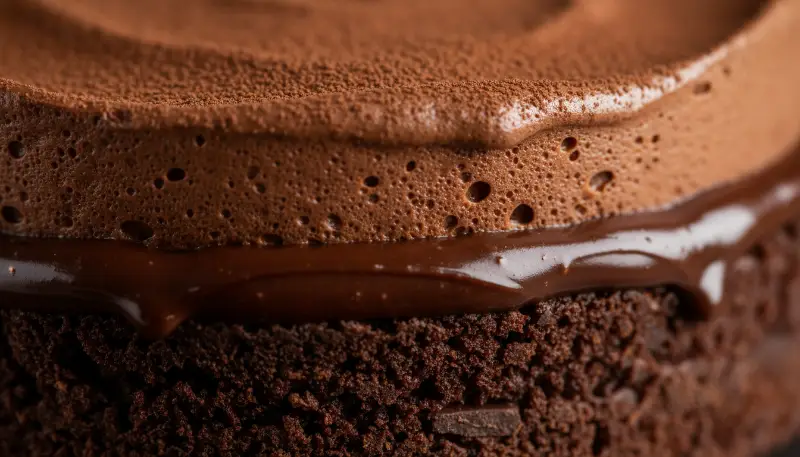
The final aesthetic of your Chocolate Mousse Cake depends heavily on the ganache. A perfect ganache should be glossy, smooth, and just thick enough to coat the back of a spoon. When pouring the ganache over the chilled mousse, timing is everything. If the ganache is too hot, it will melt the top of your mousse, creating a muddy appearance. If it is too cold, it won’t spread evenly, leaving you with a lumpy surface. Aim for a temperature that is slightly warm to the touch, roughly body temperature.
To get that professional finish, start pouring from the center and work your way outward in a spiral. Let gravity do the work. If you have any leftover ganache, don’t throw it away. You can whip it into a frosting or use it as a dip for fruit. For long-term preservation of your high-quality chocolate chips or cocoa, using a FoodSaver Vacuum Sealer Machine can prevent oxidation and keep your baking supplies fresh for months, ensuring your next Chocolate Mousse Cake is just as delicious as this one.
Essential Equipment for Dessert Success
While you can make a Chocolate Mousse Cake with basic tools, certain appliances make the process significantly easier and more consistent. For instance, when you are roasting nuts for a garnish or preparing a side of roasted fruit, the Cosori 9-in-1 TurboBlaze Air Fryer 6 Qt is surprisingly versatile. It can roast hazelnuts to perfection in a fraction of the time a standard oven takes, providing that crunchy texture contrast that many people love with their mousse.
Furthermore, a high-powered blender like the Ninja mentioned earlier is vital if you want to incorporate homemade nut butters into your cake layers. Modern baking is as much about the tools as it is about the technique. Having a dedicated space for your meal prep and storage with the Rubbermaid glass sets ensures that your kitchen stays organized, allowing you to focus on the delicate task of folding whipped cream into chocolate without the stress of a cluttered workspace.
The Importance of Temperature Control
Baking is chemistry, and temperature is the catalyst. When preparing the base for your Chocolate Mousse Cake, your eggs and buttermilk should be at room temperature. Cold ingredients can cause the batter to seize or result in an uneven rise. Conversely, when you are whipping the heavy cream for the mousse, everything should be as cold as possible. Chilling your bowl and whisk attachment in the freezer for 15 minutes before whipping can make a massive difference in the volume and stability of your cream.
If your kitchen is particularly warm, the mousse may begin to soften as you work with it. Don’t be afraid to pop the bowl back into the fridge for 10 minutes mid-fold. Patience is a virtue in the world of high-end desserts. To see how this recipe fits into a wider variety of healthy and delicious options, you can explore more resources at our sitemap, where we detail numerous techniques for elevated home cooking.
Troubleshooting Your Chocolate Mousse Cake
Even the most experienced bakers encounter issues. If your cake base sinks in the middle, it might be due to over-mixing the batter after adding the flour, which develops too much gluten. If your mousse is grainy, the chocolate likely seized when it came into contact with a cold liquid. Always ensure your chocolate and your flavor-enhancing juices are at similar temperatures before combining them. If the mousse is too soft, it usually means the beef gelatin wasn’t bloomed or dissolved properly. Simply reheating the mixture gently and adding a touch more dissolved gelatin can often save the day.
Another common issue is the mousse sticking to the sides of the springform pan. To prevent this, run a thin knife dipped in hot water around the edge of the pan before releasing the clip. This creates a clean, professional edge that makes your Chocolate Mousse Cake look like it came straight from a bakery display case. For more tips on maintaining the integrity of your ingredients, check our guides on the sitemap.
Perfect Pairings and Serving Suggestions
A slice of Chocolate Mousse Cake is incredibly rich, so it pairs best with ingredients that provide a bit of contrast. Fresh berries like raspberries or strawberries offer a tartness that cuts through the fat of the cream. A dollop of unsweetened whipped cream or a scoop of tart lemon sorbet can also provide a refreshing balance. For a more savory twist, a light sprinkle of sea salt or a few crushed roasted nuts can elevate the flavor profile to a more adult, sophisticated level.
If you are serving this at a dinner party, consider slicing the cake while it is still very cold, then letting the individual slices sit at room temperature for about 15 minutes before serving. This allows the mousse to soften just enough to melt on the tongue, while the cake base remains firm and easy to eat. You can find more inspiration for your next dinner party by browsing the latest entries on our site map.
Can I use beef gelatin instead of pork gelatin in all mousse recipes?
Yes, beef gelatin is a direct 1:1 substitute for pork-derived gelatin. It provides the same structural integrity and is virtually tasteless, making it perfect for a Chocolate Mousse Cake. Just ensure it is fully bloomed in a cold liquid before being heated and incorporated into your mixture.
Why does the recipe use apple juice instead of vanilla extract?
Most commercial vanilla extracts are alcohol-based. Apple juice provides a natural sweetness and acidity that helps the cake’s texture and heightens the chocolate flavor without the use of alcohol. It is a professional secret for keeping the cake incredibly moist for several days.
How long will the Chocolate Mousse Cake stay fresh in the fridge?
When stored in an airtight container like the Rubbermaid Brilliance sets, your Chocolate Mousse Cake will stay fresh and delicious for 4 to 5 days. The beef gelatin helps maintain the mousse’s structure, so it won’t weep or become runny over time.
Is it necessary to use hot coffee in the cake batter?
While not strictly necessary for the cake to bake, the hot coffee “blooms” the cocoa powder, releasing more intense chocolate flavor. The heat also helps melt the cocoa fats, resulting in a smoother batter and a more decadent Chocolate Mousse Cake.